

Writing is notoriously one of the most difficult skills to improve because traditionally it required a good-willed fluent speaker to check your work!
Of all the languages I’ve learnt, French is especially difficult to write for a number of reasons, including silent letters or whole sections of words, not to mention its many homophones.

Luckily, times have changed and now technology can be your teacher! Read my 6 tips below to drastically improve your French writing skills.
- Read, read, read
- Start with someone else’s words: French dictation
- Identify what you’re writing for
- Use Bon Patron website as your teacher
- Ace your writing technique like a school kid
- Make it a regular habit
- Final thoughts
1) Read, read, read
The most effective way to improve your writing skills is to read. Not only will this improve your grammar and vocabulary, but it’s a great work-around in terms of spelling and accents, as rather than learning a series of rules, you’ll start to simply recognise what a word should look like.
Generally speaking, trying to read native-level material acts as more of a deterrent than anything else when you’re starting out, as the difficulty level is just too high. Instead, try graded readers, which are books pitched at each level of the Common European Framework of Reference for Languages.
2) Start with someone else’s words: French dictation
Sometimes when writing in a foreign language, before you’ve even started thinking about vocabulary, sentence structure, grammar, you’re bogged down by what content to write. Take that out of the equation to start with by relying on someone else’s words with some dictation.
Find comfort in the fact that French is such a challenging language that even the French struggle with it, to the point that dictation is virtually a national sport! Monthly, French celebrities accept a dictation challenge with Le Figaro magazine. Dictation has even captivated TV audiences with the show Tous prêts pour la dictée! where students challenge themselves to correctly write a classic text read to them. For us foreigners, TV 5 Monde has the perfect tool; La Dictée d’Archibald allows you to choose your French level and try your hand at writing what you hear, one sentence at a time:

Initially you may find it very challenging, but don’t worry, you’ll soon get the hang of it! The best technique is to listen to the whole text without writing anything first, then scrolling down to the text boxes, where you can try writing what you hear in sentence chunks.

3) Identify what you’re writing for
The answer to this question of what you’re writing for completely depends on why you want to improve your French writing; it’s worth sticking to the context of your world i.e. don’t bother trying to write a fairytale if you’re learning French for your banking job.
For work: Any business French book will give you the basis for starting to practise writing work emails and checking for errors on the Bon Patron website!
For fun: If you’re learning as a side hobby in the hope of striking up a conversation with the next French speaker you meet, it’s worth trying to write the odd text about anything that you’d talk about with your friends in your native language, like where you want to go on holiday next year, an amazing restaurant you went to last week or your favourite music. Writing a journal that recounts what you did the day before is a good one for this. Pairing this with getting yourself a Whatsapp pen pal is a great idea, something you can easily find on any language exchange Facebook group. Auto-correct is your teacher! Before you know it you’ll be writing error-free French without its help.

If you prefer a bit of anonymity, try the Hello Talk app, which I talked about in my 5 apps to use alongside Duolingo that will improve your listening, reading, speaking, writing and pronunciation post.
For moving abroad: If you plan to move to a French-speaking country, I would take a more methodical approach to writing, following material specifically catered to the CEFR levels, as such material is scaffolded to ensure you progress without accidentally missing out some fundamentals. No one wants to get to the stage where you can discuss politics but you don’t know what a pronoun is!

This is where graded readers come in handy. Follow my steps on how to read effectively in a foreign language, which includes tips on how to write a good chapter summary.
The beauty of these books is that you will have a real sense of accomplishment once you’ve read enough books at one level to try the next one up!
4) Use Bon Patron website as your teacher
I am someone who struggles to learn a word if I haven’t seen it written down, and the best way for me to commit it to memory is to write it myself, which is why I also highly recommend the Bon Patron website. You can write in French in the space provided, then when you click ‘verify’, the system will pick up and explain your errors, allowing you to self-correct.

5) Ace your writing technique like a school kid
Use plenty of connectives:
When I was studying French at Alliance Française in Bordeaux, any time I had a writing task to do at home, I would always have a list of connectors in front of me, to stop me from overusing the classic GCSE “mais”, “cependant” and “donc”. Here’s a starter word mat on connectives.
Use synonyms:
It’s worth building banks of synonyms in a little notebook that you can refer back to. How many other ways can you say “amusant”? You can use synonyms-fr.com for this.
Use idioms, metaphors and hyperboles:
Wordreference.com is great for finding useful expressions. Type in an expression you like in English, and it’ll deliver you the equivalent in French.

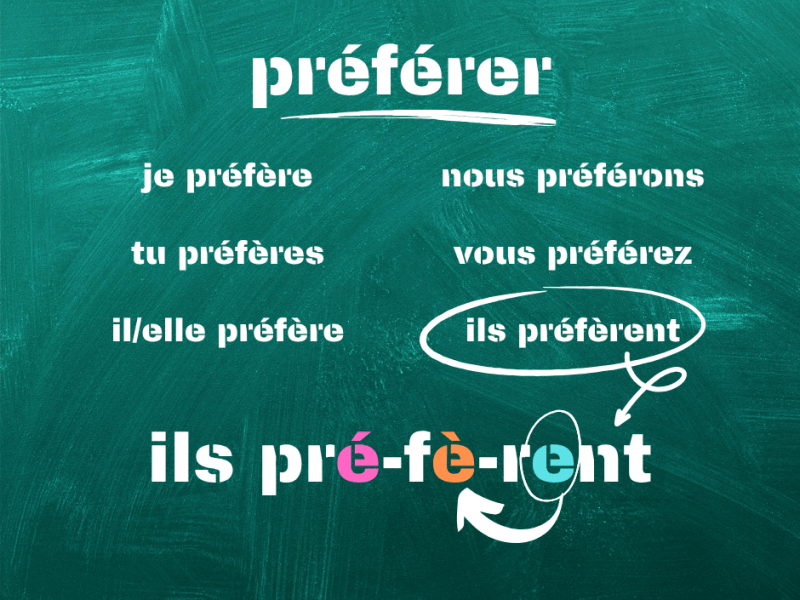
Master writing accents:
This may be hard to native English speakers to believe, but a missed or incorrectly placed accent in French is tantamount to a spelling error, meaning they’re not just a “nice to have.”
If you read a lot, you’ll start to just know which accent goes where for more common words, but there’s also a way to increase your accuracy significantly by learning a few basic rules.
Read my 4 easy orthography hacks for knowing when to use accents in French: é, è and the circumflex accent: â, ê, î, ô, û post for more on this. If it seems overwhelming, just start with mastering é and è.
Re-read your work:
The classic teacher advice! Once you start to spot your own errors, you’ll be on the way. Do this in “shifts”, looking to correct a different error upon each read, for example, first check your verb conjugations, then adjectival agreement, add in some more connectors, switch out any repetitions for more adventurous synonyms, and so on.
6) Make it a regular habit
Write a paragraph once a week, and check and correct it on Bon Patron to ensure good progress. Don’t forget to keep your summaries so that you can see how much you’ve improved over time; it’s a really motivating feeling when you realise that you can now write a chunky 7-line paragraph full of impressive words and grammar, when a few weeks ago, you were struggling to spit out 3 lines.
Final thoughts
Writing is by far the most neglected skill compared to speaking, reading and listening. If you’re learning French in order to study French at university or at a university in France, then improving your writing is something that can’t be missed.
As for those of you learning French purely for pleasure, believe me when I say that it’s far less painful to improve all of your skills together, than to reach a standard that makes you feel like you’re a conversational wizard when speaking, but leaves you googling the correct spelling of every word for a Whatsapp conversation.
I can attest to this because I made this mistake when I learned Portuguese. The most writing I ever did was writing Whatsapp messages, which is a great starting point, but as a result, my vocabulary didn’t expand at the rate it did for my other languages, and I was constantly having to check spellings (when auto-correct can’t even work out what you’re trying to say!).
Have you tried any of these techniques before? Comment below!




Leave a comment