

One of the best and worst things about learning a foreign language is the risk of blunders perpetually haunting learners, to the bemusement of native speakers.
Just like this one:
The thing about this kind of failure is that there’s no big overriding life lesson that you can give a Ted Talk on or feature on Elizabeth Day’s How to Fail.
You just fail and it’s embarrassing and you’ll simply know never to do it again because of the deep social trauma of it.
The best thing you can get out of your worst language fails is a hilarious story. So without further ado, here’s a list of my best/worst mistakes:
“Is this free?”
After having been in Germany for about 6 months, I wondered into a junk shop and found a very beautiful old wooden wardrobe, which was jammed behind boxes, pictures frames and other treasures. I wasn’t sure whether the wardrobe was just used to house smaller items, or was in fact for sale.
I asked the shop assistant, “Ist das zu verschenken?” He looked at me quizzically and quickly replied “Nein!” It was then that I realised that rather than asking him if it was for sale (zu verkaufen), I’d asked him if it was free. Cue Rudolph-level red cheeks!
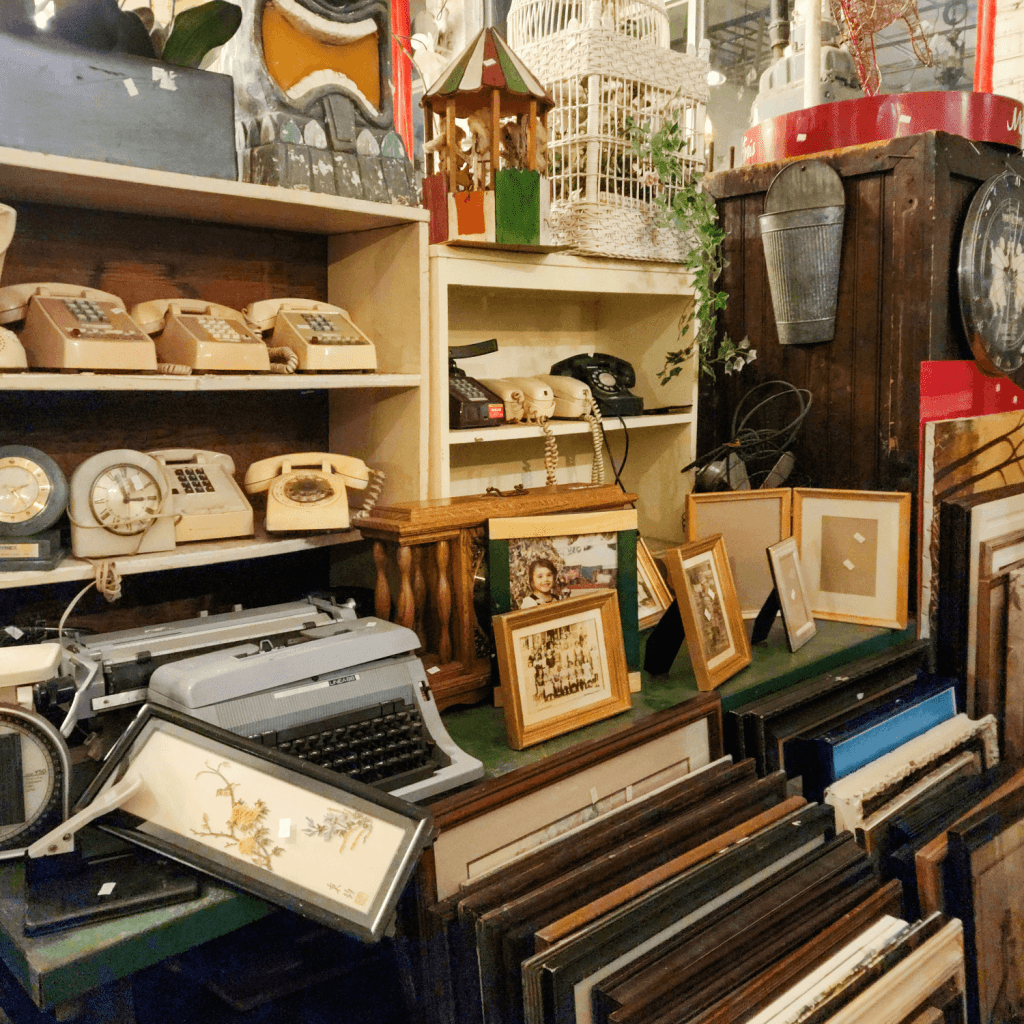
“Can I shit my phone?“
Back in the days when you used to have to top up your phone credit, I innocently asked “¿Puedo cargar mi teléfono aquí?” in a newsagents in San Sebastian, Spain.
As English people do, I struggled with the ‘r’ in ‘cargar’ and instead said “cagar”, which my native friend kindly pointed out as we left the shop. The guy had understood what I meant and presumably was highly entertained at the same time.

Given the Catalonians’ love for poo (the picture shows the Catalan Christmas nativity figure, the Caganer), it might have landed as my first joke in Spanish in Cataluña, but alas not in the Basque Country!
“I love the wind penis!”
In San Sebastian, there is a wonderful structure called “El Peine de los Vientos”, which literally means “The Comb of the Winds”.
In conversation with some locals when I first arrived, someone asked if I’d been to see it yet; struggling to forcefully pronounce the “ei” sound in the word “peine”, I instead pronounced “pene”, meaning “penis” = “the wind penis.”

“Is there an arsehole?”
Entering the toilets in a local bar in Bordeaux, I saw that there was a woman waiting near the sinks. I innocently wanted to ask if there was a queue. This, I knew, was a French word that the English used, and from previous experience, I knew that the French do not pronounce “qu” in the same way we do. Think of the word “question” in French, for example.
As such, I asked “Est-ce qu’il y a une queue?”, but managed to pronounce the word queue as “cul” [ky], rather than the correct [kø]. The correct pronunciation of “queue” in French comes out as a single sounding [kuh].
Rather, I’d asked the woman if there was an arsehole. Oh. the. shame.
“The chain is very salty“
I popped into a bike shop in Bordeaux when once again, my bike chain had come off and had stained my jeans.
I asked the guy what he recommended to avoid ruining my clothes every time I cycled, explaining that “La chaîne est très salé” (salty) when I’d of course meant to say that it was “sale” (dirty).

“I don’t want an overhang”
After weeks of heading to Bla Bla language exchange in Bordeaux, and always drinking the same beer because it had the lowest percentage of alcohol (thanks to my post-30 body for making hangovers a certainty), the barman suggested I try something different.
I obliged but requested something similarly weak to avoid a “bois de gueule”. This is the English-equivalent to discussing an “overhang” instead of a hangover. The correct term is a “gueule de bois”, literally translated as a “mouth of wood”, due to the parched sensation one has upon waking up post-drinking session. The incredibly dashing barman laughed and told me “c’est trop mignon ça!” (that’s too cute!) but I was dying inside.
“Jizz!”
One of the greatest challenges of speaking multiple Latin languages is that many of the same words exist in each language but they sometimes carry very different meanings. These are of course treacherous “false friends”.
When saying goodbye to a Brazilian friend some years ago, I wanted to wish him a good time for the upcoming weekend, using the term “Goza!”, which in Spanish means “to enjoy/have a good time”. Unfortunately, in Portuguese, “gozar” means “to ejaculate”.
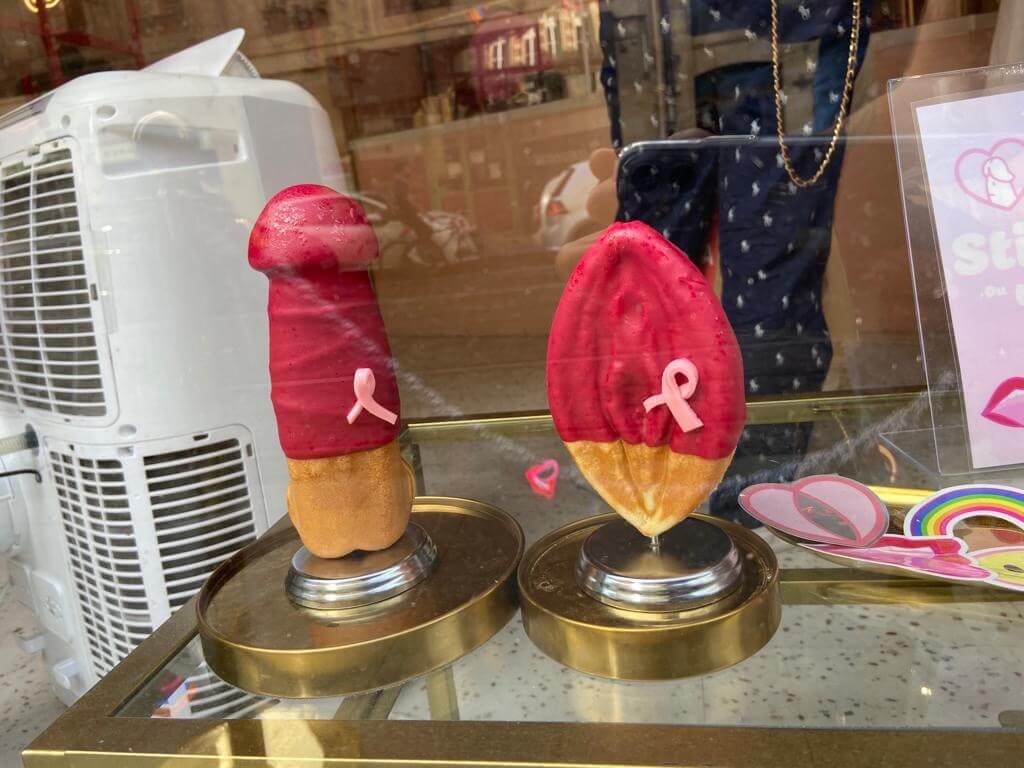
The picture is of cake shop La Quéquetterie in Bordeaux.
“Serves you right!”
I only recently found out that in French, if you say “bien fait!”, without specifying WHAT was done well (e.g. “ce travail est bien fait” – is a correct translation of the phrase “this job is well done”), then you are in fact telling someone “serves you right!”
Oops. A more appropriate phrase would be “bien joué!”

“Are you hot..?“
When I first moved out to the Basque country to improve my Spanish, I wanted to ask my Spanish host if she was “good at cooking”.
I started the phrase as “estás buena en…”, but she stopped me mid-sentence. I’d asked her if she was “hot”. What I should have said was “¿Se te da bien cocinar?”

“Do we know each other biblically?“
Walking into the kitchen in my French host family’s home one day, I encountered a 20-something-year old that I vaguely recognised. Surmising that this must be one of the live-out sons (I’d only met one of the two of them), I asked whether we’d met before.
What I said was “Est-ce que nous sommes déjà connus?”; the half-stranger replied that we had indeed met, but I had a doubt over what I’d said so checked with a friend later. She told me that what I’d asked implied that I thought we might be intimately acquainted… What I should have said was simply “on se connaît?”

The picture shown is an exhibition of the artwork of the Sistine Chapel, which I caught whilst it was installed in Bordeaux.
“I’ll have the cabin boy, please”
Never has getting the gender of a noun right been so important as when ordering a chocolate mousse in a French restaurant.
One day whilst out to lunch in Bergerac, I ordered “le mousse, s’il vous plaît”, which should’ve got me a nice slice of cabin boy.
Luckily, the bemused French waiter knew that I had meant to order “la mousse”, and brought me a delicious chocolate pudding.

“Do you have black wine?”
Recently I had a real hankering for the Perigordian local specialty that is nut wine; I couldn’t see it on the menu but thought I’d ask anyway.
When I did, the server just stared at me blankly, showing complete in comprehension. I said it again, which she then understood.
I had simply elongated the word “noix” so that it sounded like “noir”, thus, instead of saying “Est-ce que vous avez du vin de noix?”, I’d asked if they had black wine.

It’s that Brazilian sexual desire!
On my recent trip to Brazil, I wanted to explain the vigor with which my Brazilian friend had managed to get my wallet back from a pickpocket, explaining “é o fogo brasileiro!” It turns out that the word “fire” in Portuguese has sexual connotations, and I’d just described arousal.

Final thoughts
This is not an exhaustive list; there will be some errors I’ve made in the past that I either can’t recall because of time passed, or I’ve suppressed them from sheer embarrassment. Needless to say, I’m sure I’ll add entries in the future.
What have been your most embarrassing language fails? Share them in the comments below!


Leave a comment