
So, you want to do some wine tasting and you’d like to say more than “yes, that’s very nice.”
Here’s a quick snapshot of what you need to know to make the most of wine tasting in the area:
There are 7 wine types within the Bergerac region, and confusingly, one of those wine types is called Bergerac. Bergerac red wines (the type) tend to be high in tannin and as a result, they’re quite dry, compared to other French wines.

Within the Bergerac region, there’s quite a range of wines. Rosette and Monbazillac are both sweet wines, called “moelleux” (pronounced [moi-luh]) in French. Monbazillac is the biggest sweet wine vineyard in the world. Monbazillac wines are rich, with a honey taste when young, which develops into notes of almond and hazelnut as they age. Rosette is not very well-known outside Périgord; normally, the word “rosette” is associated with a particular Lyonese charcuterie sausage. Rosette has been recognised since 1946, but fell into obscurity until the 1960s, being maintained by only four producers, after which it has gradually regained prominence in the region.
Côtes de Duras is the little brother of Bordeaux in the sense that it’s composed of the same grape varieties and same blends but because of the fame of Bordeaux wines, it lives in the shadows. Montravel is best known for having produced Michel de Montaigne and a very good white wine. Saussignac is a small area shared by only a dozen vintners; it’s best known for its sweet wines.
Finally, there is Pécharmant. Pécharmant is considered to be the Bergerac resident’s Saint-Émilion; i.e. it’s delicious! “Pécharmant” means “charming hill” in Occitan (a language of Southern of France, as well as Monaco, Italy’s Occitan Valleys, and Spain’s Val d’Aran).
Taste-wise, it produces a mixture of red and black fruits and has a woody flavour. The vineyards enjoy considerable sunlight and the area’s unique soil is what gives it its character. Depending on the wine you buy, these should be laid down for at least three years, and can be aged for between 8-10 years, with some being suitable for up to 15. In sum, it’s worth paying for that extra hold luggage.
Three key things to note when planning to go wine tasting:
- Most places will be closed for lunch between 12:00-14:00.
- During the summer (June-August) it’s sometimes worth calling to book a tasting as they can get busy. If your phone French is garbage (though some may humour you in English), just turn up and head somewhere else nearby if they turn you away.
- Bring cash and card; payment methods vary by place. Some will even take cheque, would you believe it?!
Wine tasting by bike
Head to the Bergerac tourist office to rent a bike for the day (don’t forget to either buy some paniers or a basket to put on the front of your bike, or bring a rucksack with you).
Put the first place in my list below into Google maps and you’re off. As you head off from Les Farcies du Pech, you’ll start to notice that Chateaux are signposted all over the place, so you can head to the ones I’ve listed below, and also drop in on others you find on the way.
Les Farcies du Pech
This is my favourite producer in the Pécharmant area. They produce a few different wines (whites and reds), but there are two that are the absolute cream. The first is simply called Farcies du Pech and they’ve got a few different prices based on the year. The most expensive of these is 13,50€ a bottle.
The second is their Elixir, which comes in at 25€ (ouch!); you can simply have a taste of this there but I’d highly recommend you taking a couple of bottles home for a special occasion. The name perfectly encapsulates the magical quality of this sensational wine.
Overall, my favourite is the 2018 Farcies du Pech.

In our household, this wine has earnt the street name “Peshers”, said in a Somerset accent, to honour our roots.
La Tilleraie
You’ll need to get on your bike for a grand total of about three minutes to get from Farcies du Pech to Tilleraie. The Château is used a lot for weddings and other events, tant pis pour moi, because I have tried going there three times with friends, always to be turned away due to said events being on.
I’ve since bought it at the supermarket; it makes a very nice table red, so if you pop by and they’re open for tasting, give it a go!
Beauportail
Beauportail will require a slight detour (and you’ll come across lots of other Châteaux that you can stop off at on the way), but it’s totally worth it.

It was recently bought by a really friendly and passionate Canadian, who is relatively new to the industry (I think he told me was an engineer in a past life). He will give you a really detailed explanation of his wines, particularly of something new he’s trying with Canadian oak.
His prices range from 8.50€ to 37,45€ a bottle.
💡Fun fact: roses were traditionally “the canary in the mine” for vintners, showing signs of mildew earlier than the vines, thus giving vintners the signal to spray their vines with sulphur, to prevent the grapes from succumbing. Advancements in technology have eliminated this need, but the roses still decoratively adorn many vineyards.
Pécharmant Corbiac
If you want to try prize-winning wine, then look no further than Corbiac. This is really hard to get hold of so you’ll want to go straight to the source – Château de Corbiac.
Prices range from 6.50€ to 20€.
La Vieille Bergerie
I headed to La Vieille Bergerie on a local recommendation; they’ve got a number of Bergerac and Pecharmant wines, though my favourite is the Quercus white. “Quercus” is Latin for “oak”, named so for the way it was made – in oak barrels.
Prices range from 7.50€ to 18€ a bottle.


Wine tasting by car
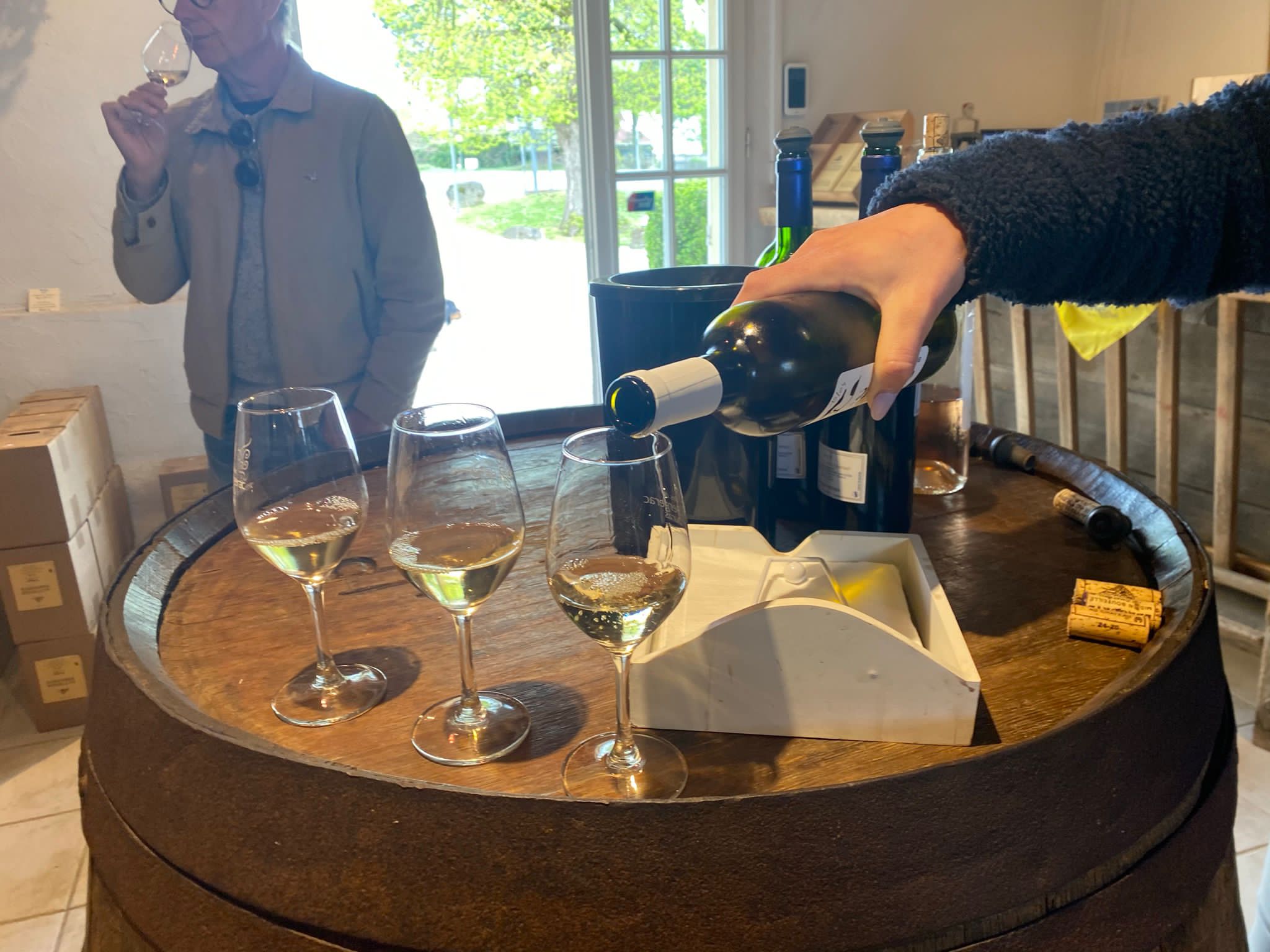
Being in the car will give you more exposure to the different wines around Bergerac, though of course will require more restraint. The spit buckets are there for a reason!
Les Verdots
If you want a little bit of modern chic, Les Verdots is where to go. This is a significantly bigger operation than the other châteaux I’ve mentioned. You can try quite a few whites and reds that are all very drinkable. The building is rather spectacular, with a glorious pine roof.
The only thing I would say is that I find the label a bit off putting. That swirly font reminds me of something I would’ve designed at school using Microsoft Word’s early scroll-type fonts to make something look old and fancy.
Prices range from 8€ to 50€ a bottle.
Terre Vieille
This has a very similar feel to Farcies du Pech, which you’ll see on wine lists in the higher-end restaurants in Bergerac. It’s an excellent choice with a steak.
The location is really beautiful, with views across the hills and lovely nooks for languid tasting sessions. They also serve tapas-style food with wine tastings.
Prices range from 29€ upwards. Prepare to spend.
Château Barouillet
If you’re feeling adventurous, then Château Barouillet is definitely worth a visit. This lot produces biodynamic wine, which is the process of production according to the cycle of the moon.

As well as red wines and dry whites, you can try their orange wine, sweet white and natural sparkling wine. I love this lot’s wine labels, they’re really original!
Their website is better than most French websites, but it conveniently omits the prices, so you’ll have to see when you turn up for this one.
Château Lestevenie
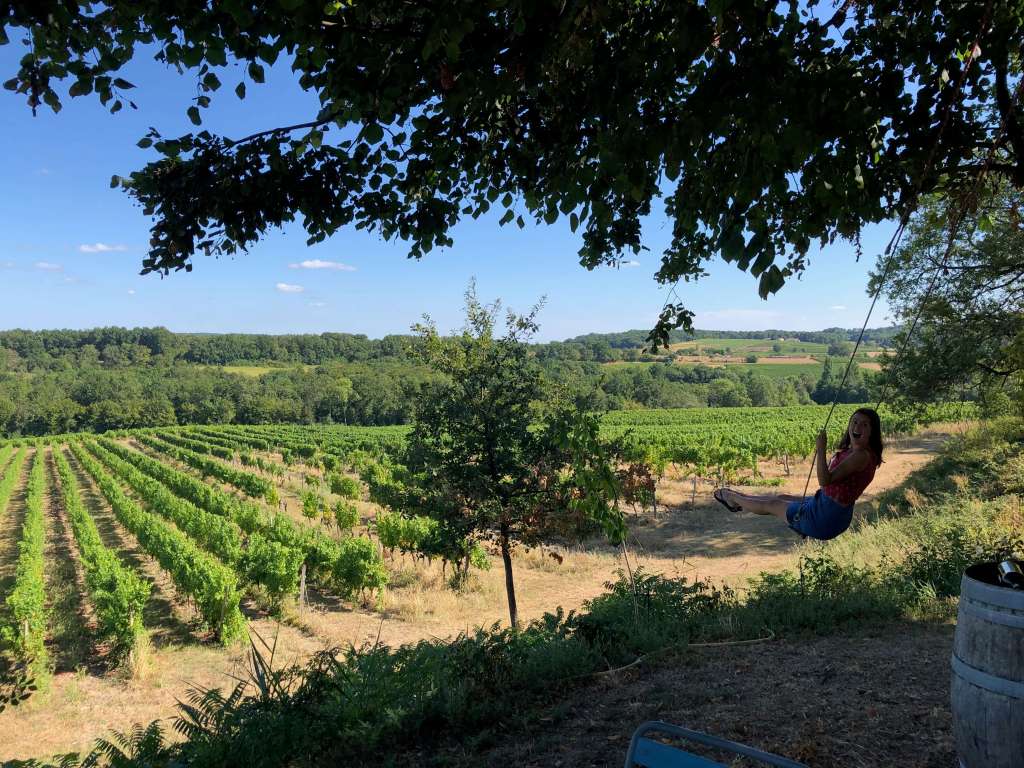
Lestevenie is a Saussignac wine, which produces white, red and sweet wine. It’s got a charming hare on the label and the swing above the vineyard makes a wine tasting session even more enjoyable!
Prices range from 9.95€ to 18€.
Let me know what you think of the wine and places you visit, as always!


Leave a comment