

In my first year of university, in a class about halfway through my first semester, my Italian teacher wrote a sentence on the board and asked me to identify the pronoun. My response? “What’s a pronoun?” FAIL!
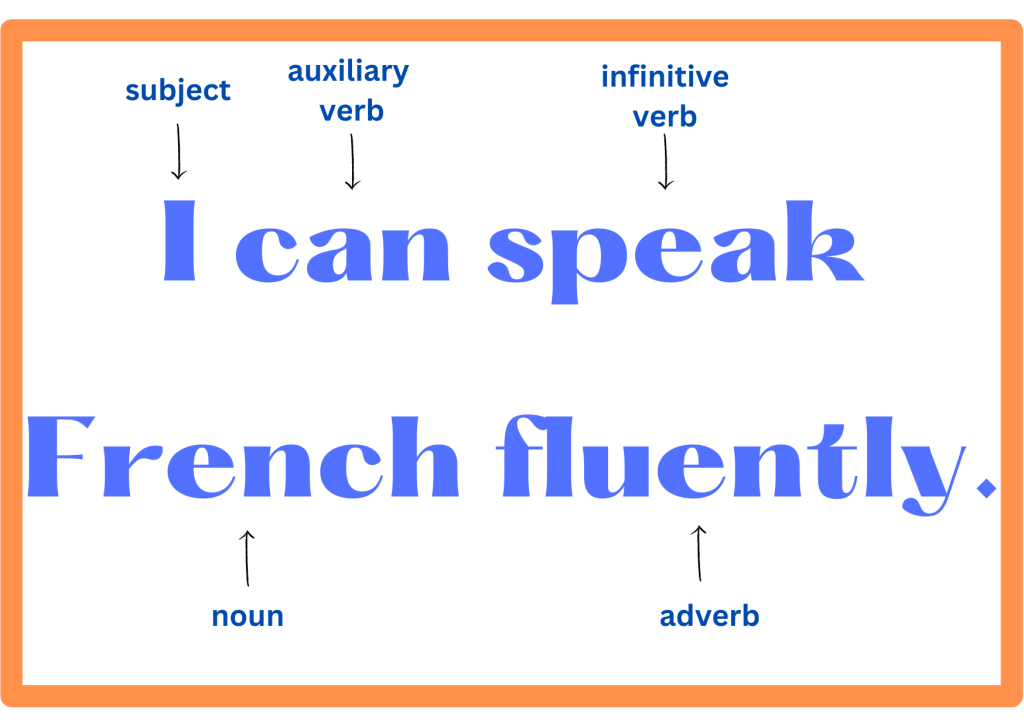
Anyone who isn’t British will most likely find this pretty appalling. How could I get to the age of 18, start a degree in English Literature and Italian, and not know what a pronoun is? Read on to find out…
Why does this happen?
Perhaps if I’d studied Latin at a private school, my knowledge of grammar at the age of 18 would have been better. Yet, having attended an English state school, and later having worked in one, I know exactly why English kids have a poor understanding of grammar, in their own language and others.
One of the most frustrating things I found when working as a languages teacher in the UK was the realisation that my students couldn’t even identify simple things like a verb, or noun in a sentence, even in English. My department would regularly complain that it was the job of the English department to educate our students on grammar, but of course, they were as bound to our government’s curriculum as we were.
This may be one explanation for why it’s incredibly common to hear such sentences as:
“I should of known better.”
“There’s loads of people on the beach.”
“If I would have known, I would have said something.”
“I need to lay down.”
“Before she knew it, she’d drank the whole bottle!”
*Corrections at the end of this post.
These kinds of errors even make it into popular TV shows and films; can you spot the errors?




Why does this matter?
Struggling with one’s native language is not a uniquely British problem. Many French people have told me that they sometimes find writing difficult in French; some rely heavily on the autocorrect function to write work emails, and others tell of family arguments erupting out of “fun and light-hearted” dictation activities.
However, it’s worth noting that French is a far more complex language than English and as such, children are still taught their native language by rote in France, having certain grammar rules drilled into them.
I think that the lack of this in the English education system really hinders our scope for learning a foreign language because we are not given the skills to ‘decode’ language, i.e. grammar. Naturally, we often know whether something is correct or not based on sound in our own language, a privilege we’re not afforded when learning a foreign one. And even with the help of sound, we can get tripped up (think “should of”).
Fear not, however! I don’t know what a predicate, modifier or determiner is either, and you don’t have to in order to learn a foreign language.
BUT, it does help to have a grasp on the simple stuff, and the ability to distinguish between different tenses. This is something that is often referred to as ‘grammarese’, and is a surefire way to speed up your progress in a foreign language.
For example, people who learn lots of the Latin languages can often do it with speed, not just because of shared vocabulary, but shared grammatical structures. If we take Spanish, French and Italian, all three languages share the same structure to say “I like” when referring to a singular noun:
Spanish: Me gusta
French: Ça me plaît
Italian: Mi piace
These literally translate as “it is pleasing to me.” If you’ve already mastered this structure in one of these languages (which can be quite mind-boggling for anglophones) you’ll quickly be able to pick up the structure in another of the languages, skipping the difficulty a monolingual English native would have.
The same principle applies in terms of knowledge of grammar in your native language. Understanding key grammatical terms and structures is a crucial tool for learning a foreign language, and it can save a lot of time in the process.
How to top up your grammar knowledge
Here are 4 things I recommend you do to get your grammar knowledge up to scratch if it’s feeling a bit creaky:
1) Refresh your memory on the 8 parts of speech.
2) Test your knowledge of English grammar terms.
3) Test your knowledge of tenses.
4) Listen to Grammar Girl podcast (this is a recent discovery of mine, and I’m hooked!).
5) Read English Grammar for Dummies or My Grammar and I… Or Should That Be Me?, depending on your knowledge level.
English Grammar for Dummies is a really useful guide for those averse to all the jargon-y stuff.
My Grammar and I… Or Should That Be Me? sets the record straight on everything from those eternal doubts that even native speakers have to challenges to grammar pedantry.

Warning: My Grammar and I… Or Should That Be Me? is a nerdy read; I, naturally, loved it.
* Corrections
“I should have known better.”
“There are loads of people on the beach.”
“If I had known, I would have said something.”
“I need to lie down.”
“Before she knew it, she’d drunk the whole bottle!”
Do you feel confident in your knowledge of grammar in your native language and in your target language(s)? Did your knowledge of grammar improve upon learning a foreign language? Comment below!


Leave a comment