
One of my favourite things to do when travelling to a country where I speak the language, is to pay attention to the street art. You learn a lot about the history and the mindset of a people when you decode their “unofficial” messages.
Earlier this year I visited Argentina and Brazil for the first time, and I learnt so much from the street art; here are my findings in pictures and words.
Buenos Aires, Argentina
Messi dominates a lot of walls in Buenos Aires, whereas this picture of another Argentinian player was the one that caught my eye.
The phrase el fútbol no se ve, se siente translates as “you don’t watch football, you feel it.”
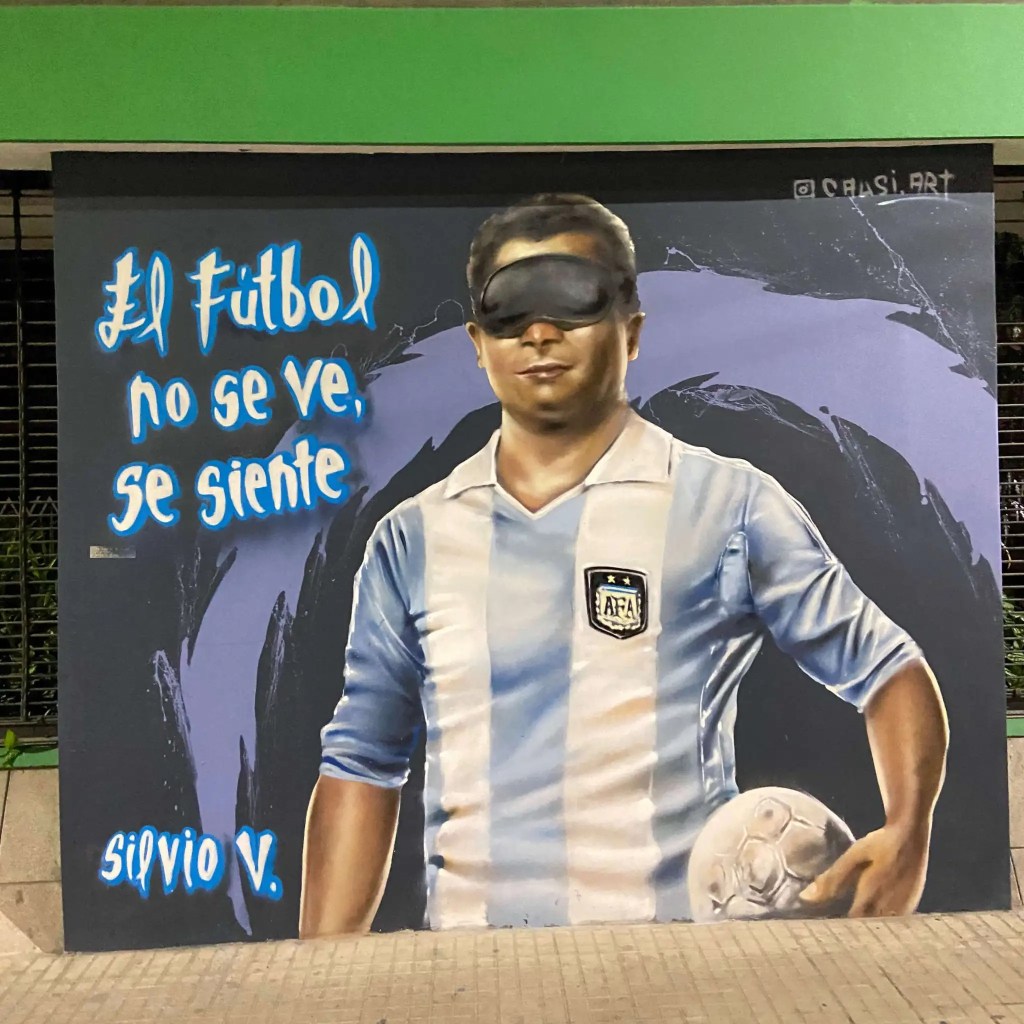
This very popular phrase reminds me of a line from Laura Esquivel’s novel Como Agua Para Chocolate, in which the main love interest of the story, Pedro, declares to Tita: el amor no se piensa, se siente (you don’t think about love, you feel it).
The importance of feeling that I sometimes find is lacking in British culture, is something I really felt during my trip!
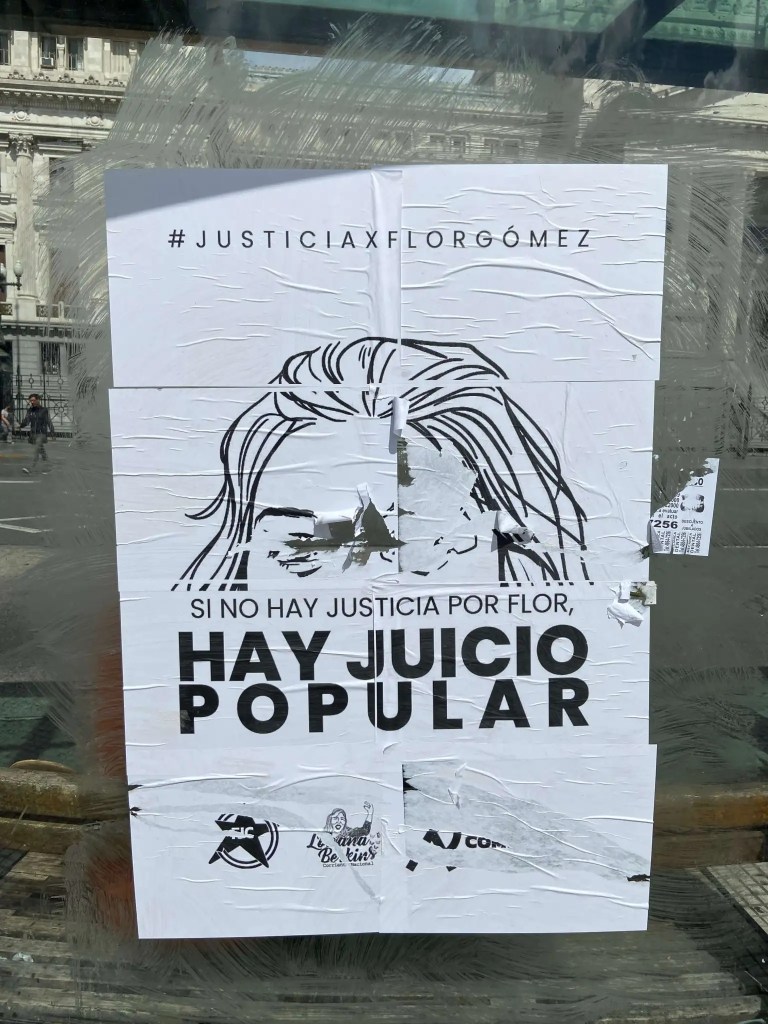
Posters told me a lot too! This poster states that “If there’s no official justice for Flor, then it’s up to the people to seek it.”
I later looked up Flor’s story, who was a 35-year-old woman and a prominent figure both locally (in San Jorge, Santa Fe) and nationally, a feminist and communist activist. She was murdered in 2020; the culprit(s) remain(s) at large.
Femicide is rife globally; in the Argentinian context, from January to October 2022, at least 212 women were victims of femicide. Of those women, almost two thirds (61.3 percent) were murdered by their partners or ex-partners.
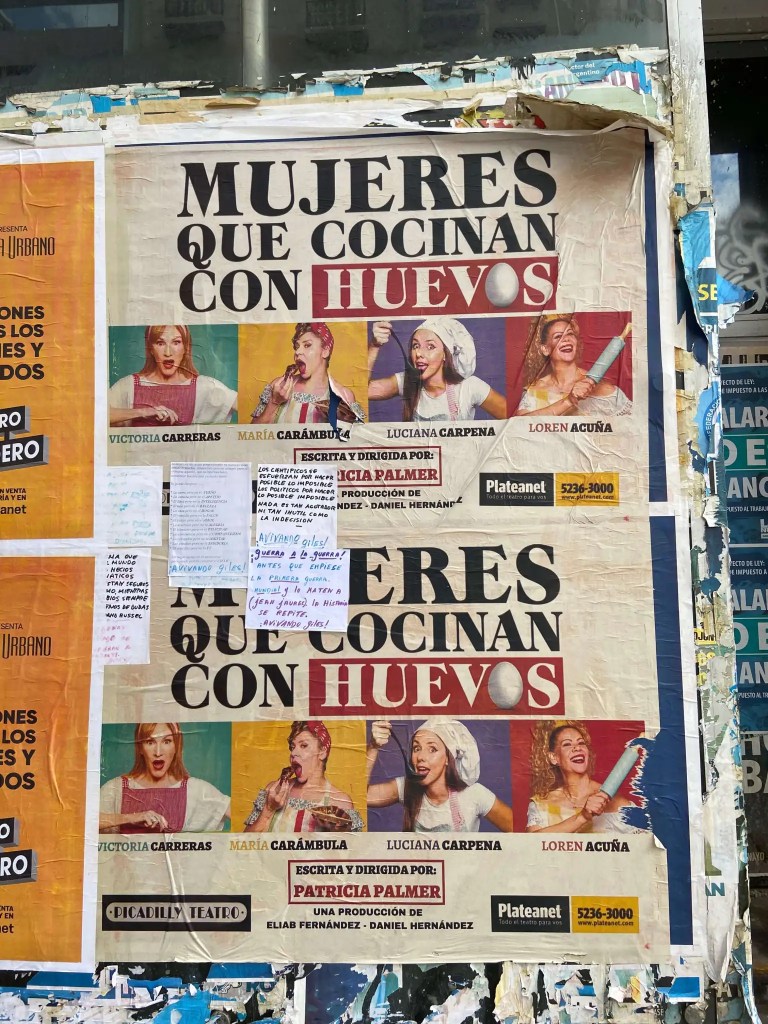
Mujeres que cocinan con huevos is a theatre piece written by Patricia Palmer, which is a play on words, given that the word huevos (eggs) is often used as a synonym for “courage”, due to its dual meaning of “testicles.”
A woman married to a violent husband decides to learn to cook and befriends three companions who show her a different world. From there, she decides to change her life forever, making an unexpected turn that will take her to another dimension.
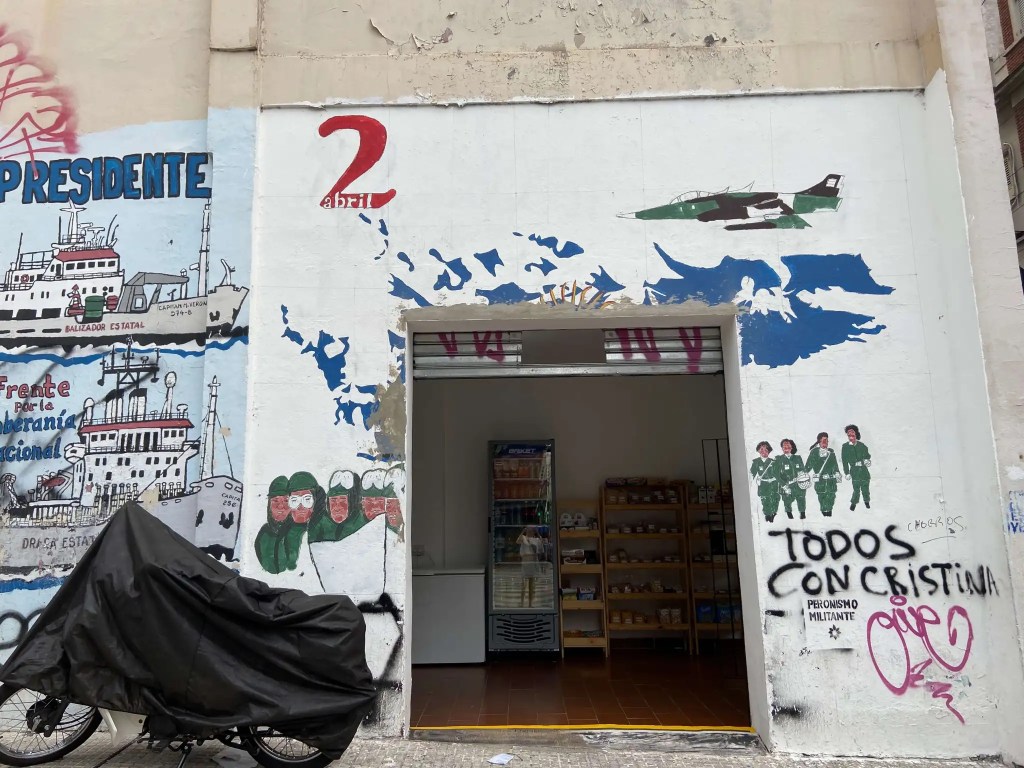
Naturally I had to look up who this Cristina was!
Todos con Cristina refers to vice-president Cristina Fernández de Kirchner, who in September 2022 narrowly escaped assassination when a man attempted to shoot her in the head. The gun jammed and he was immediately arrested.
It’s considered that if the bullet had been released, the country would have gone up in flames. Democracy would’ve died with Cristina.
Given the statistics on violence against women that I’ve already mentioned, it’s not surprising to see art like this:
“If our fire doesn’t burn, I die, she dies, they will kill us all (women).”

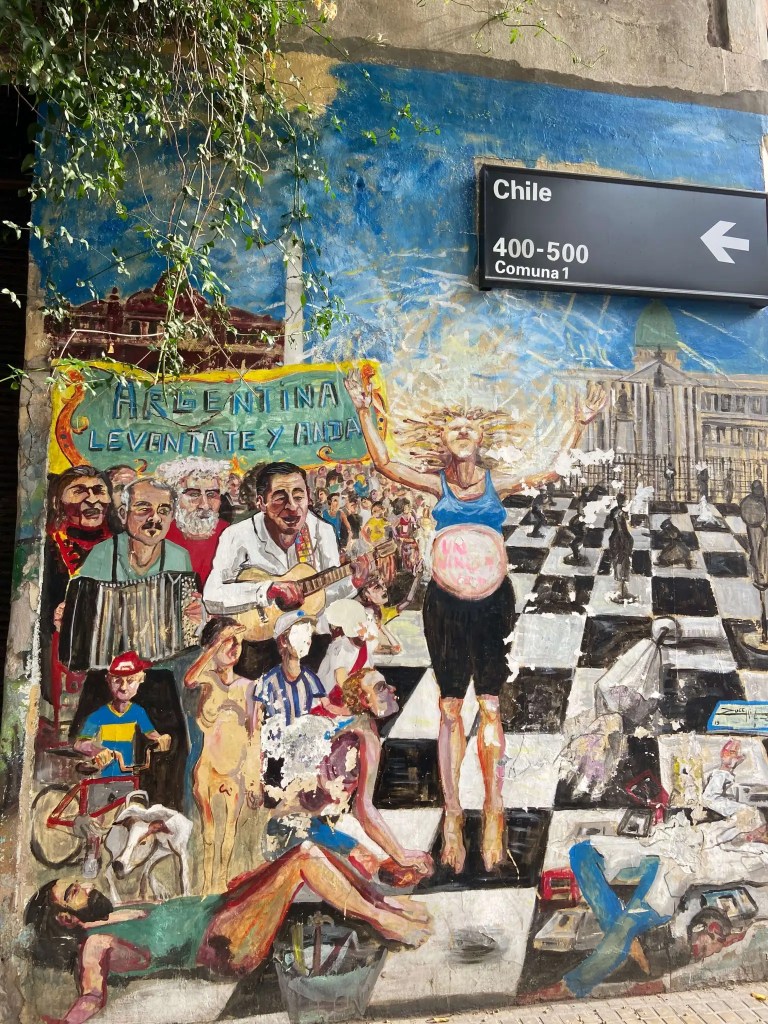
“Argentina, get up and walk.”
I have no idea what is going on in this one, but am desperate to know. If you do, please get in touch!
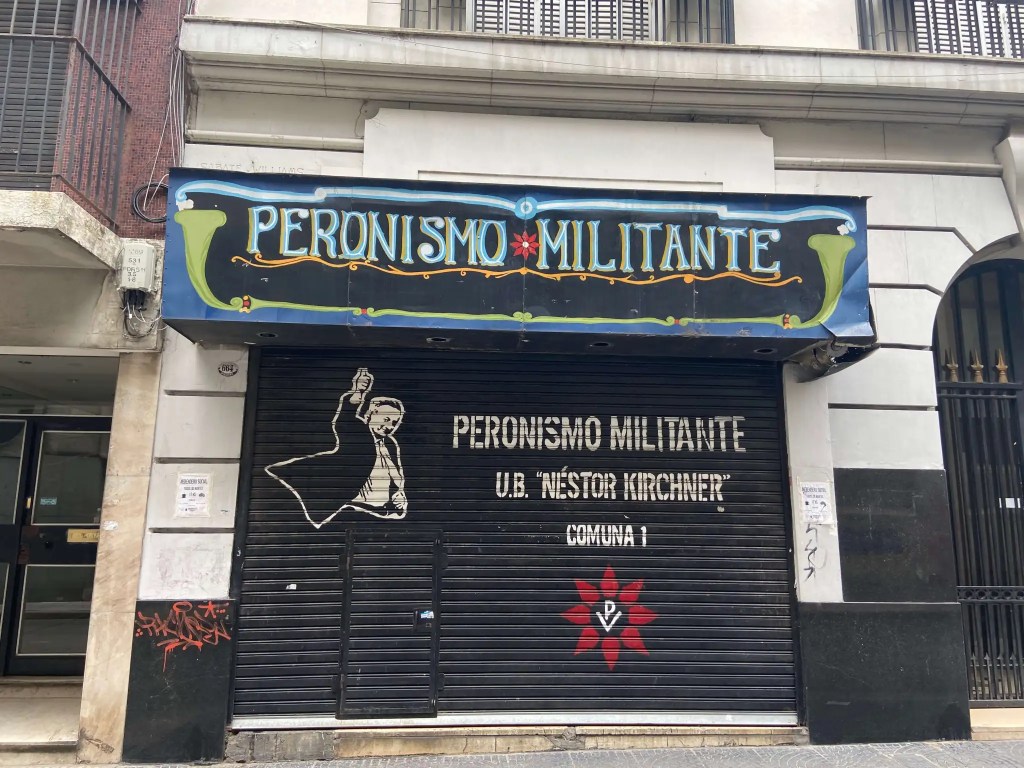
Peronism has a very complicated history, which started with the policies of social justice, economic nationalism, and international non‐alignment of politician Juan Perón.
It’s since been transformed exponentially into something quite different.
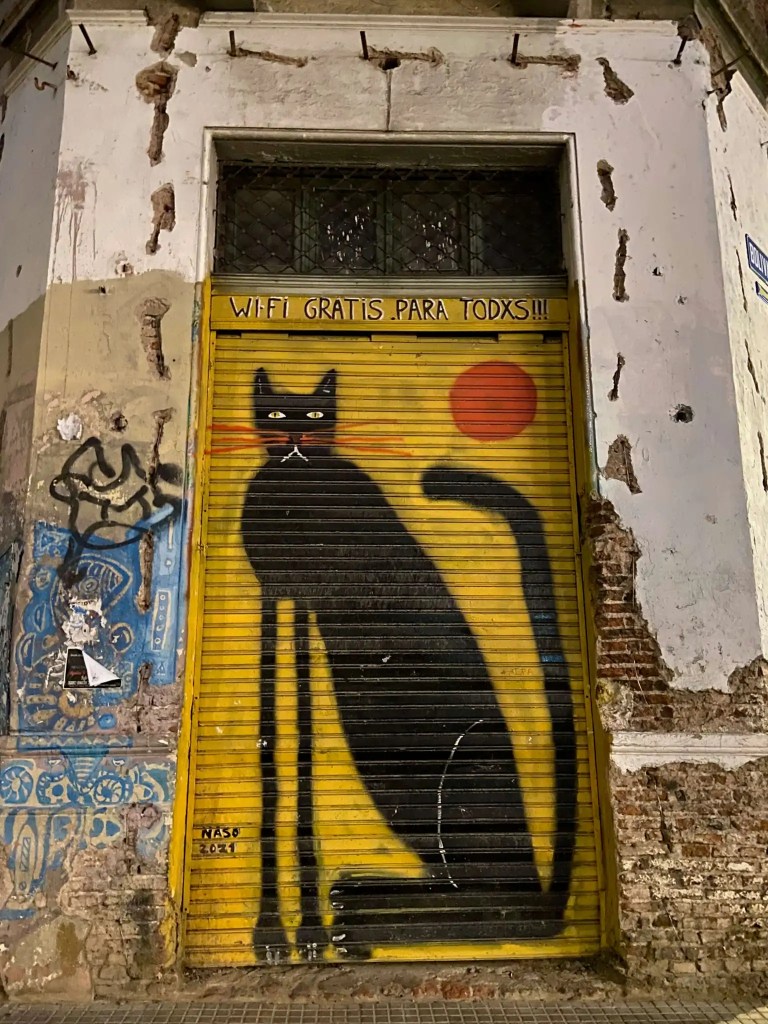
A brief nod to digital equity with a cool image, using the gender inclusive todxs. Todos/Todas = everyone. X and @ are often used to substitute the masculine and feminine o/a.
Rio de Janeiro, Brazil
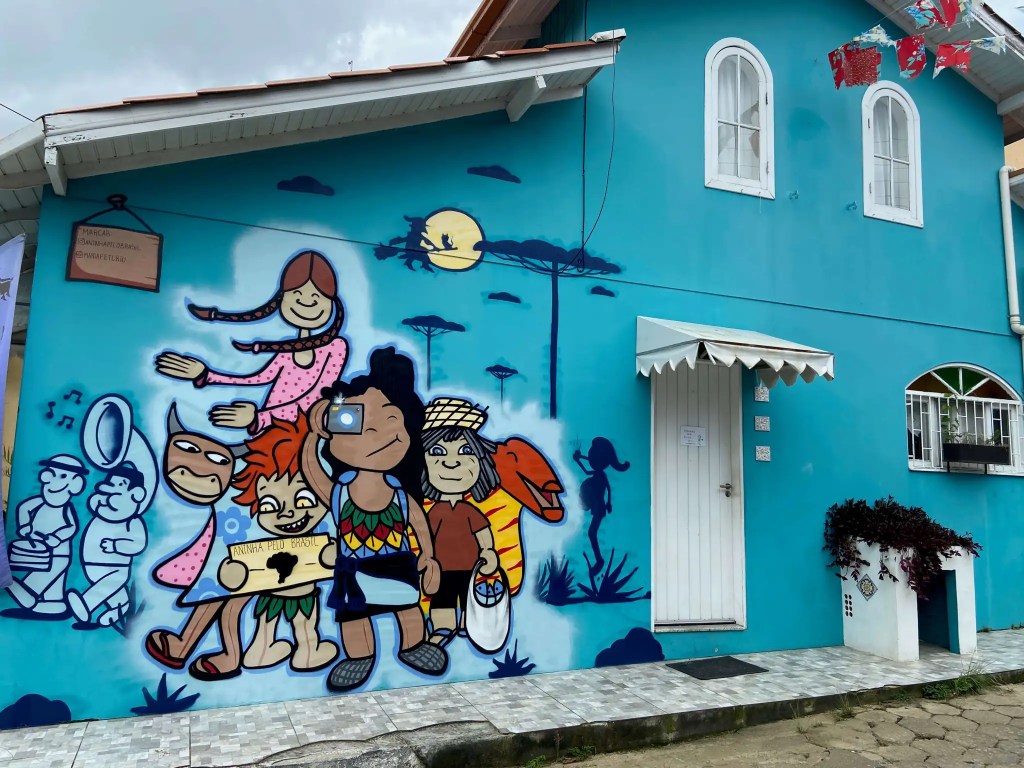
This is the only photo in this section not in Rio; it’s from Florianópolis. These wonderful characters are from Brazilian folklore, many of whom appear in one of my favourite Brazilian series: Cidade Invisível.
You can see one-legged Saci as a silhouette to the right, fiery-haired Curupira with his backward feet holding a map and a witch on her broom in the sky, a key figure of Floripa, also known as the Ilha da Magia!

“What matters can’t be imported. It is found in ourselves.”
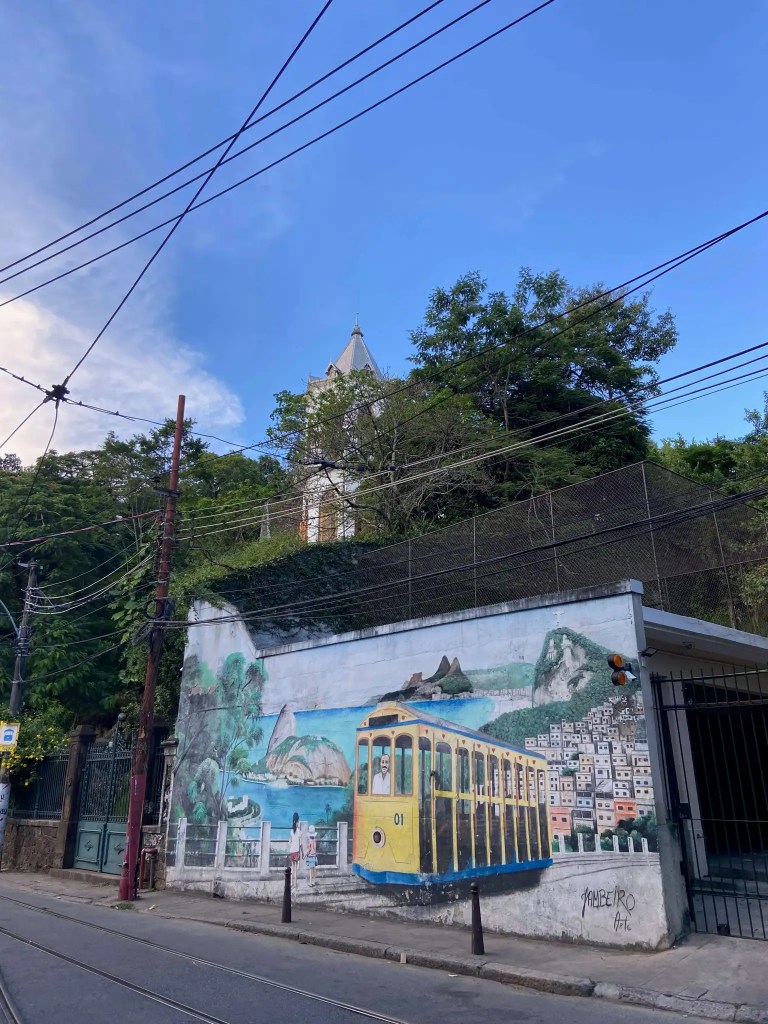
This one in Santa Teresa is just beautiful.
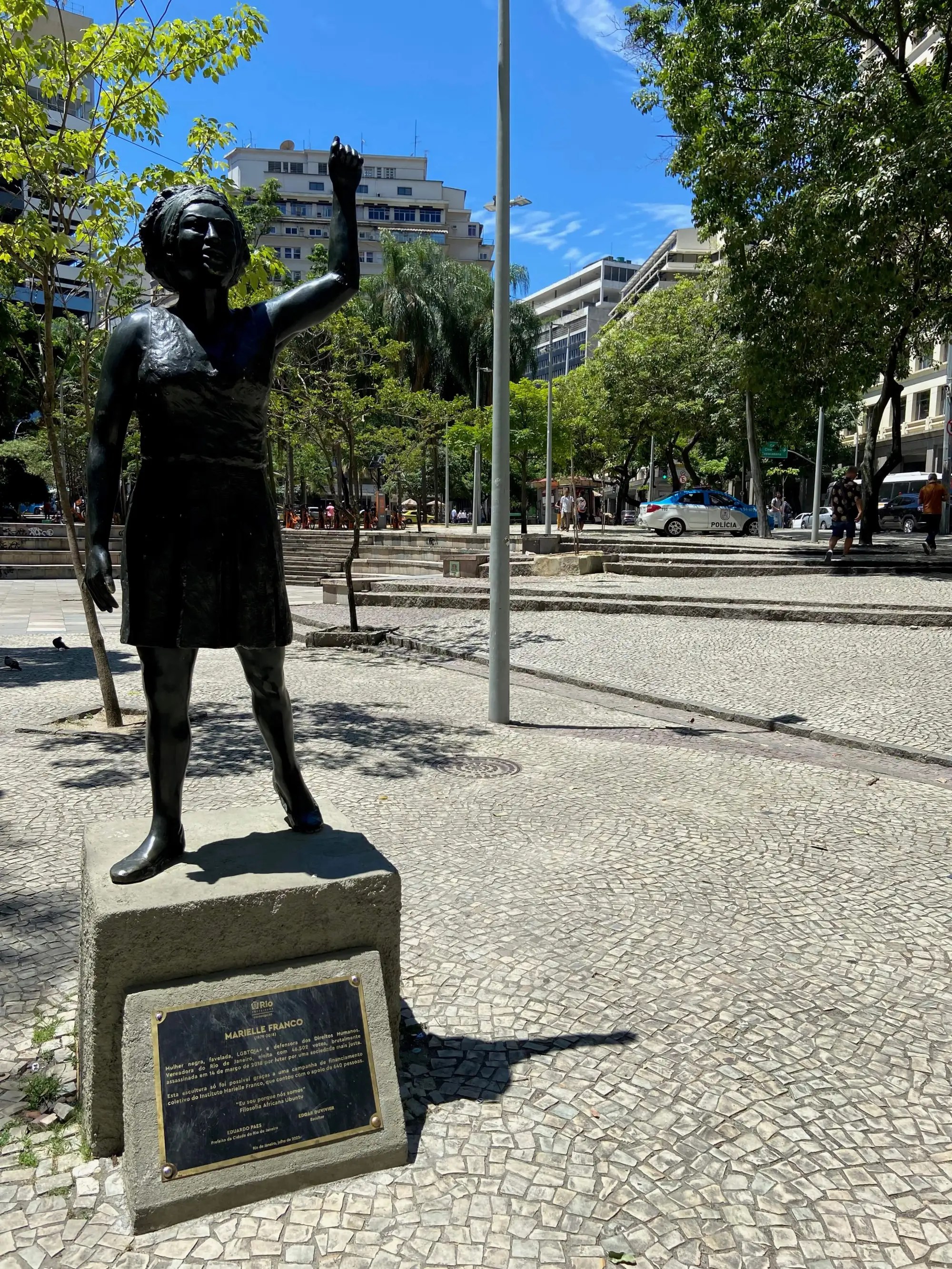
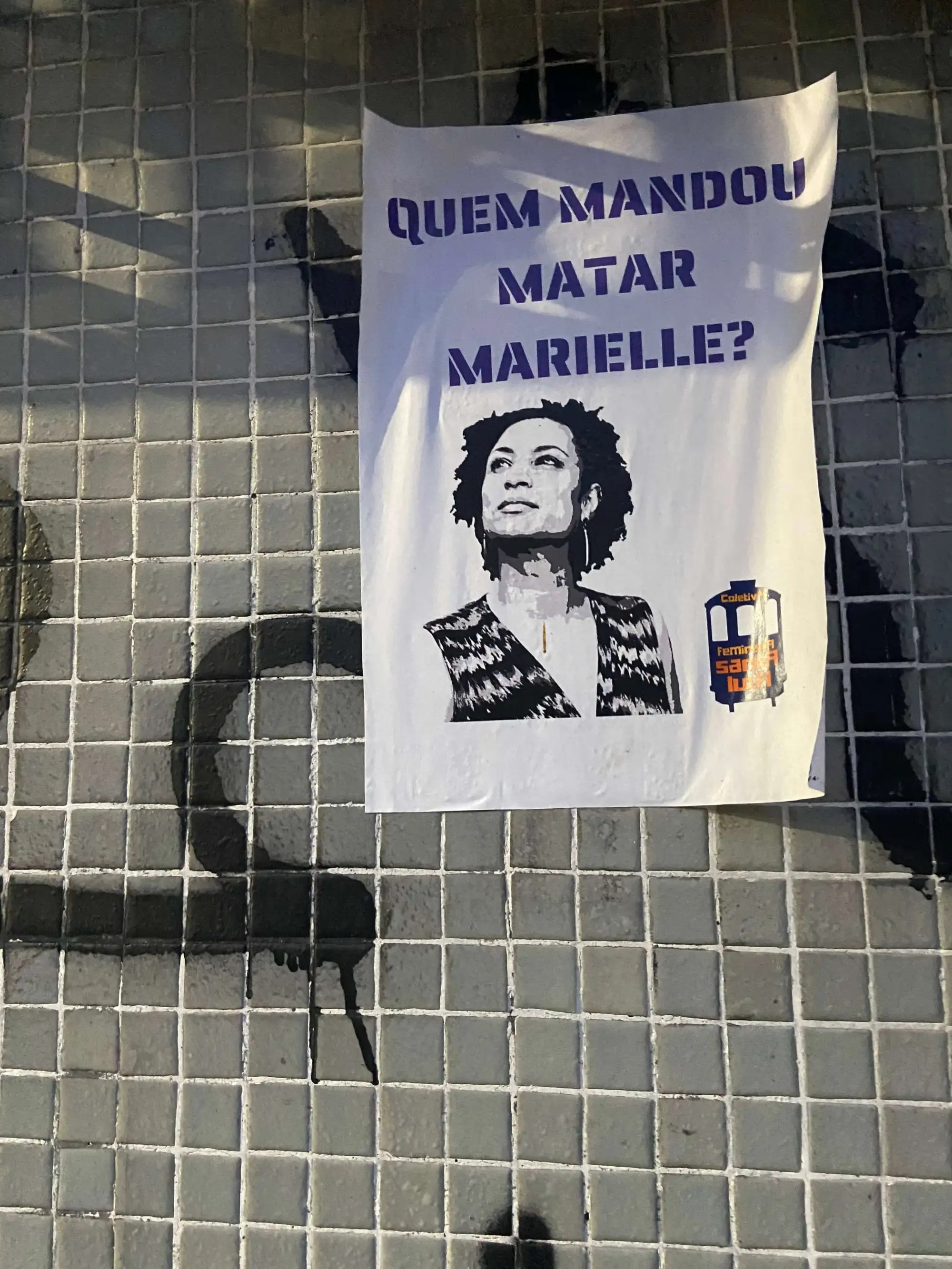
Street art the below is not, but it needed a mention. Marielle Franco was a feminist, LGBTQ+, anti-racist and human rights activist, who was brutally murdered in 2018 by two ex-police officers.
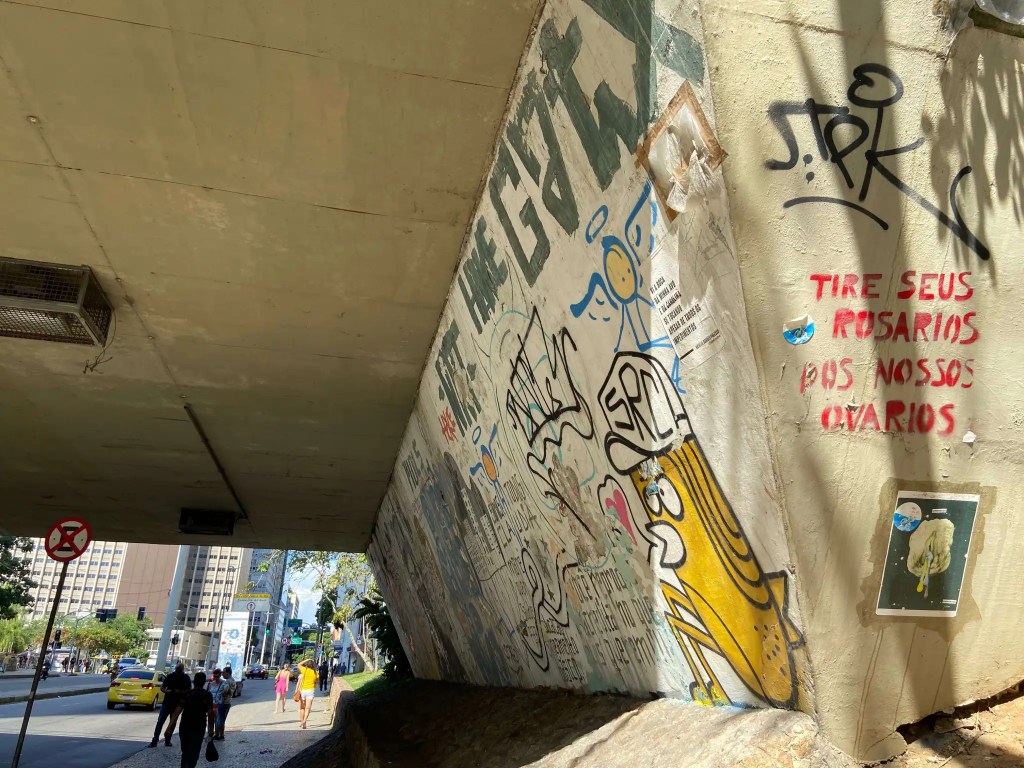
“Get your rosaries off our ovaries.”
In Brazil, abortion is a crime that carries a prison sentence—with exceptions only for rape, risk to a woman’s life, or a diagnosis of fetal anencephaly.
The punishment for a woman who obtains an abortion outside of these circumstances can be up to three years in prison.
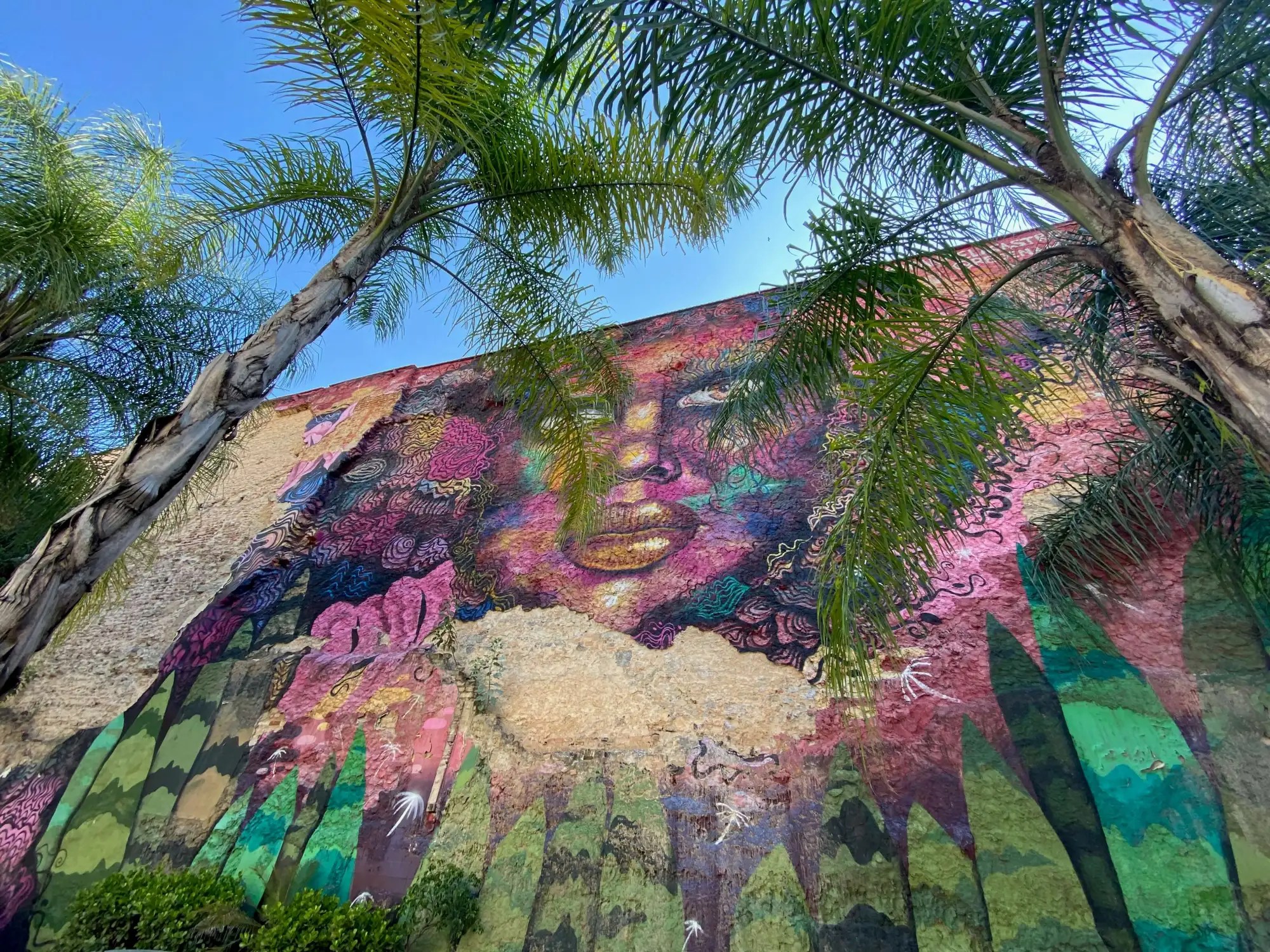
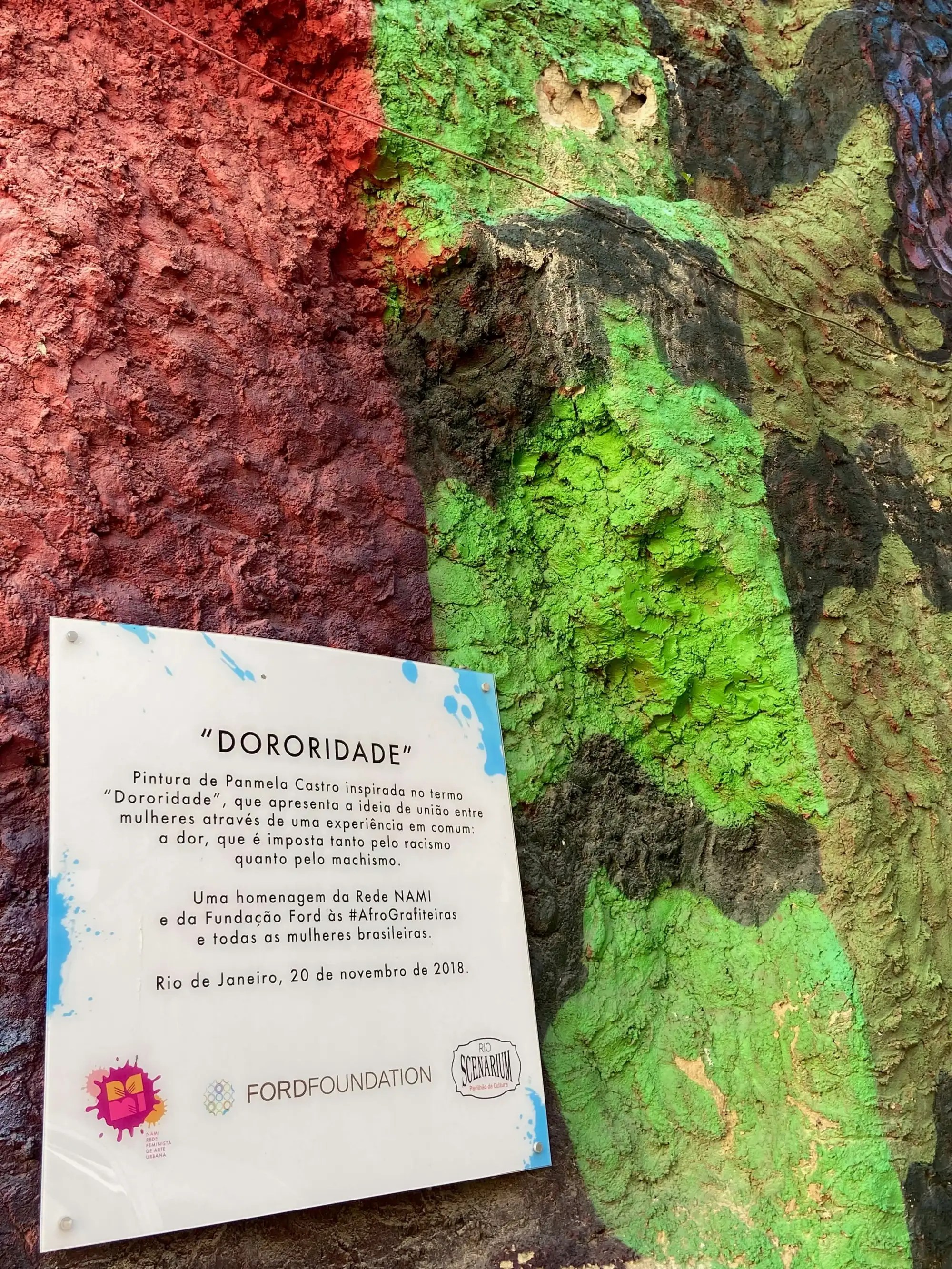
This incredible mural by Panmela Castro sits outside the women’s delegation in Rio, where I learned the neologism dororidade, which refers to unity amongst women as a result of shared pain produced by racism and/or sexism.
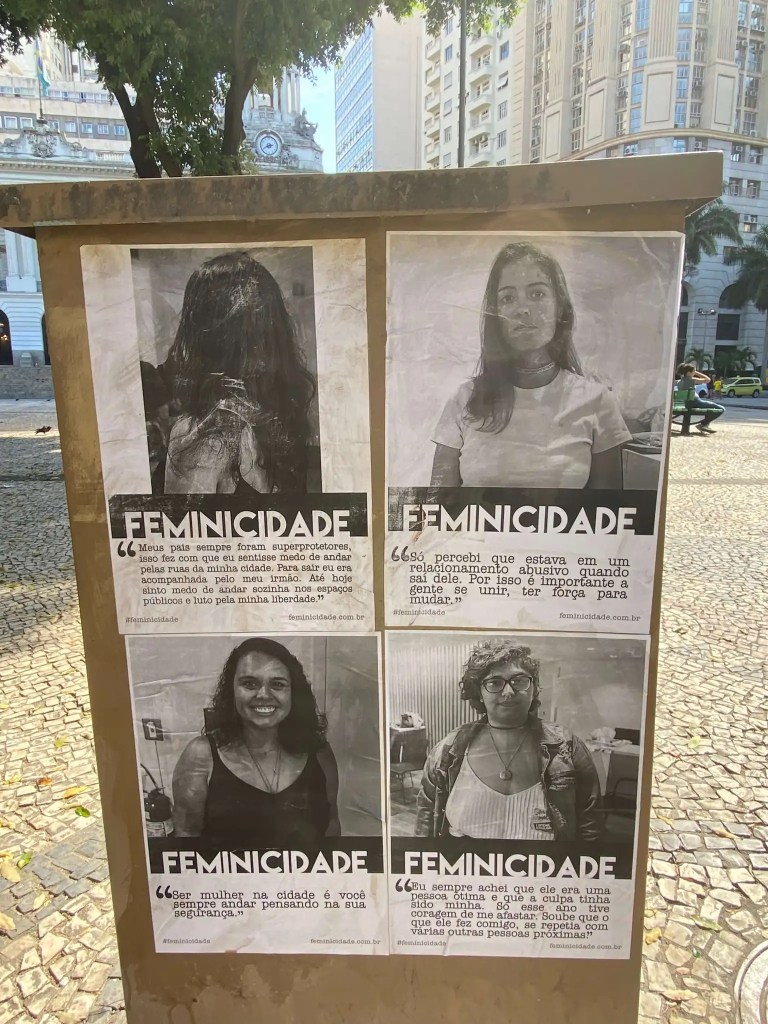
Feminicidade (feminicity) is a feminist collective created in 2016 that uses storytelling, advocacy and urban interventions as a means to denaturalise violence against women and encourage female empowerment through identification and empathy with female narratives.
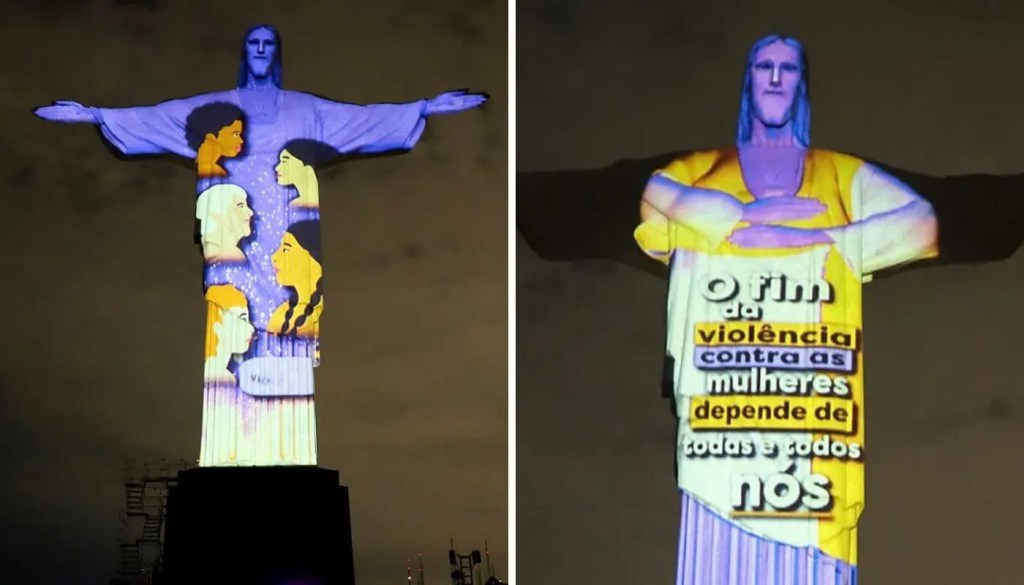
When I went up to see Christ the Redeemer, I asked about the event that was being organised up there. I was visiting in March (the month of International Women’s Day); a group of women of faith were organising their annual event to commemorate women lost to violence.
I couldn’t stick around but googled last year’s event, to find some really powerful images.
From 2016 to January 2023, a total of 522 murders of women were classed as femicide in the state of Rio de Janeiro. In 2022, the number of cases of femicide reached the highest total when 110 cases were recorded.
A caipirinha with a twist
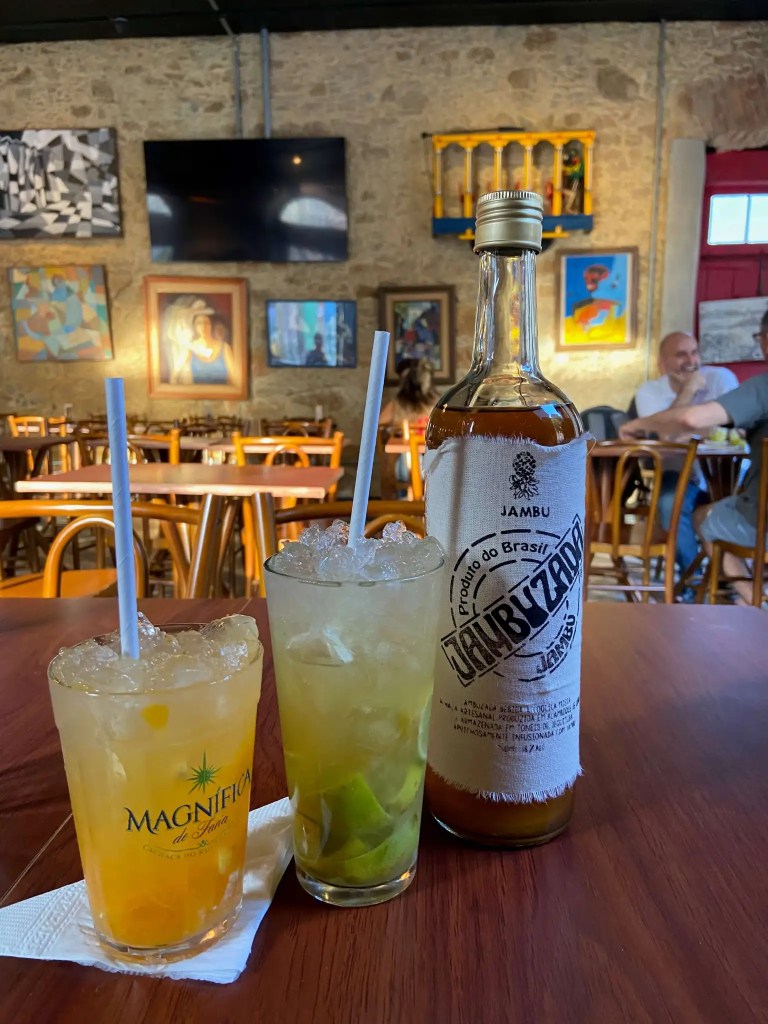
And if all of that wasn’t enough, a quick stop for caipirinhas in Santa Teresa led me to discover that whereas in England, bars suggest you “ask for Angela” if you’re feeling unsafe, in Brazil, you can order a drink called “La Penha”.
This drink name refers to the Maria da Penha law, passed in 2006 to protect women against violence. In the 80s, Maria da Penha survived two murder attempts at the hands of her husband (leaving her paraplegic). She spent 20 years campaigning for justice for women.
Final thoughts
Seeing so many iterations of women’s pain and hope for change was incredibly moving, and it made re-watching Un Violador en tu Camino even more poignant.
It also further contextualised the series I was listening to at the time, called Praia dos Ossos, which I wrote about in my 8 podcasts that will improve your Portuguese at any level post.
Perhaps this is a fairly atypical kind of sightseeing for most, and it can be a heavy one, but I learnt so much in researching from the prompts I found all over the cities. Of course I did all the typical touristy stuff too, but this was something that made me feel like I’d really got under the skin.
What do you think of think kind of tourism? Is this something you do or that you might try?
Psst! If you liked this post, please give it a like below 😊👇!


Leave a comment