

At the this year’s Polyglot Gathering this June, I had the pleasure of meeting Ira, who teaches Russian on her Youtube channel called In Simple Russian.
As someone who has never even approached any Slavic language or the Cyrillic alphabet, I accepted the challenge of attempting to read Cyrillic successfully in the space of 50 minutes, or what Ira described as “a quick video”… 😂
I felt the burn of a language newbie, which was a great reminder of the brain pain you get when trying to tap into a new language family. I really enjoyed the session, learnt a lot and boosted my curiosity for a language I previously knew nothing about! Or as a grammar pedant might say: about which I knew nothing.
As a total newbie to this linguistic party, I thought I’d share 7 things that I didn’t know about Russian and Cyrillic:
7 things I didn’t know about Russian and Cyrillic
The Cyrillic alphabet is used for more than 50 languages
Cyrillic is currently used exclusively or as one of several alphabets for more than 50 languages, notably Belarusian, Bulgarian, Kazakh, Kyrgyz, Macedonian, Montenegrin (spoken in Montenegro; also called Serbian), Russian, Serbian, Tajik (a dialect of Persian), Turkmen, Ukrainian, and Uzbek.

Russian rivals the English language in usage in some countries
As Jakub Marian explains, in Estonia, Latvia, and Lithuania, and even in the rest of the former Eastern Bloc, Russian is not lagging much behind English. However, recently, countries such as Latvia and Estonia have set linguistic exams to force their resident Russians to prove competence in the countries’ languages.

Russian shares a fair few letters with other alphabets
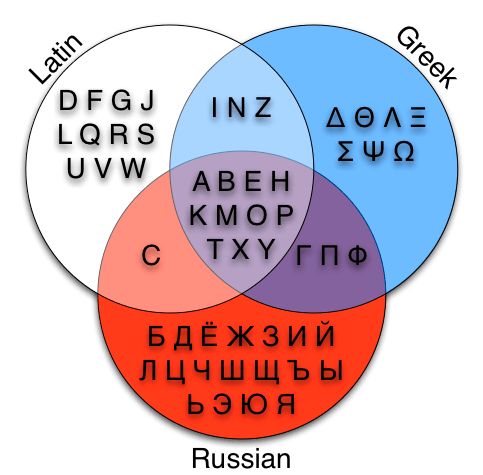
As a child I spent many summers in Greece, and upon mentioning my interaction with Ira to my brother recently, he mentioned that surely Greek and Russian shared the same alphabet?! Not quite. There are similarities, but Russian, Latin and Greek cross over as much as they feature their own distinct characters:
The Cyrillic alphabet is larger than the English one
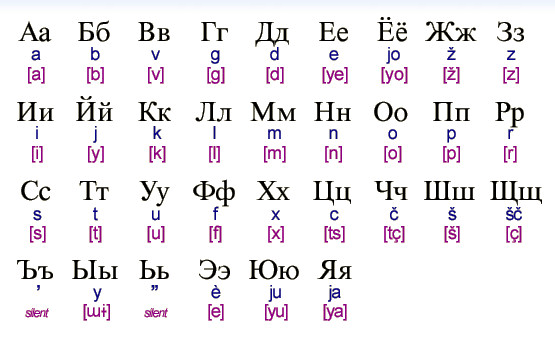
The Cyrillic alphabet has 33 letters – 10 vowels, 21 consonants, and 2 which don’t represent any sounds.
Russian is an Indo-European language
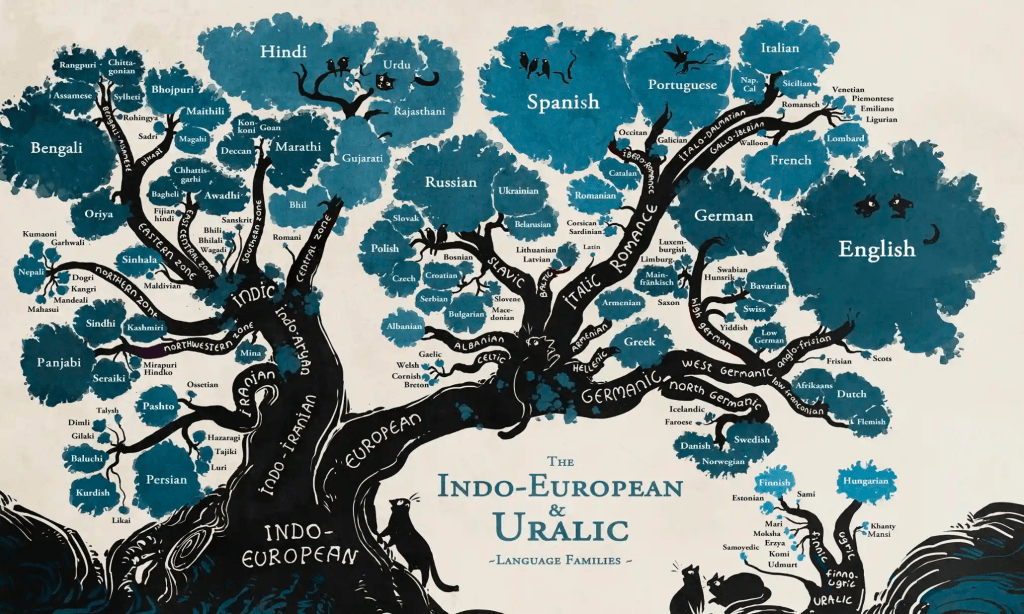
Whilst to my Romance-language-obsessed eyes, Cyrillic looks very different to me, it’s still part of the Indo-European family and shares characteristics with other languages I know!
The Russian language consists of around 200,000 words
The English language has over 1,000,000 words, by comparison. This means that many Russian words have multiple and different meanings in different contexts.
Russian words have made it into the English language
There are many Russian words in the English language; the most recognisable include: balaclava, mammoth, pavlova (ok, from a surname, but still), tsar, intelligentsia, parka, yurt and more.

Ira has made multiple videos as we covered ALOT!
Here’s Part 1:
Part 2:
And finally, part 3:
Have you tried learning Russian or another language that uses Cyrillic? How did you find it?


Leave a comment