
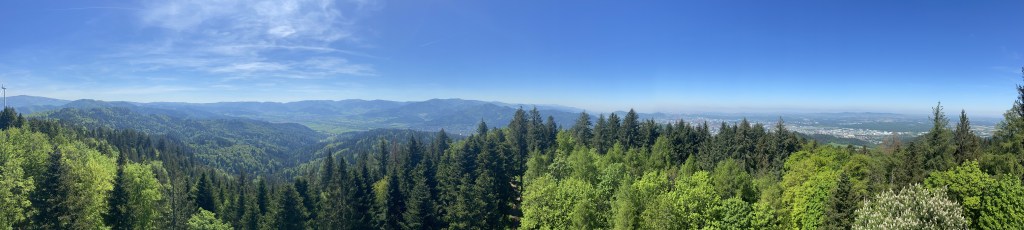
I spent a year living in Ghent in Belgium some years ago, as part of the European Solidarity Corps. You can read more about this in my Work abroad with no experience: 7 reasons to participate in the European Solidarity Corps post, and I recently returned to Ghent to visit a friend and to rediscover the city.
If you’re a fan of the Danish and Norwegian concept of “hygge,” but your wallet won’t permit a visit to pricey Scandinavia, Ghent has the perfect alternative: “gezelligheid” or “knusheid,” which refer to snug, upbeat and warm conviviality. Ghent is great in the summer and thanks to delicious beers, cosy bars, warm cafes for hot chocolate and waffles, you can get that “knus” feeling in autumn and winter.
First things first, I highly recommend you pick up this leaflet as soon as you spot it when you hit a tourist stand. It’s got loads of great recommendations for young travellers in particular.
Now here’s a list of my favourite Ghentian activities, most of which I did during a recent weekend in Ghent. The city is so small that you can fit a lot in over a short period.
Walk along Graslei and Korenlei
Graslei and Korenlei (referring to the two sides of the canal) made up the commercial centre of Ghent in the days of old. Graslei means “street of herbs and vegetables”, and Korenlei means “street of wheat,” referring to the products stored in these areas.
This is a great spot for a beer or ice cream, whether in a cafe, or perched canal side, weather permitting!


Take a boat trip through the canals

Book a boat trip with any one of the companies dotted around the city; most of them hang around on the Graslei waterfront.
You’ll get a thorough history lesson and will quickly orientate yourself.
See the van Eyck brothers’ Adoration of the Mystic Lamb – through AR
The Sint-Baafs cathedral is home to a piece of art with the most extraordinary history. The Adoration of the Mystic Lamb, by Hubert and Jan van Eyck, is the world’s most stolen artwork. It has been burnt, forged, and raided in three different wars. For the full fascinating story, followed by a close-up viewing of the incredible piece, you can book a 40 or 60-minute augmented reality tour for 16€ here.


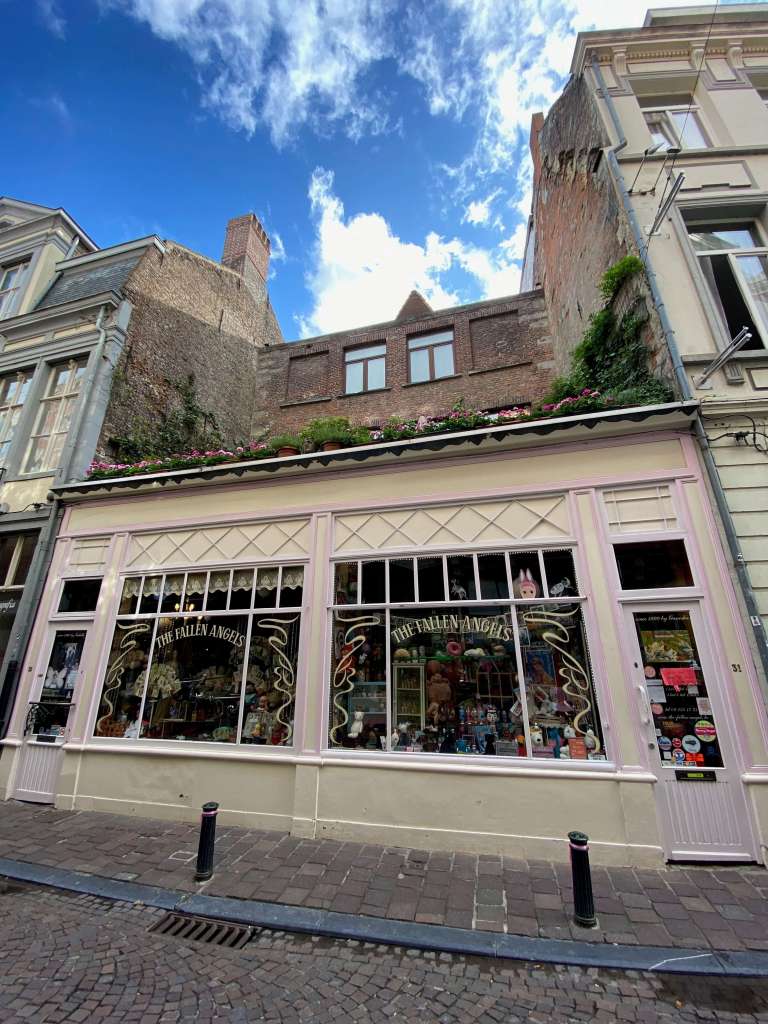
Browse the bizarre delights of The Fallen Angels shop
If you’re looking for a pang of nostalgia, head to The Fallen Angels for every manner of bizarre object, from creepy dolls, to wistful posters and postcards, and anything else the owner orders in on a whim.
Walk under the Stadshal
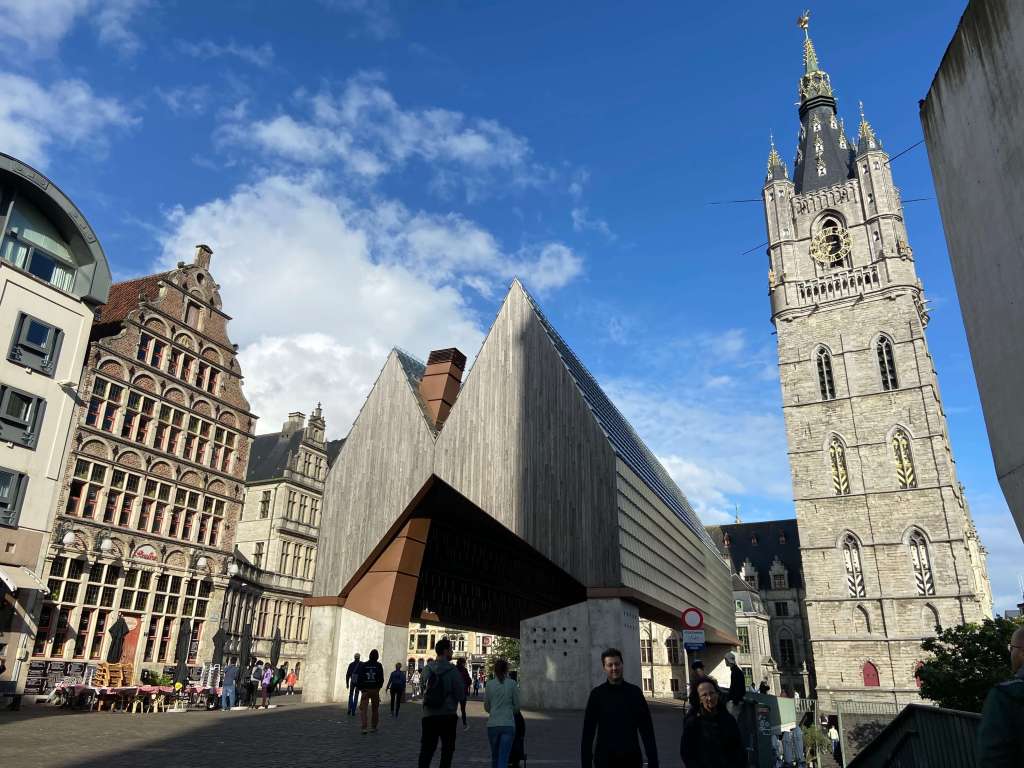
Some of the locals refer to this modern building as “the sheep shed.” It caused quite a stir when proposed, as its style is in stark contrast to the ancient buildings surrounding it.
There are two things it is great for. Firstly, the acoustics make it a popular spot for buskers, and secondly, it’s regularly used for public events, as it eliminates the “weather permitting” precariousness of event management in rainy Ghent.
Stroll through Patershol
Patershol is the ultimate part of the city for a true Ghentian experience. Cobblestone streets, medieval buildings and quirky cafes and bars make this a delightful place for a summer stroll.

Visit the Kunsthal art space

This thirteenth-century Caermersklooster monastery in Patershol now hosts art exhibitions, which are constantly changing.
Anyone can apply to have their artwork displayed in some exhibitions, making it a wonderful opportunity for aspiring artists.
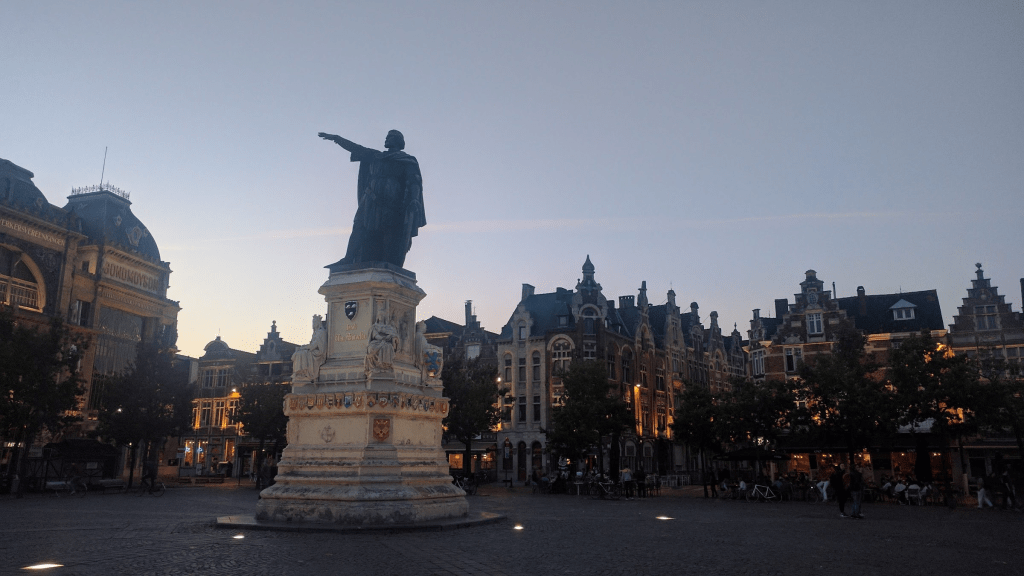
Stop off at Vrijdagmarkt
Vrijdagmarkt is a very large square that features a central statue of Jacob van Artevelde. Artevelde was instrumental in undoing the boycott of English wool imports during the Hundred Years’ War between England and France.
Hailed a hero with the revival of the Ghent textile industry, in 1345 he was murdered during a riot. Since 1863 his statue in Vrijdagmarkt has been pointing toward England.
Check out the graffiti version of the Adoration of the Mystic Lamb

Walk onto Saint Michael’s bridge and look south down the canal. You’ll spot this piece on a building to the left of the canal, opposite Saint Michael’s church.
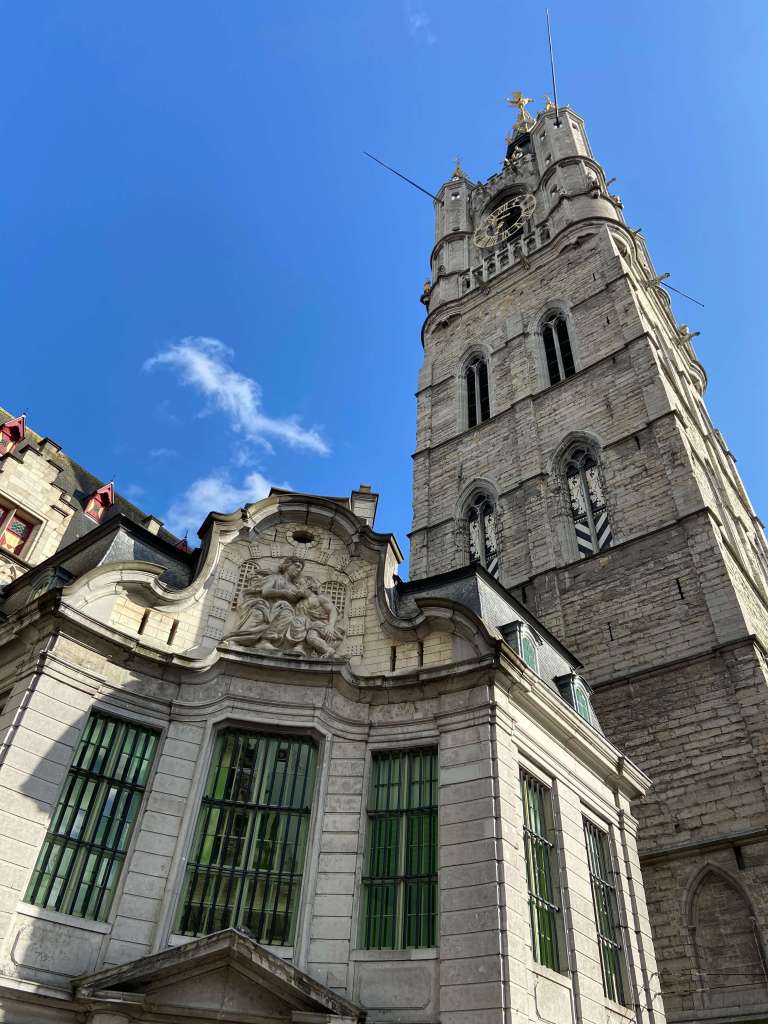
Climb the Belfry
Climb the Belfry for the best views of Ghent, and to meet the dragon at the top, who guards the city. Individual standard tickets cost 11€, with many cheaper options available for a number of concessions, from being a student, teacher, or simply 25 or younger.
The building next to the Belfry (pictured) is called Mammelokker (meaning “breastfeeder”), due to the sculpture the building displays, believed to have been built in 1741.
In this legend, Cimon is an old man who is in prison and condemned to starvation. His daughter Pero is allowed to visit him, but may not bring him any food. She saves her father from starvation by suckling him in jail. Pretty grim.
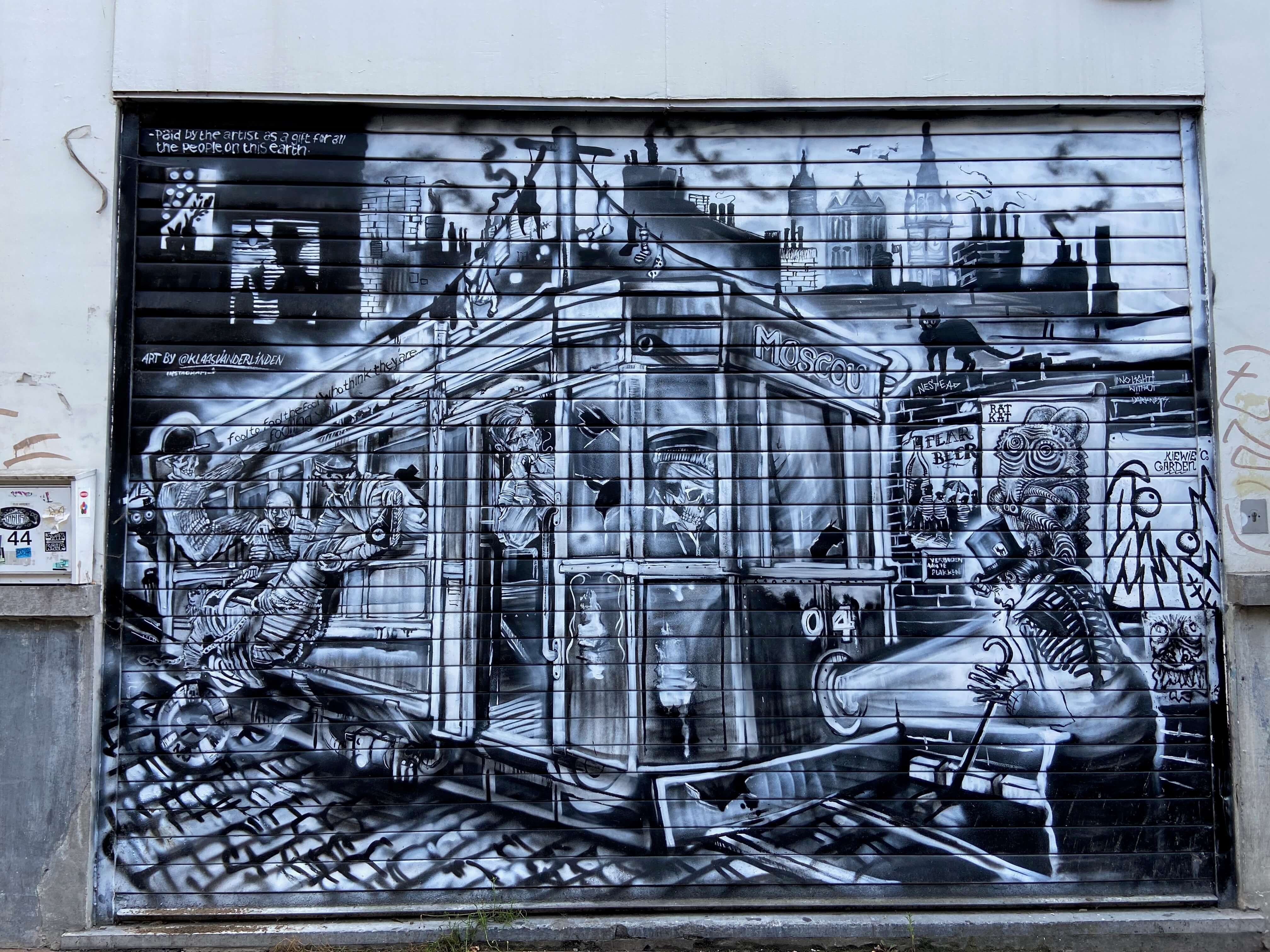
Visit the graffiti street
This is a legal graffiti space that is open to anyone. This means that it’s constantly evolving; there’s plenty of terrible stuff amongst some cool pieces too.


Marvel at the contrasting town hall
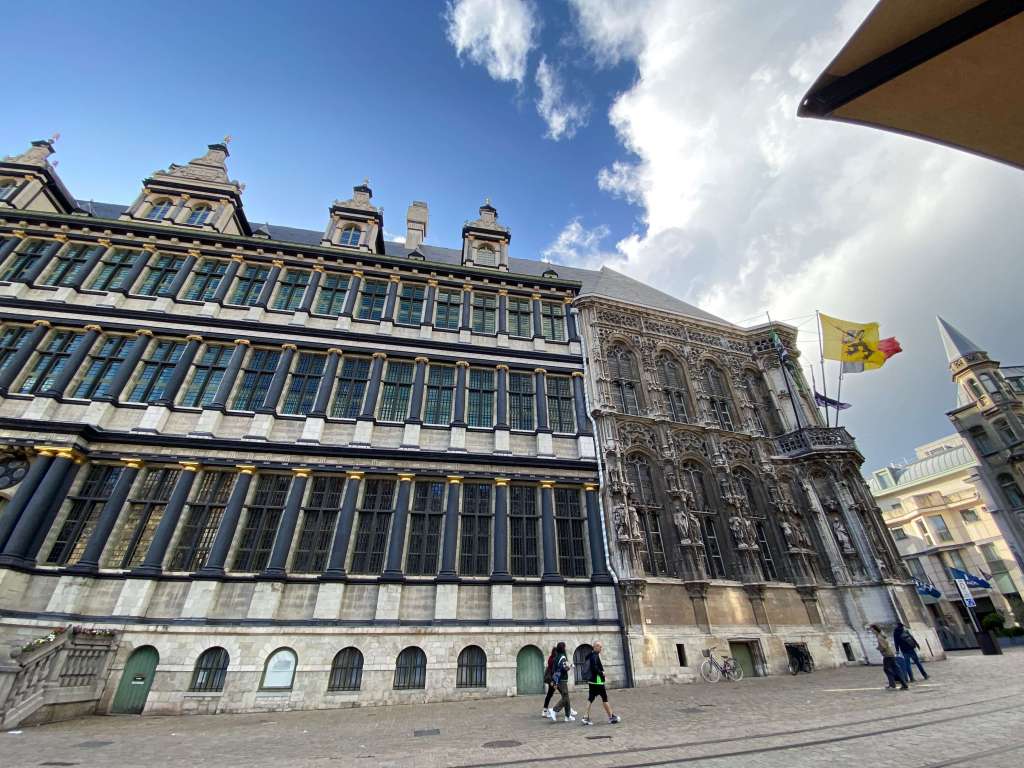
The town hall is often described as “schizophrenic,” given its contrasting architectural styles, made up of the Late Gothic style that dates from the early 16th century on the right, and the Renaissance style on the left. It even features a blue and white candy-cane style drainpipe down the middle!
Catch the sign of a baby being born
If you head to Sint-Veerleplein and happen to see the streetlights flash once, then it’s because a baby has been born in a Ghentian hospital, and its parents have pressed a button to announce it to the city!
This is a permanent installation created by Italian artist Alberto Garutti, under the name Ai Nati Oggi, meaning “to those born today.”

Attend Gentse Feesten

Gentse Feesten is an annual music and theatre street festival that lasts 10 days in late July.
Dating back to 1843, it is free and has since grown to become one of Europe’s three biggest popular festivals, along with Oktoberfest in Munich and Fallas in Valencia.
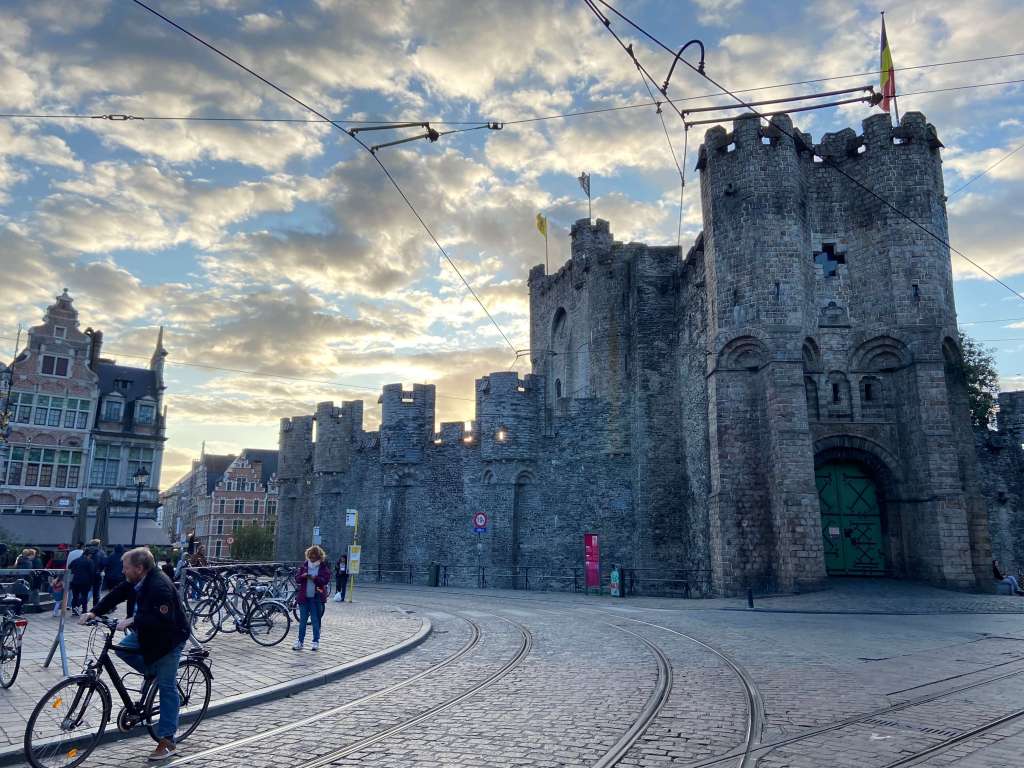
Visit or marvel at Gravensteen castle
Gravensteen castle is best enjoyed from the outside, particularly the water, if you fancy canoeing round it.
If you’re a castle enthusiast, you can visit the inside for 13€ or less.
Listen to jazz at Hot Club

Hidden down a dark alleyway is Hot Club de Gand, which hosts a different free jazz night every night of the week.
Monday is improv night, Tuesday features international musicians, Wednesday is avant-garde, and the list goes on. Shows start at 21:00 but get there earlier to grab a seat and a beer before the place fills to the brim.
Swim in Blaarmeersen lake
If you happen to visit Ghent when it’s really hot, Blaarmeersen is a great place to cool down. Rent bikes and cycle through a pretty wooded area.
I spent the summer chilling lakeside when I lived in Ghent. It’s no Lake Geneva but it’s still great for a refreshing swim.
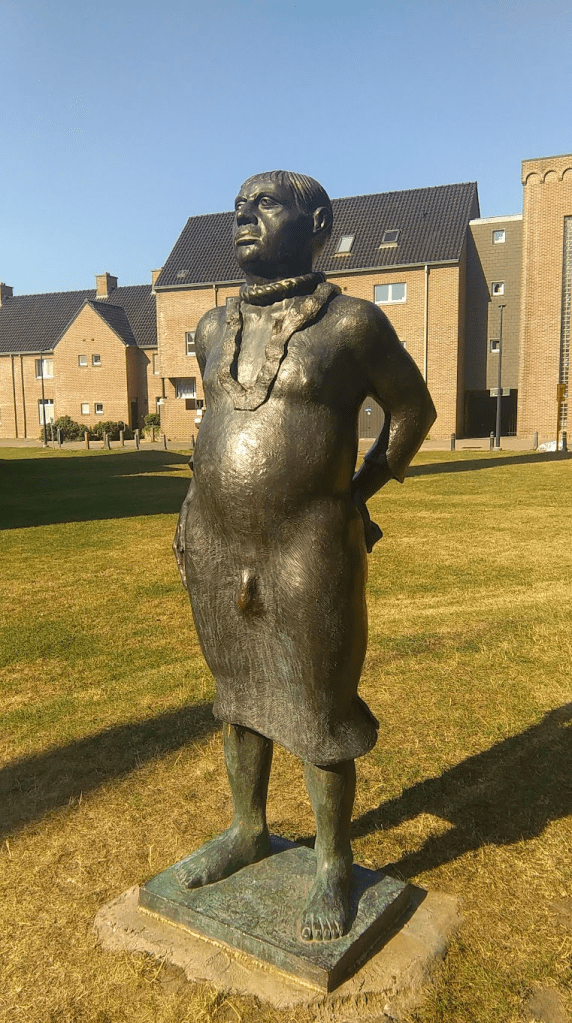
Visit the “noose bearer”
Find the “stroppendrager” or “noose bearer” statue on the border of Rabot neighbourhood. This figure represents those who revolted against taxes imposed by Emperor Charles V in the 16th Century.
After the revolt, Charles V had a number of dissenters walk through the streets in their undergarments with nooses tied around their neck. This earnt the Ghentians a reputation as resistors of tyranny and misplaced authority.
Visit Saint Nicholas’ church
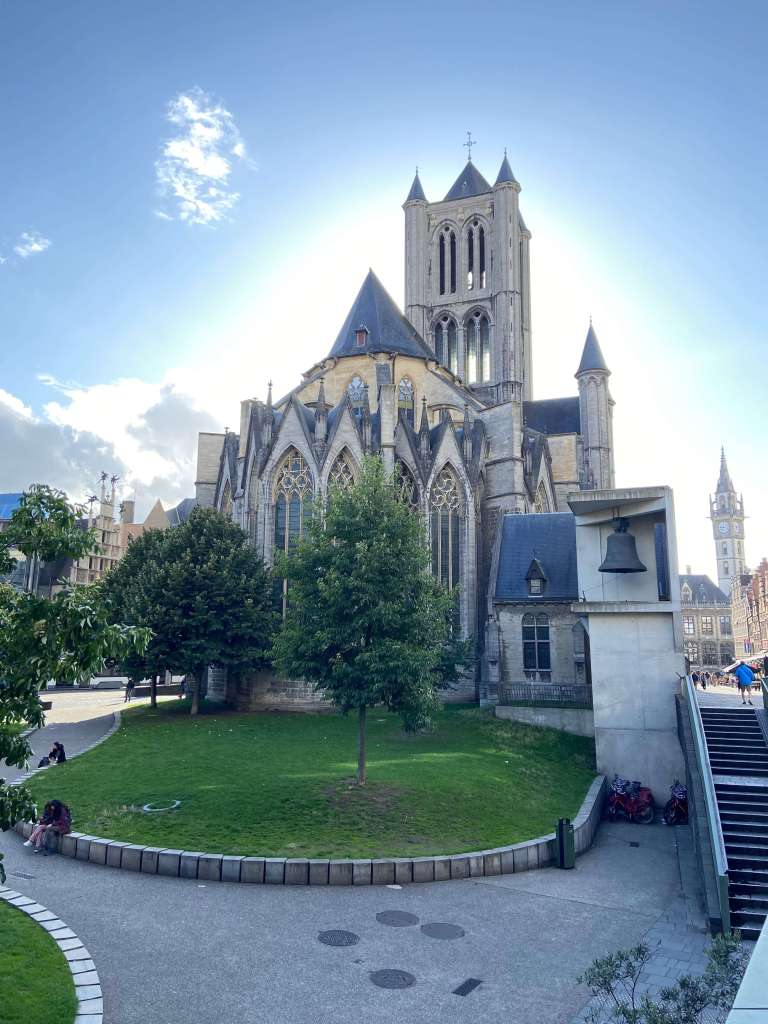
Saint Nicholas’ church is one of the oldest and most prominent landmarks in Ghent, dating back to the 13th century.
The bell displayed to the right of the church is called “The Triumphant” or “Roeland,” which was originally in the Belfry. The bell cracked in 1914 and was removed from the Belfry and restored.
Drink beer
Ghent’s beer scene is sensational.
See my Where to eat and drink over a weekend in Ghent: 20 cafes, bars and restaurants post for my favourite watering holes.

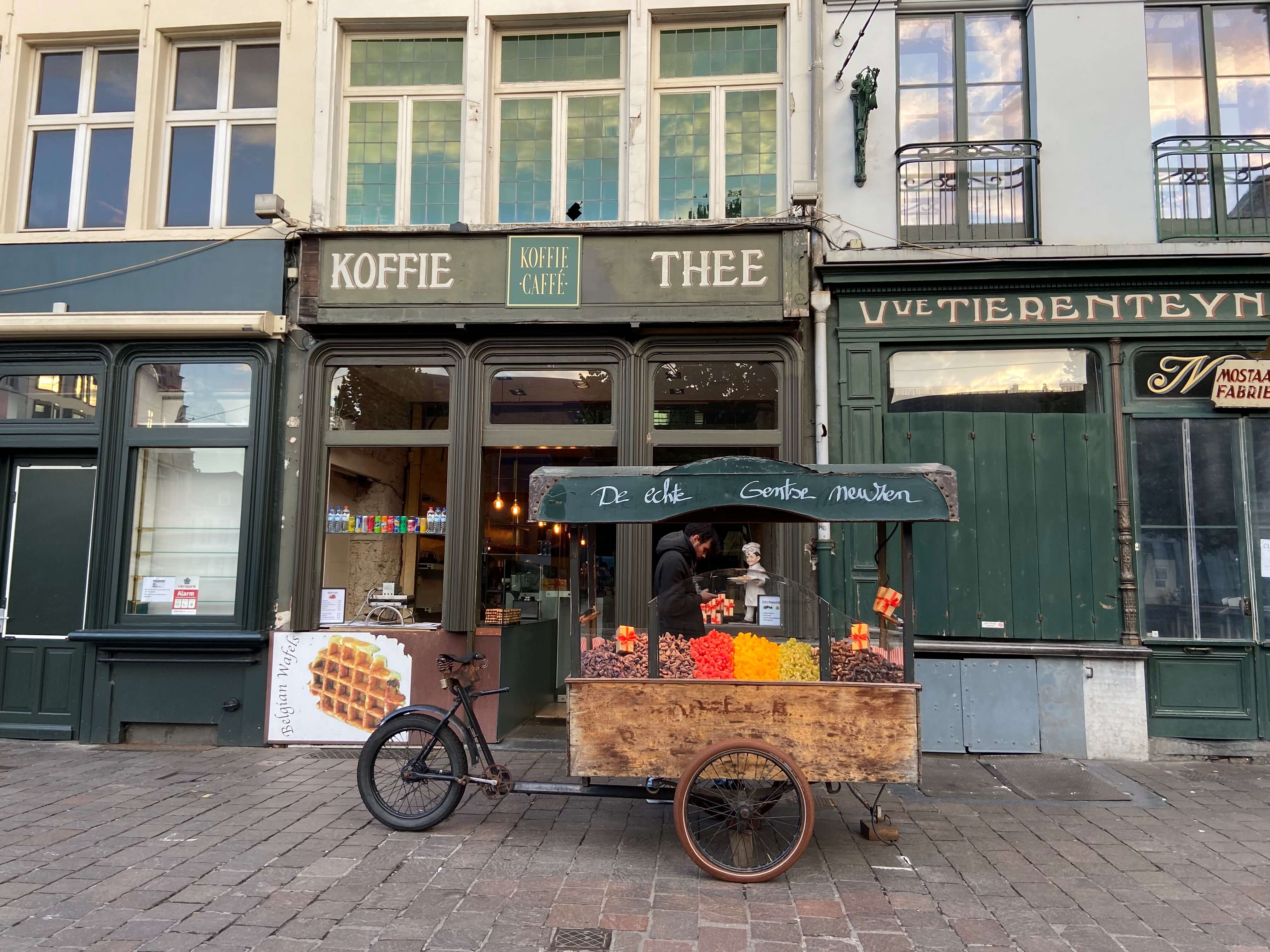
Eat cuberons / “neuzekes” (little noses)
Due to the shape of these colourful sweets, they’re affectionately referred to as “little noses.” As such, when a conflict between two vendors developed and escalated extraordinarily, the ruckus was coined “the War of the Noses.”
Two rival vendors spent 8 years at each other’s throats, to the point that the Mayor of Ghent had to step in. Sick of the gossip, buckets of water thrown, cart highjacking and more, eventually the courts hit one of the vendors with a fine, a demand to pay damages to the other vendor, obligatory attendance at a self-control course and even a conditional prison sentence. Read the story in detail here, and the final outcome here.
The purple cuberdons are the original sweet; they’re hard on the outside and soft on the inside. The most popular way to eat them is to bite the top off, then suck out the juicy centre. Find one of the vendors in the Groetenmarkt.

For a proper snapshot of Ghent in all its glory, check out this video:
Have you visited Ghent? Did I miss anything? Comment below!


Leave a comment