

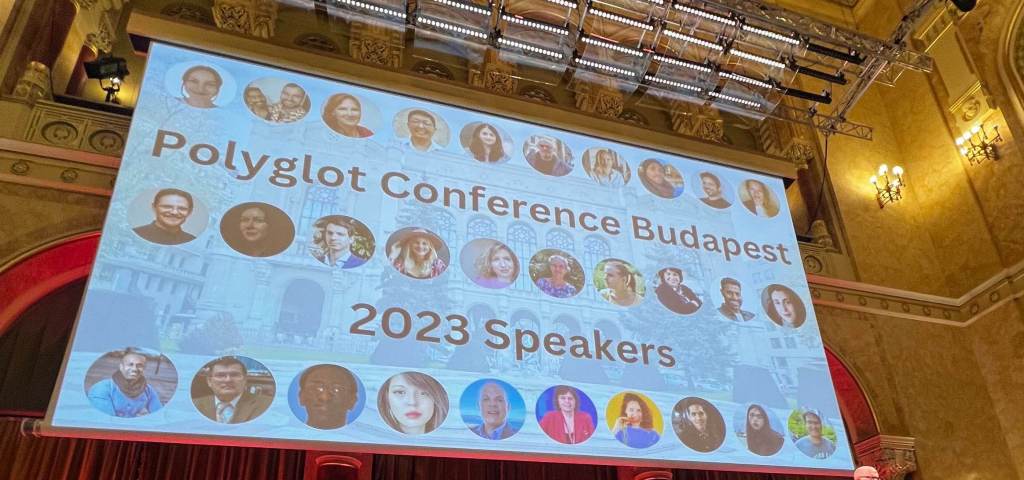
Last week I returned from Budapest, where the 10th anniversary of the Polyglot Conference took place. Despite being a relative newbie, I felt like I’d always been a member of the language and polyglot community. Amongst some familiar faces and recently forged friendships from the Polyglot Gathering in Poland this June, I also enjoyed meeting many new people.
If you’ve been watching the language community from the sidelines, but haven’t yet dipped your toe into a language event (whether in-person or online), well, perhaps it’s time! Here’s a list of the wonderful things you can expect from getting involved.
Whilst some of the benefits I’ve listed are specific to attending an in-person event, most of them also apply to online events too:
You will learn new things
Whether it’s by attending talks or chatting to people in the breaks or in the down time, you’ll learn so much about language, other people’s projects, skills, lives and more.
You can practise virtually any language with others
Whether you want to practise more commonly spoken languages such as French or Spanish, or a less represented language, from Kazakh, to Bulgarian or Persian, you’ll find speakers to practise with.
At the Polyglot Gathering in particular, there’s always a language tables area, with an hourly rotation of languages. You don’t even need to ask someone what they speak before you start a conversation; just check their language badge and crack on!


You will have the opportunity to travel
This one’s for in-person events! I know lots of participants who, if they’re travelling to a different continent in particular, will use a language event as an excuse to do a tour of the host region. So far, I’ve discovered some European cities that I hadn’t visited before, which is always a pleasure.
You will be inspired to create
At any language event you will meet lots of creative people! There are bloggers, videographers, podcasters, event organisers, teachers and more, who may well inspire you to start that project you’ve had on the back burner.
Every wondered how much time it actually takes to create a Youtube video from start to finish? Or what kind of equipment you need to start a podcast, without breaking the bank? How about how to maximise the reach of a blog, or how to create a really engaging talk or launch a language course? If you can think of it, someone at one of these events will be able to help. Check out my 8 brilliant women in the language community who will inspire you to launch that project you’ve had on the back burner post for a taster of this.
You will gain opportunities to collaborate
So many people who attend language events work in the languages industry, or have language side projects, which results in a lot of collaboration between attendees, both at the event and beyond.
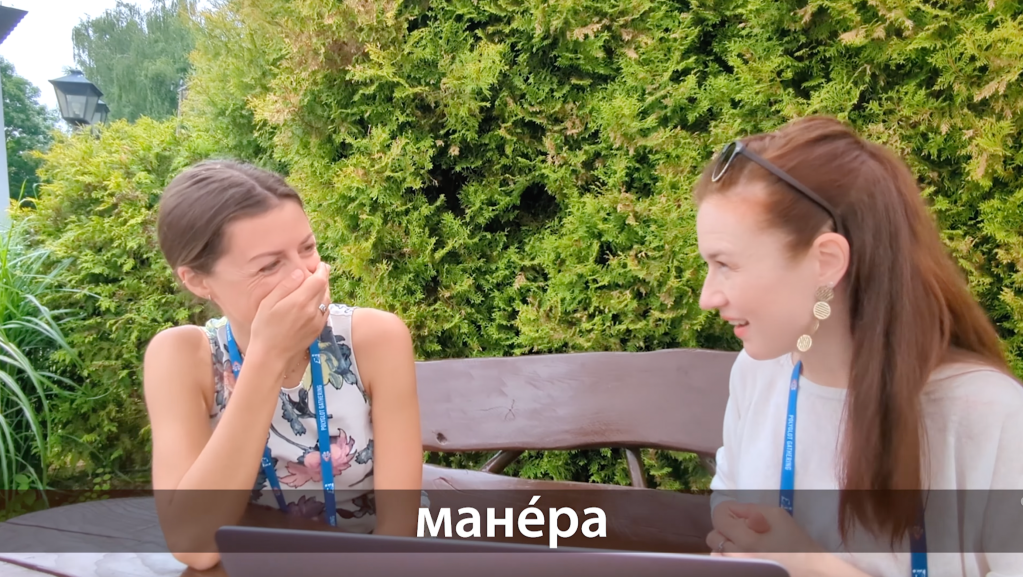
Ira of In Simple Russian Youtube channel taught me to read Cyrillic in under an hour in Poland!
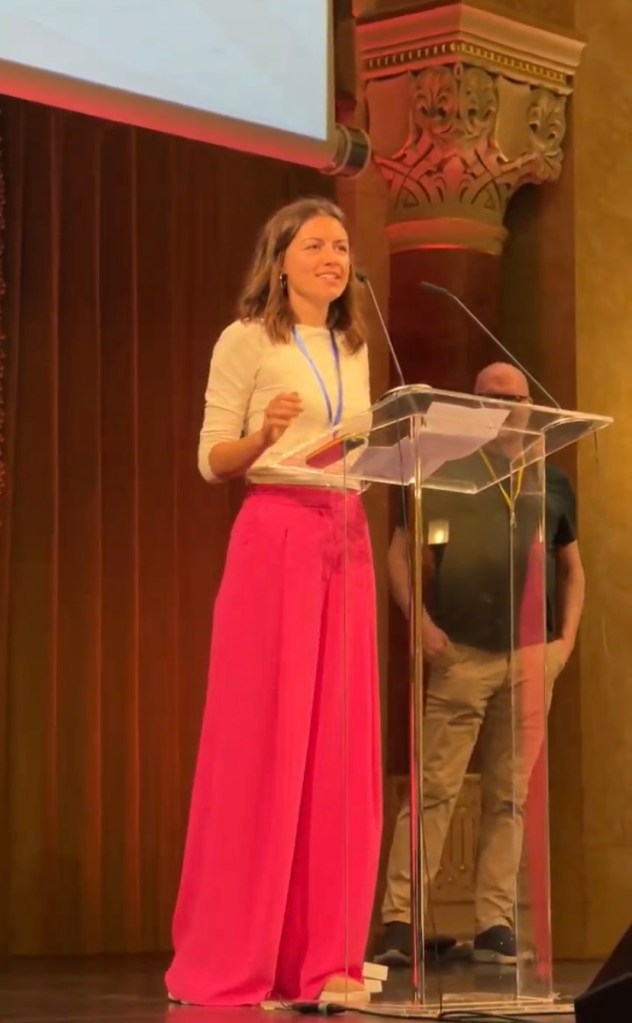
I was lucky enough to be part of the organising team of the 2023 Polyglot Conference, which gave me the opportunity to interview four really inspiring women in the language community for the Wise Words of Women series of the Polyglot Conference Global event: Lindsay Williams, Kerstin Cable and Shannon Kennedy of Women in Language, and Shahidah Foster of Black Girls Learn Languages.
Your ideas will be heard
At the Polyglot Gathering in June, I gave about talk that – amongst other things – made suggestions on how to recruit a greater variety of voices in speaker line ups at language events.

Off the back of this, Richard Simcott – the organiser of the Polyglot Conference – invited me to contribute to his event. I accepted, of course. Along with Judy Um (another polyglot keen on this topic), we put a variety of things in place to transform the 10th anniversary of the Polyglot Conference.
If you feel you’d like to see a change, speak up!
If this topic interests you, check out the blog post version of my talk entitled Why the majority of well-known polyglots online are men, and what we can do about it; the video recording of the talk will be published on the Polyglot Gathering Youtube channel in due course.
You will have the opportunity to hone your public speaking skills
If you’ve always wanted to try out public speaking, but feel nervous about it, or simply have knowledge you’re keen to share, the language community is such an open and non-judgemental space and is a great place to cut your teeth.
If you want some guidance on how to go about putting together a talk, check out my How I prepared to give a talk at this year’s Polyglot Gathering and what I learnt from it.
You can swap language learning techniques (and fails!)
This one’s really useful, and is something you can do at the event and beyond. For example, I met Maria Spantidi at the Polyglot Gathering, where I learnt about her book called Fluent for Free, which has since given me soooo many language learning tips.
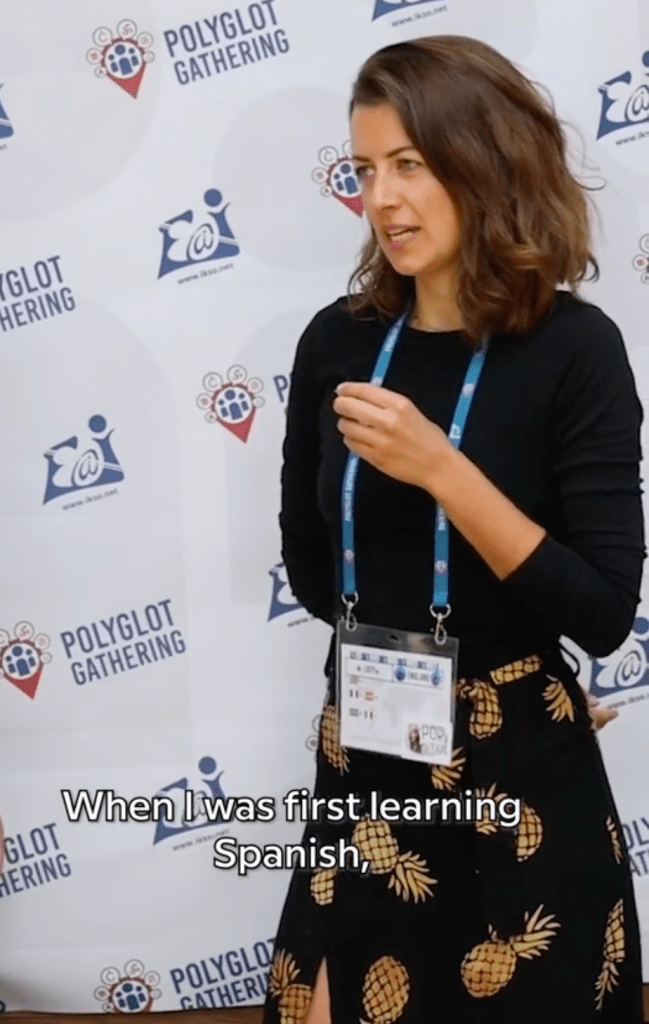
And swapping fail stories is always fun…! Check out this Tiktok video of me sharing one of my embarrassing learning fails with the Babbel team.
This is by no means my worst one… You can read more of mine in my How to deal with embarrassing language errors: make them into a good story post.
You will be free to be unapologetically yourself
The polyglot community is an incredibly inclusive space, where a high proportion of members are neurodivergent. There are many theories as to why this is the case (which I won’t go into now); the result of this is an acceptance of difference and the continual pursuit of what unites us, as well as an appreciation of what we can learn from people who are different from us.
You will make lifelong friends
At this year’s Polyglot Conference there were some great social events in the evenings, where locals gave us different options for eating traditional Hungarian food, going dancing, or chilling in a bar space. These moments are always a great time to talk through the day’s presentations and to bond further.
If you want to meet people who share your passion for languages and make lifelong friends, then a language event is for you.

FAQs
What’s normally included in the ticket price?
Most participant tickets grant you entry to the event only, with the exception of the Polyglot Gathering, where you can add accommodation and food onto your ticket order for an extra fee.
Some online events are completely free for a limited period.
Do many people attend the in-person events alone?
Yes, lots! Newbies are always embraced. However, you will get access to the chat groups on Telegram for events like the Gathering and the Conference, where you can coordinate with other participants if you’d like to travel together.
If I speak at one of the events, will I get a free ticket?
Each event has a different policy, so check the details carefully. For example, the Polyglot Gathering provides a speaker discount, but this is issued as a refund, so expect to pay full whack up front.
Are all talks recorded?
Each event has a different format. Women in Language provides a safe space, meaning that only ticket holders can access talks, and as such the videos are never made public. Only a select few talks at the Polyglot Gathering are recorded and later published on Youtube; the rest are enjoyed by in-person participants alone. The Polyglot Conference records and shares all talks on Youtube.
Can I just attend part of the event?
Yes! Some events have a flat fee regardless of how many days you attend, whereas other will take this into account. Check the details of each event.
If this has inspired you to get involved, check out my Language events for your 2023-2024 diary post, whether to submit a talk idea or to buy a participant ticket at one of the many events still ahead of us in 2024!


Leave a comment