

Perhaps you’re keen to learn a foreign language for the first time or are already bi- or trilingual, and you want to dip your toe in the Latin language pool.
In this post I will talk about the different features of French, Italian, Spanish and Portuguese, from the perspective of a native English speaker, or any other English speaker who does not speak or who has not learnt a Latin language before. The reason for this is that once you’ve learnt one Latin language, learning another becomes a lot easier, but that doesn’t mean that the first one is simply “easy.”
This article focuses on the process of getting from beginner level to B1-B2 level, as comparing the languages in terms of which easiest/hardest to master or perfect (C1-C2 level) can be a different conversation.
I’ve divided my analysis of the four languages in different areas and offer my “hot take” on each one:
- Vocabulary
- Pronunciation
- Grammar
- Available resources and language communities
- Native speaker tolerance
- Script
- The results are in…
Vocabulary
French
Similarities to English: French shares many cognates with English, especially in fields like art, literature, and science: palette, musée, ballet, biologie, télévision, poésie, littérature.
Difficulty: The unique pronunciation and accent system of French can make vocabulary recognition challenging for English speakers. It’s common for French native speakers to struggle to comprehend learners’ pronunciation of French words that we use in English, due to anglo interference of words like: “naïve,” “décor,” “lingerie,” or “déjà vu.”
French also features many homophones (same sound, different spelling), which require listeners to piece together the context of a conversation to identify the word behind the sound. Examples include: l’amande (almond) / l’amende (fine), cent (100) / sang (blood) / sens (meaning/direction) / sans (without).
Spanish
Similarities to English: Spanish has numerous cognates with English, particularly in technology and daily life. It’s worth noting that in some Latin American countries, there is a stronger link with English than in Spain with some vocabulary: car = carro (LA) vs. coche (ES), computer = computadora (LA) vs. ordenador (ES), to park = parquear (CO) vs. aparcar (ES), lunch/light meal/snack = lonche (MX) vs. comida/almuerzo (ES).
Difficulty: Sometimes the importation of so many anglicisms into Spanish can feel awkward for English speakers, but words like “marketing,” “internet,” and “golf” must be pronounced in a very un-anglo way.
Italian
Similarities to English: Italian shares many cognates with English, and English has borrowed many Italian words, especially in music, art, and food: ristorante, lasagna, opera, maestro, studio.
Difficulty: you have to pronounce every syllable in Italian, which means that words can often be quite long: subscription (3) = sottoscrizione (6), self-determination (6) = autodeterminazione (9), survival (3) = sopravvivenza (5), geography (3) = geografia (5).
Portuguese
Similarities to English: Portuguese has fewer cognates with English compared to the other three languages. However, there are still some similarities, particularly in technical and scientific terms: universidade, informação, laboratório, hospital.
Difficulty: Brazilian Portuguese specifically has a very varied vocabulary, thanks to the linguistic diversity present in the history of Brazil. For example, the word Ipanema, referring to the famous Rio beach, is Tupi for “stinking lake.” The delicious sugar cane spirit called cachaça (in a caipirinha) originates from the Quicongo language. And this doesn’t stop at proper nouns. There are many words of foreign origin like moleque from Kimbundu (naughty boy), abacaxi from Old Tupi (pineapple), and words of Latin origin that we simply won’t recognise as English, Italian or French speakers, feature heavily in the language: esquecer (to forget), cachorro (dog), jeito (way).
MY HOT TAKE: EASIEST VOCABULARY: Spanish // HARDEST VOCABULARY: Portuguese
Pronunciation
French
- guttural “r”: the French “r” doesn’t exist in English and in my opinion is harder to master than the rolling “r” that exists in Spanish and Italian. It’s particularly hard to pronounce at the beginning of words: regarder, rouge, raison.
- 4 nasal sounds: learning to distinguish between these four – present in the sentence un bon vin blanc – is crucial for comprehension. For example, vont (they go), vent (wind) and vin (wine) and thon (tuna), temps (time/weather) and teint (complexion) are often confused.
- é, è and e: the accented Es are called accent aigu and accent grave, and they sound very different from each other and from the regular e. Sometimes all three feature in the same word: préfère, élève. These sounds also play a part in tenses. Depending on where you learn your French, you may or may nor hear a distinction between the ending of the present prefect: j’ai parlé and the imperfect: je parlais.
- dangerous liaisons: the rules for when to link French words and when not to are extensive, and are categorised as 1) required 2) optional 3) forbidden. For example: 1) les‿anciens‿étudiants, 2) les‿hommes‿arrivent / les‿hommes☒arrivent 3) Jules et☒Isabelle.
- the “pn” and “ps” letter combinations: the “p” is pronounced in such instances in French: pneu = wheel, psychologie, something quite unnatural to native English speakers.
- phonetic inconsistency: the general rule in French is that you don’t pronounce the last consonsant of a word, like in tabac (tobacco), bout (end) and amis (friends), but there are plenty of exceptions, like in parc (park), but (aim) and tennis. You just have to learn these.
- masculine possessive adjectives go with feminine nouns that start with a vowel or muted “h”: for melodic reasons, feminine possessive adjectives become masculine before vowels or the muted “h”: mon amie, ton experience, son horloge, mon opinion.
Spanish
- rolling “r”: this can be a challenge to master, though the best instruction I’ve heard is from Benny Lewis, who suggests saying the word “butter” in an American accent, and extracting the “tt” sound from that.
- knowing where the stress of a word is: accents really help with knowing where the stress of a word is: último, música, sábado, inglés, for words without accents (called tildes in Spanish), there are a series of rules to work out where to put the stress in a word, but I personally found it easier to memorise this from listening to Spanish speakers.
- the Spanish v: this letter is pronounced halfway between an English b and v, and requires a fair amount of practice. Try saying el vestido violeta de Valentina era elegante.
- the Spanish j: this is quite a phlegmy letter that you really have to lean into! The letter combinations “gi” and “ge” produce the same sound. Try saying Jorge jugó al fútbol con su gemelo y una girafa en el jardín.
- masculine indefinite and definite articles go with feminine nouns that start with a stressed vowel or muted “h”: in Spanish, for melodic reasons, feminine possessive adjectives become masculine before stressed vowels or the muted “h”: el hacha, el alma, el águila, el arma. Any accompanying adjectives retain the feminine: el alma hermosa (the beautiful soul), and in the plural, the feminine definite articles is used: las almas hermosas (the beautiful souls).
Italian
- rolling “r”: like Spanish, Italian has a rolling “r”, which can be challenging for English speakers.
- the “gli” letter combination: this sound doesn’t exist in English. It comes up as a single word a lot; it’s a plural definite article for some words: gli studenti, gli amici.
- stress: most Italian words are stressed on the penultimate syllable: professore, bambino, amica, but there are exceptions: microfono, sabato, telefonano, città, così.
- pure vowels: unlike in English, Italian vowels are not diphthonged (two sounds together do not create a new, unique sound). For example, the vowels in the word aiuola (flowerbed) are all individually pronounced.
Portuguese
- triphthongs: a triphthong is a combination of three vowel sounds in a single syllable. These are common in Portuguese, but very rare in English: quão (how), iguais (same – plural), averiguei (I found out).
- nasalisation: many vowels are nasalised in Portuguese: an example is “ão” in pão, meaning “bread.” Get pão wrong, and you’ll end up saying “penis” – pau.
- vowel sounds: there are a lot more vowel sounds in Portuguese than there are in English. For example, some learners find mastering the difference between avô (grandfather) and avó difficult (grandmother).
That Portuguese speakers can understand Spanish but Spanish speakers struggle to understand Portuguese speakers says a lot about how cryptic Portuguese pronunciation can be. When you see a sentence in Portuguese written down, it could be mistaken for Spanish. Off the page, however, it’s a completely different story.
💡One thing worth noting is that the same words in Spanish, Italian and Portuguese in particular are pronounced differently, with stress being a key part of this:
farmacia (ES); farmacia (IT); farmácia (PT)
estereotipo (ES); stereotipo (IT); estereótipo (PT)
policía (ES); polizia (IT); polícia (PT)
MY HOT TAKE: EASIEST PRONUNCIATION: Italian // HARDEST PRONUNCIATION: French
Grammar
French, Spanish, Italian and Portuguese all have the same features in some areas, including the subjunctive mood, inflected verbs (verbs that change based on tense, mood, gender and number), grammatical gender, an alternative word order to English (e.g. most adjectives go after nouns) and a few more features. There are of course some features that are unique to each language.
French
Auxiliary verbs: a small amount of French verbs take “to be” (être) rather than “to have” (avoir) as the auxiliary verb. Luckily, these are few, and can be memorised easily with the mnemonic Dr & Mrs Vandertramp.
Verb agreement: the agreement of non-reflexive verbs is relatively simply to master after about B1 level, whereby a verb that uses être as the auxiliary agrees (les filles sont allées à la plage) and a verb that uses avoir as the auxiliary does not agree (les femmes ont écrit plusieurs lettres), unless the object of the sentence precedes the verb, in which case agreement occurs (Les lettres que les femmes ont écrites sont longues).
💡It’s in these scenarios where you can end up with triple Es in French. This sentence is correct, even though it doesn’t look it: L’entreprise que j’ai créee il y a des années est mise en faillite = the business that I created years ago is bankrupt.
Yet, the agreement of reflexive verbs is a veritable nightmare in French, which even trips native speakers up. For most common phrases, the pattern is fairly easily cracked; check out this explanation by French School TV. However, once you get to C1 level, things get complicated. If you’d like to know more about this, and your French is good enough to follow in French, check out this excellent explanation by Grammaire Française Youtube channel on L’accord du participe passé des verbes pronominaux.
Tenses: French uses fewer tenses than Italian, Spanish and Portuguese. The past simple is only used in literature, and the imperfect subjunctive is obsolete in spoken French. You’ll need to recognise both if you are a keen reader, of course.
Spanish
Pluralisation: Spanish has the simplest form of the plural (of nouns and adjectives) compared to French, Italian and Portuguese. Like in English, you simply add an “s” to most words (un gato→dos gatos), and when a word ends in a consonant, add “es” (un árbol→dos árboles).
Prepositions with articles: unlike French, Italian and Portuguese, most Spanish definite and indefinite articles with prepositions are simple and remain in the same form as they are alone, with the exception of de + el = del. For example: soy de los Estados Unidos (I am from the United States); voy a la playa (I am going to the beach), but visitaremos la Costa del Sol (we’ll visit Costa del Sol).
Auxiliary verbs: Spanish only uses one auxiliary verb for all verbs: “haber.”
Italian
Auxiliary verbs: Italian, like French, has some verbs that take “to be” (essere) rather than “to have” (avere) as an auxiliary verb. For example, we say “sono arrivata” (I (have) arrived) but “ho finito l’esame” (I (have) finished the exam).
Grammatical gender: the rules for grammatical gender and quantity are less straightforward than the other Latin languages. Whilst plenty of regular rules exist, there are lots of exceptions and other peculiarities. For example: l’uovo → le uova (egg/s); l’uomo → gli uomini (man/men); il dito → le dita (finger/s).
Double object pronouns: these are quite bitty in Italian; all result in spelling changes: mi (to me), lo (it) → dammelo = give it to me. In the singular and plural third person, it’s even more of a mouthful: glielo, gliela, glieli, gliele, especially when combined with imperative verbs: to say “explain it to him”, you’d say: spiegaglielo.
Portuguese
The future subjunctive and the personal infinitive: Portuguese has two whole tenses that do not exist in the other languages; they are the future subjunctive (se você quiser = if you’d like) and the personal infinitive: (para chegarmos à estação, devemos correr = in order for us to get to the station, we have to run). Luckily, regular verbs are conjugated in the same way for both tenses, meaning that there’s just one other set of endings you need to learn, rather than two. There are of course different endings for irregular verbs (e.g. ser), which need to be memorised. Check out this explanation of the future subjunctive and of the Impersonal vs Personal Infinitive, both from Practice Portuguese.
Pronouns: It’s worth noting a significant difference between Brazilian and European Portuguese here when it comes to the use of pronouns. Whilst European Portuguese uses direct and indirect pronouns in a similar way featured in French, Italian and Spanish, for example: diz-lhe a verdade = tell him the truth, the direct object pronoun is avoided even when the noun is omitted, in favour of a more general “that” – isso → diz-lhe isso. The Brazilians circumvent even further, with a fala isso pra ele = tell him that/it. I personally find the Brazilian way much easier.
The verbs “to have”: Portuguese only uses ones auxiliary verb for all verbs: ter in Brazilian Portuguese and haver in European Portuguese. These are also used differently just to say “to have” in any tense. For example, Há leite no frigorífico (PT) versus Tem leite no frigorífico (BR) = there’s milk in the fridge. I recommend sticking with one or the other for simplicity.
MY HOT TAKE: EASIEST GRAMMAR: Spanish // HARDEST GRAMMAR: French
Available resources and language communities
French
In the UK, French has been the most common language taught in schools for time immemorial (though is now being edged out by Spanish). Combine with this the fact that it’s one of the main languages of the European Union, that means that a lot of people are constantly making new resources!
It being a very popular foreign language choice across different ages, there are a lot of great resources out there, whether graded readers or compelling podcasts specific for learners, not to mention the magic of French cinema and TV series and more.
Aside from the many published learning materials in the way of textbooks and workbooks, teachers are constantly innovating! If you google a French language point or topic and type in “language mat” or “worksheet”, you’ll find loads of high quality free material.
Plus, in most cities you will find at least one French exchange meet up group or event.
Unfortunately, France does monopolise the French-learning market a bit, meaning that if you’re learning the French of a different French-speaking country or culture, you’ll have to do more digging.
Spanish
Resources for Spanish are ample, varied, and really high quality. It’s great to be able to find so many materials for the many different Spanish variants too, thanks to a strong global appetite for learning Latin American variants, as well as the castellano of Spain.
Spanish and Latin American cinema and TV are compelling whether you’re learning Spanish or not, and there’s a genre of music in Spanish to suit anyone’s taste. Learners are spoilt for choice with podcasts too, as well as graded readers and Youtube channels for learning Spanish.
Depending on where you make your money, Spanish schools across the globe can be one of the most economical options for attending a language school abroad. For example, it’s much cheaper to do an intensive Spanish course in Spain than a Portuguese course in Portugal, or a German course in Germany. Check out my 9 tried-and-tested ways to live your best short-term language immersion abroad post for ways to get the best deal for any language course abroad.
It’s also highly likely you’ll find a Spanish exchange group in your local city.
Italian
Finding Italian resources that speak to me and that fulfil my “effective learning material” criteria is an eternal challenge… For example, I spent a lot longer writing my 8 amazing podcasts with free transcripts for A1-B2 Italian learners post than the podcast posts for the other languages I write about. Each culture and language has unique features and due to Italian’s small reach as an official language, sometimes it can be difficult finding really up-to-date and captivating resources. That’s not to say there aren’t any, there are just fewer than those produced in Spanish, for example.
That said, Italian is so charming and American cinema has done such a sterling job of selling the idyll of Italian life that you will find fellow learners wherever you go, whether you’re looking online or in your local community – even if it’s just at a “make your own pasta cooking course,” which, let’s face it, we only ever do once.
Portuguese
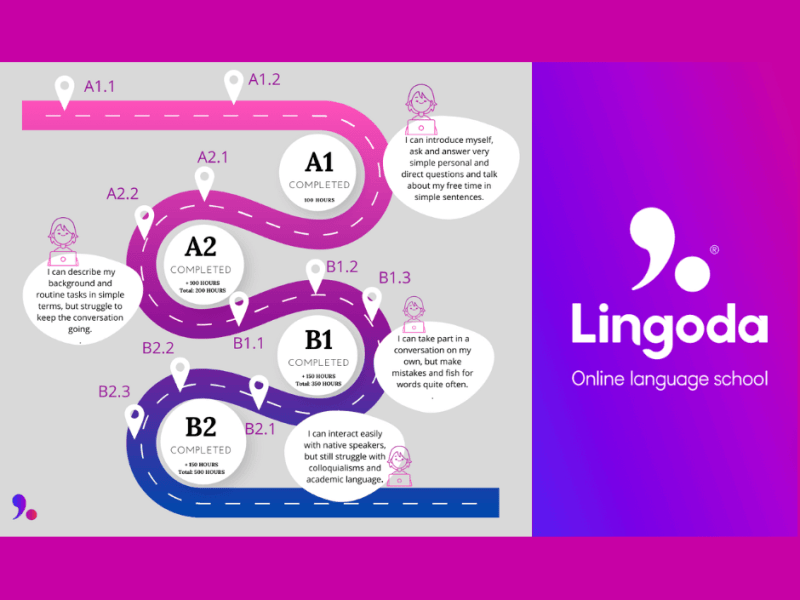
Portuguese is a slightly harder nut to crack than the other three languages in some regard. It’s not a “given” as a feature in some language apps. For example, there are three platforms I’d highly recommend to any language learner: 1) Blackcat Cideb ereaders 2) Chatterbug app 3) Lingoda language sprint. They all offer English, French, Spanish and German as language staples, (with number 1 also featuring Italian), but Portuguese simply doesn’t get a look in, and this is quite common.
This is even more extreme if you’re looking to learn European Portuguese, where resources are more scarce than for Brazilian Portuguese.
That said, there are a few excellent podcasts that I swear by, and Brazilian music, particularly Bossanova and Música Popular Brasileira (MPB) – as well as Portuguese Fado and Morna – provide ample opportunity for absorbing Lusophone cultures and language.
If you’re looking for Portuguese exchange partners in your local area, but can’t find a group, try a Spanish group as you’re likely to find people who have dabbled in both.
MY HOT TAKE: MOST ACCESSIBLE: Spanish resources and community, French resources and community // LEAST ACCESSIBLE: Italian resources and Portuguese language community
Native speaker tolerance
Never underestimate the power native speaker tolerance can have on your mindset about language learning! Everyone’s experience of practising speaking with native speakers is different.
Portuguese speakers: in my experience, I have always found Brazilians to be the most encouraging, keen to tell you that you speak amazing Portuguese, even when you’ve only said a few words. I also had great experiences in Portugal, where the Portuguese are happy to converse in their language no matter your level.
Italian and Spanish speakers: I’ve never had any issues with Italian or Spanish speakers switching to English or being overly critical, and Italians in particular are often charmed by people who love their language.
French speakers: as for the French, you’ll only really get French people switch the conversation to English when they detect you’re not native in Paris. As for the rest of the country (I can’t speak for other French speaking nations), they’ll generally stick to French – which is great for your practice. There is a stereotype that French people are overtly critical of grammar and pronunciation errors, which I’ve never actually experienced, though have had plenty of experiences of French people being totally baffled by my anglo-pronunciation in the early days. For example, I remember saying “Biarritz” repeatedly, for the French person only to understand what I was saying once I wrote it down: “Ohhhhh, Biarriiiiitz!”
MY HOT TAKE: MOST TOLERANT SPEAKERS: Portuguese speakers // LEAST TOLERANT SPEAKERS: French speakers
Script
All four languages use Roman script, but accents are the big bug bear! Whilst sometimes native English speakers consider accents to be unimportant, omitting an accent on a letter is equivalent to spelling a word incorrectly or omitting necessary punctuation.
French
Accented letters: é, à, è, ù, ç, â, ê, î, ô, û, ë, ï, ü
Punctuation: quotations marks: «»
Spanish
Accented letters: á, é, í, ó, ú, ü, ñ
Punctuation: question marks: ¿?, exclamation marks: ¡!, quotations marks: «»
Italian
Accented letters: à, è, é, ì, ò, ù
Punctuation: same as English
Portuguese
Accented letters: á, é, í, ó, ú, à, ò, â, ê, ô, ã, õ, ç
Punctuation: quotations marks: «»
MY HOT TAKE: EASIEST SCRIPT: Italian // HARDEST SCRIPT: French or Portuguese
The results are in…
Here’s my overall assessment of the four languages:

This is all a matter of opinion and I’d love to know what other learners think of my analysis of each language.
I personally found it easiest to learn Spanish (I learnt enough Spanish to get a Spanish-speaking job within 6 months) and hardest to learn French (it took me 21 years of struggling to master French), though I only properly worked out why through writing this blog post and analysing all the different features I’ve discussed.
One thing I haven’t covered in this post is passion for a language; passion is subjective to each learner, and yet it’s a hugely important motivator that has a great effect on our progress. So, whilst you can be strategic about the language you choose to learn in order to maximise your progress, if the language in question doesn’t light your fire, then the details don’t hugely matter.
It’s still useful to know which parts of a language are going to be particularly challenging, to direct your learning and know that when you find it difficult, you’re not the only one!
If you’ve learnt one or more of these languages and there’s a feature that you found particularly easy or hard, and I haven’t mentioned it, please let me know!


Leave a comment