

My passion for language is never-ending and nowhere is this clearer than on my bookshelves. It took for me to do a degree in English Literature to realise that I much prefer reading non-fiction to fiction. What a long four-year slog that was… And thank Mnemosyne (the Titan goddess of memory and remembrance and the inventress of language and words) I’d chosen to do a joint honours degree with the Italian language, which kickstarted my passion for foreign languages.
Here are 6 books on words that I’ve read and loved this year, and 4 that are on my “read next” list:
Wordslut: A Feminist Guide to Taking Back the English Language
Have you ever noticed that when English speakers want to insult a woman, they’ll generally compare her to 1) a food (tart) 2) an animal (bitch/cow) 3) a sex worker (slut)?
Did you know that “hedging” (using phrases like “you know,” “just,” “I mean” and “isn’t it?”) are a sign of linguistic and chameleonesque tact and not – as women are so often told – a sign of inferior communication skills?
How about that one of the first official observations of vocal fry dates back to the 1960s, delivered by a British man?
And my favourite: there are six completely distinct forms of the word “like.” So next time someone complains that they hate it when people say “like” all the time, ask them “which one?”
Montell gives her readers the tools to do everything from “embarrass the shit out of people who try to correct your grammar,” to how to confuse a catcaller. She talks us through linguistic features not just of English, but Spanish, the indigenous Algonquian languages of North America, Yoruba, French, Tamil and more.
I think this might well be my book of the year.

Empires of the Word
This 640-page book is a TOME and is not for the faint-hearted. It’s taken me 3 years to finish; it’s very much something to dip in and out of because of the density of the information, meaning that for me, at least, I have to be in the mood for absorbing what can feel like academic information, despite the very readable writing style.
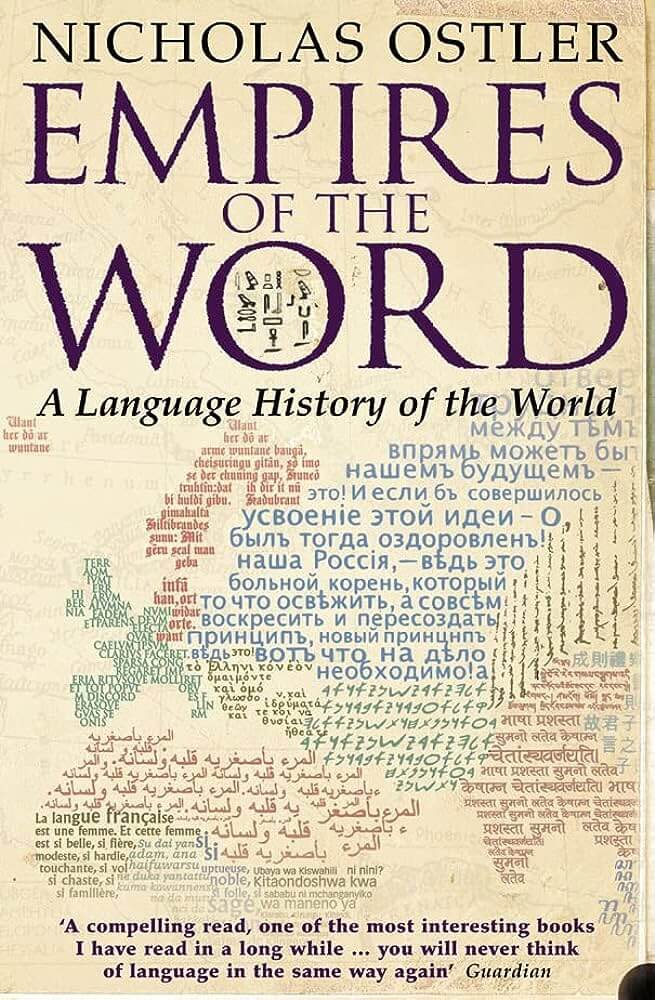
Have you ever considered how the Phoenicians spread the practice of alphabetic writing?
Did you know that Greek is still spoken in two tiny enclaves in Southern Italy?
Have you wondered why, despite the many colonising projects of the Netherlands, the Dutch left a limited linguistic mark, compared to the British, French and Spanish?
Empires of the Word is a superb education for anyone who loves history and words; I see it as the linguistic answer to another book I thoroughly enjoyed: Prisoners of Geography by Tim Marshall.
Cultish: The Language of Fanaticism
I enjoyed Amanda Montell’s Wordslut so much that I had to get my hands on her latest book, Cultish.
Montell’s Dad grew up in a cult, which was what inspired her to explore language’s ability to influence people into pursuing group affiliations and developing fanatical beliefs. She sees it that if we can recognise cultish language, we can guard against its power.
Montell discusses cultish rhetoric, from Scientology, to SoulCycle, to social media gurus.
I absolutely loved this book, and happily, Montell allows us to indulge further, thanks to her Sounds Like A Cult podcast. Whether you want to hear Montell and her friend comedian Isa Medina discuss “The Cult of” Taylor Swift, The Royal Family, the NFL or Crossfit, they’ve got something for everyone.
Listen to Montell talking about Wordslut and Cultish on Feminist Book Club: The Podcast.
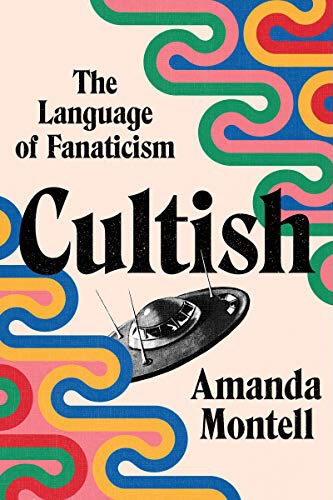
Disclaimer: this book has nothing to do with language learning. It will have you thinking EVERYTHING can be a cult… Maybe even the world of polyglottery…
Me Talk Pretty One Day

David Sedaris just cracks me up. Me Talk Pretty One Day is a collection of essays centred around Sedaris’ relationship with speech and language.
It spans from his experiences in speech therapy as a child, to his move to Paris and his attempts to learn French, which transition from “speaking like an evil baby to speaking like a hillbilly.”
It is the most realistic portrayal of the pains of language learning that I’ve read in a long time! The reason I gave it 4 stars is because I enjoyed the second half of the book much more than the first; the book is split between stories of speech growing up in America, followed by Sedaris’ move to France.
If you’re unsure about this one, listen first to Sedaris talking to Ira Glass on This American Life in the “Americans in Paris” episode.
The Etymologicon: A Circular Stroll through the Hidden Connections of the English Language
This book will have you thinking “no way?! That’s where that comes from?!” every two pages. This isn’t just another stuffy rundown of Latin roots and Greek suffixes, although I’d also enjoy such a thing…
Forsyth takes well-known terms and phrases, from “a turn-up for the books,” to “humble pie” and even the word “botox,” and provides a fascinating chain of amusing history lessons that explain how such terms came about. I say “chain” because every term he explores is connected chronologically. Each explanation births another odd phrase, to come full circle back to the first phrase by the end of the book. This means that you can start this book on any page you like, and it still makes sense.
The main focus is English, but there are plenty of explanations of foreign words too; for example, the French word for “turkey” is “dinde”, which comes from “d’Inde” (“from India”), due to a misunderstanding about where the turkey bird is native to.

My Grammar and I: Or Should That Be Me? – Old-school Ways to Sharpen Your English
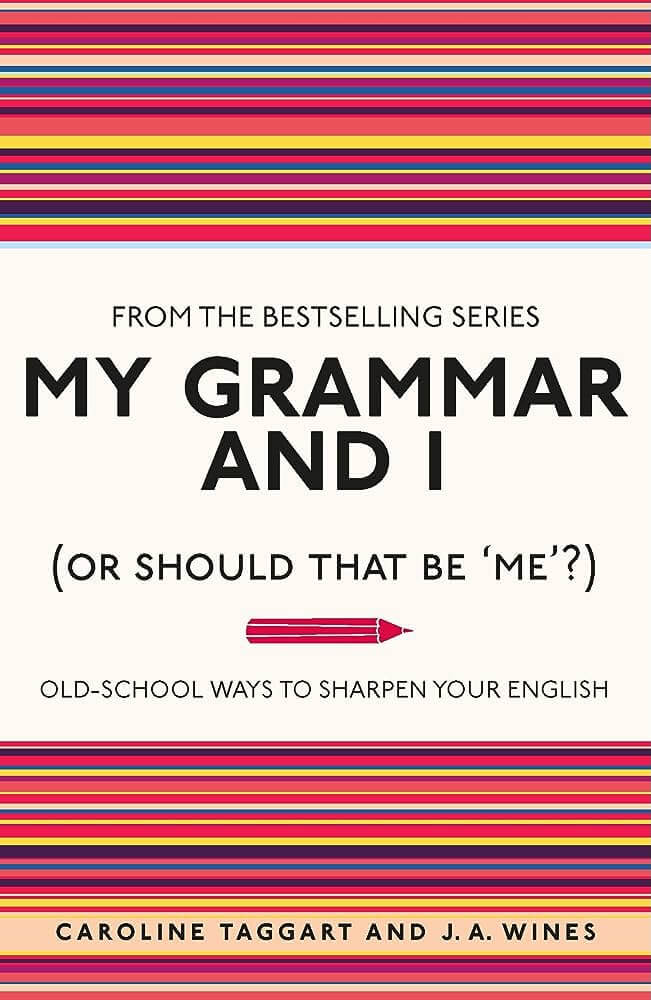
An oldie but a goldie, My Grammar and I is refreshing in its rejection of grammar snobbery, whilst still managing to please the grammar enthusiasts in us with the breadth of its coverage.
Find answers to questions you always had, to plenty of nuggets that’ll have you thinking “I never knew/noticed that!”
What I want to read next:
A Brief History of the Spanish Language: Second Edition
Having read Empires of the Word and Wordslut side-by-side this year, I’ve had a real hankering for a Montellesque exploration of one of the foreign languages I speak.
Whilst I don’t imagine that Pharies will have taken a feminist lens to the Spanish language, I’m keen to read a brief history of Spanish with a view to putting my own gender lens to it!
For example, if anyone wants to unpack the fact that the word cojonudo, meaning “awesome” derives from cojones (testicles), whilst coñazo, meaning “pain in the ass” derives from the word coño (vagina), let’s talk!!

Mother Tongue: The surprising history of women’s words
Dr Jenni Nuttall is a lecturer at the University of Oxford. Mother Tongue: The Surprising History of Women’s Words is her first non-fiction book.
The blurb has me absolutely sold:
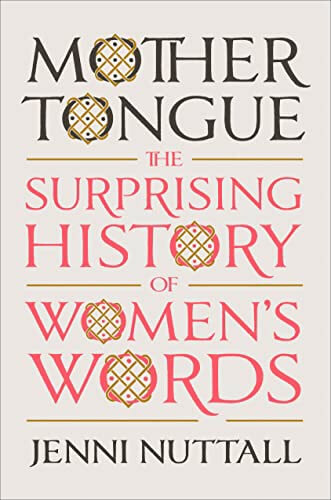
So many of the words we use to articulate the experiences women share feel awkward or alien. Medical terms are accurate but antiseptic. Slang often perpetuates stereotypes. Where are the plain, honest words for women’s daily lives?
From the dawn of Old English to the present day, Dr. Jenni Nuttall guides readers through the evolution of the words we have used to describe bodies, menstruation, sexuality, the consequences of male violence, childbirth, paid and unpaid work, and gender.
Along the way, she argues that, paradoxically, as women have made slow progress towards equality, we’ve lost some of the most expressive and eloquent bits of our vocabulary.
Nuttall explains that Mother Tongue is “for anyone who loves language – and for feminists who want to look to the past in order to move forward.”
If you want to hear more about this book, listen to Nuttall talk to Michael Rosen on BBC Radio Four’s Word of Mouth programme.
The Unfolding Of Language: The Evolution of Mankind’s Greatest Invention
The title of this irked me somewhat, upon first discovering the book. Luckily, a sneak preview into Jenni Nuttall’s Mother Tongue: The Surprising History of Women’s Words explained that in actual fact, the Old English word “mann” – also spelt “mon” – from which the word “mankind” derives, actually meant “human” or “person.”
As such, I will resist the urge to give Deutscher’s subtitle a feminist critique…
Deutscher asks in the blurb:
“If we started off with rudimentary utterances on the level of ‘man throw spear’, how did we end up with sophisticated grammars, enormous vocabularies, and intricately nuanced shades of meaning?”
I’d love to know the answer, as long as he has taken the time to analyse women’s first and subsequent utterances along with “man throw spear.”

Through the Language Glass: Why The World Looks Different In Other Languages

Deutscher’s third book sets out to answer:
Does language reflect the culture of a society?
Is our mother-tongue a lens through which we perceive the world?
Can different languages lead their speakers to different thoughts?
Spoiler alert: Deutscher answers “yes” to all three questions. We multilingual folks are aware of this in the general sense, and I’m now desperate to know the specifics!
Are there any books on language you highly recommend? Please share them in the comments; I’m always on the lookout for recommendations from fellow language lovers!


Leave a comment