

Nothing freaks out teenagers more than the idea of a man with a ginger beard sneaking into their houses to touch their bellies in order to check if they’re full…
When I was a teacher, I always used the Christmas period as an opportunity to do something a little different with my students of French and Spanish. I find the less commercial Christmas traditions, beyond Coca-Cola’s Santa Claus, much more interesting!
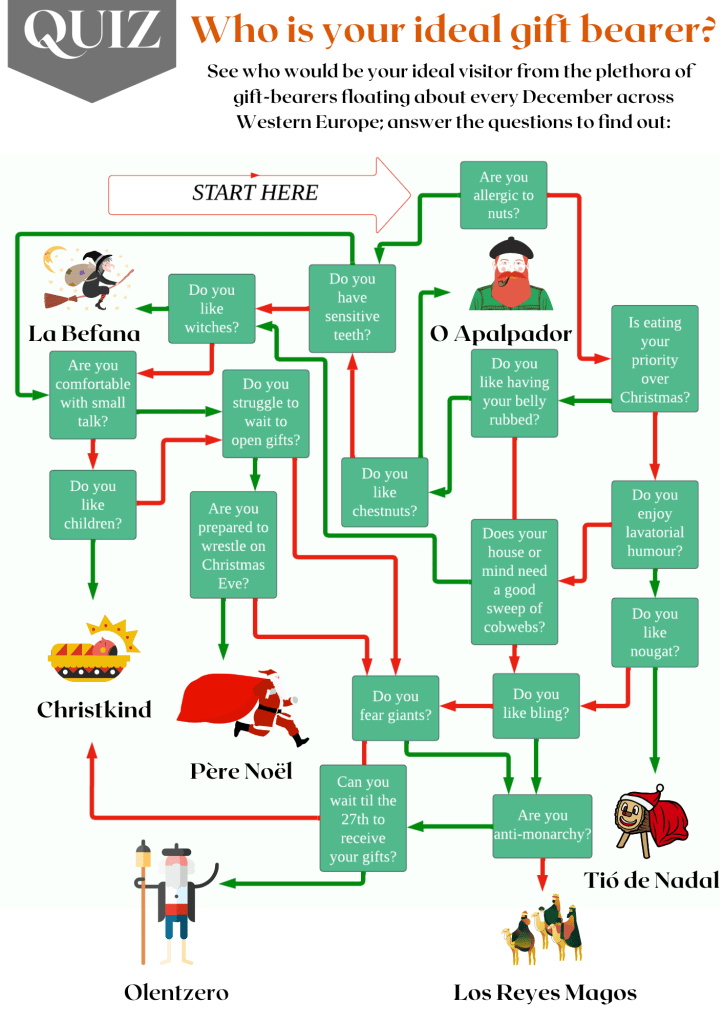
Before you delve into the details of 7 alternatives to Father Christmas, try my quiz to see who should ideally be delivering your gifts this year:
Germany
Das Christkind
Baby Jesus, or the Christ Child is also prominent in Austria, Switzerland, the Czech Republic and a number of other predominantly Catholic countries worldwide.
A move by the Lutherian Church to put the Christ back into Christmas, the Christkind delivers presents to Children on Christmas Eve. At the Christkindlesmarkt in Nuremberg, a young woman is chosen every two years to represent the Christkind.

Italy
Italy boasts a big crowd of gift bearers, including San Nicolò (Saint Nick), Santa Lucia, Gesù Bambino (Baby Jesus), Babbo Natale (Father Christmas) and La Befana. La Befana is by far my favourite so here’s her deal:
La Befana
Italian folklore talks of an old woman who delivers presents to good children on the eve of Epiphany, or coal to bad children (these days the coal is just a yummy hard sweet).
The story goes that the Three Wise Men stopped at La Befana’s house to ask for directions to Jesus’ stable. They asked La Befana to accompany them, but, feeling she had too much to do, she refused, but regretted it upon their departure. As such, to this day, she flies on her broomstick in search of the stable, handing out presents to any children who leave out shoes or stockings.

Spain
Spain’s many Christmas figures are highly political due to the attempts of the Franco dictatorship to suppress regional cultures and traditions, and as such, I thought it important to introduce you to as many as possible here!
O Apalpador
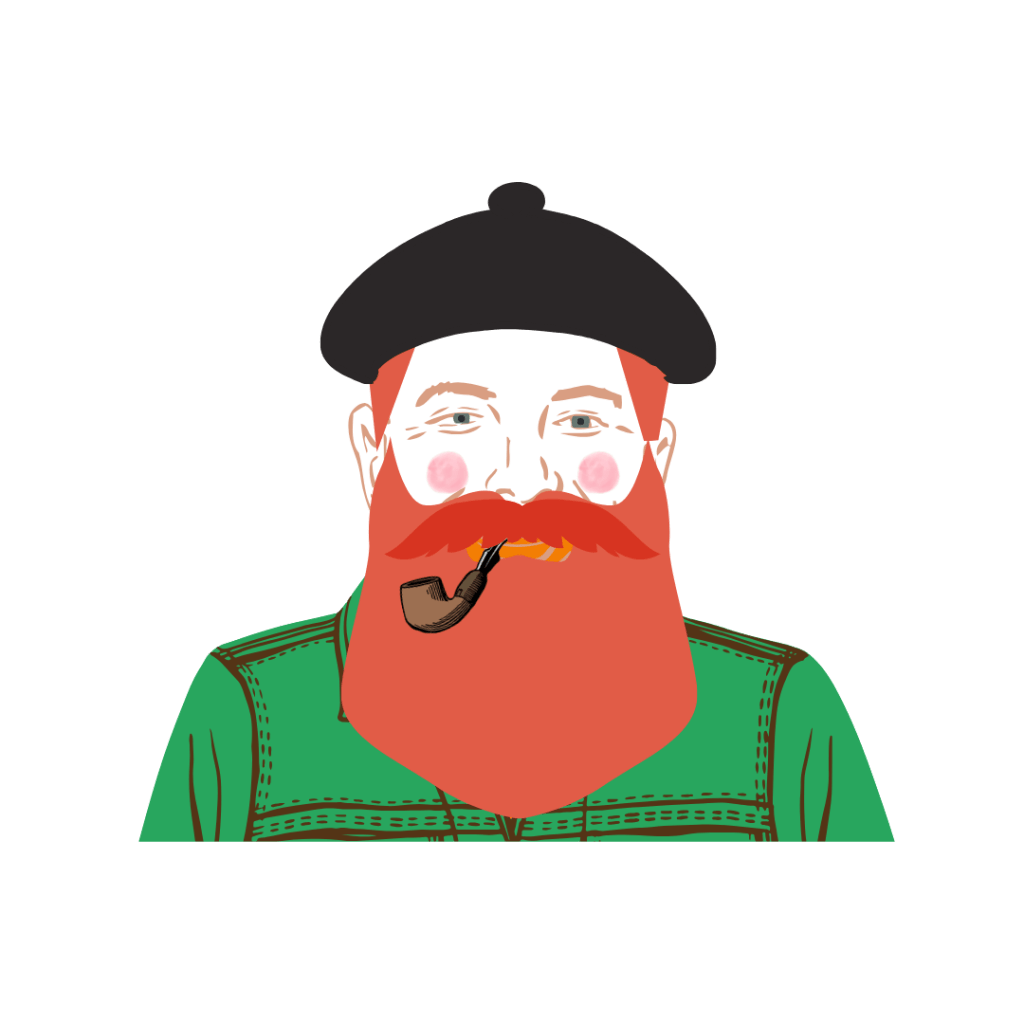
The Apalpador is a Galician figure – a coal merchant – who visits children over the Christmas period, touching the bellies of children to check if they’ve eaten well over the past year (hence the name, deriving from the word palpate = to diagnose with touch). He leaves chestnuts for the children to eat.
Los Reyes Magos
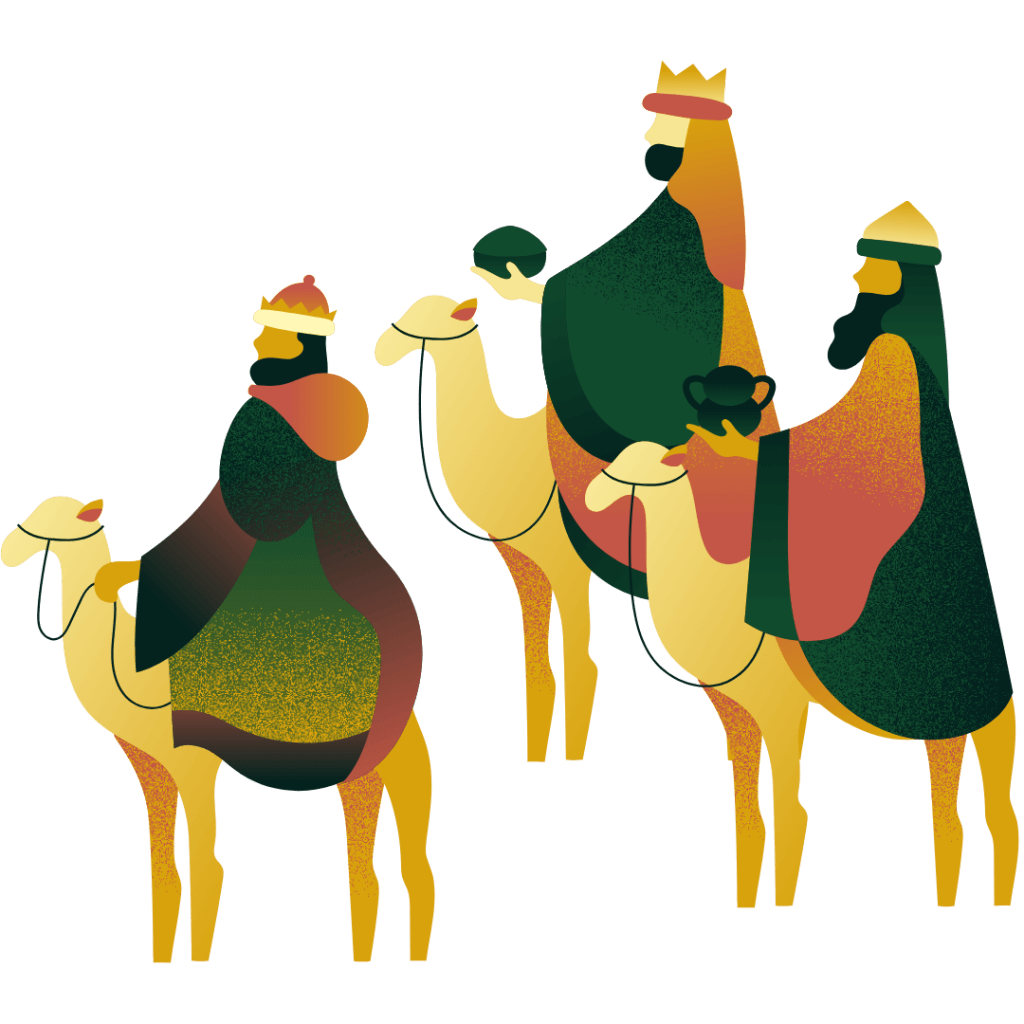
The Three Wise Men are prominent in many parts of Spain and Latin America. They bring presents on 5th January.
Each King represents a continent: Melchior = Europe, Gaspar = Asia and Balthazar = Africa.
Tió de Nadal
This is a great Catalan tradition! Children hit the pooping log (called “Uncle Christmas”) whilst singing a special song to encourage him to poop nougat, nuts and presents!

Olentzero
Olentzero is a pagan figure in the Basque Christmas tradition. Legend has it that he was the only giant out of a group to survive a fall down some cliffs. His name literally translates as “the season of the good ones”.
He was banned during the Franco dictatorship and as such has become an important figure in reestablishing Basque traditions, shown by the Basque slogan “Erregeak, españolak“, which means “the Three Kings are Spanish”.

This means that only in the 1970s was he given the role of delivering presents to Basque children, as an alternative to the Three Kings. He delivers presents on the 24th, 27th and 31st, depending on the area.
France
Père Noël and Père Fouettard
Père Noël is very similar to the UK’s Father Christmas, but, unlike in England, children open their presents after mass on Christmas eve in France. Père Fouettard is a lesser known character in the French Christmas tradition. His origins are disputed but it’s said that he accompanies Père Noël on his visits and whips (fouet = whip in French) naughty children, or even puts them in a sack!

The corresponding character in the Netherlands is called Zwarte Piet, or “Black Pete”; Zwarte Piet has become incredibly controversial in recent years, partly because of the use of black face by some people depicting the figure.
And a Catalan character delivering a different kind of gift….
El Caganer
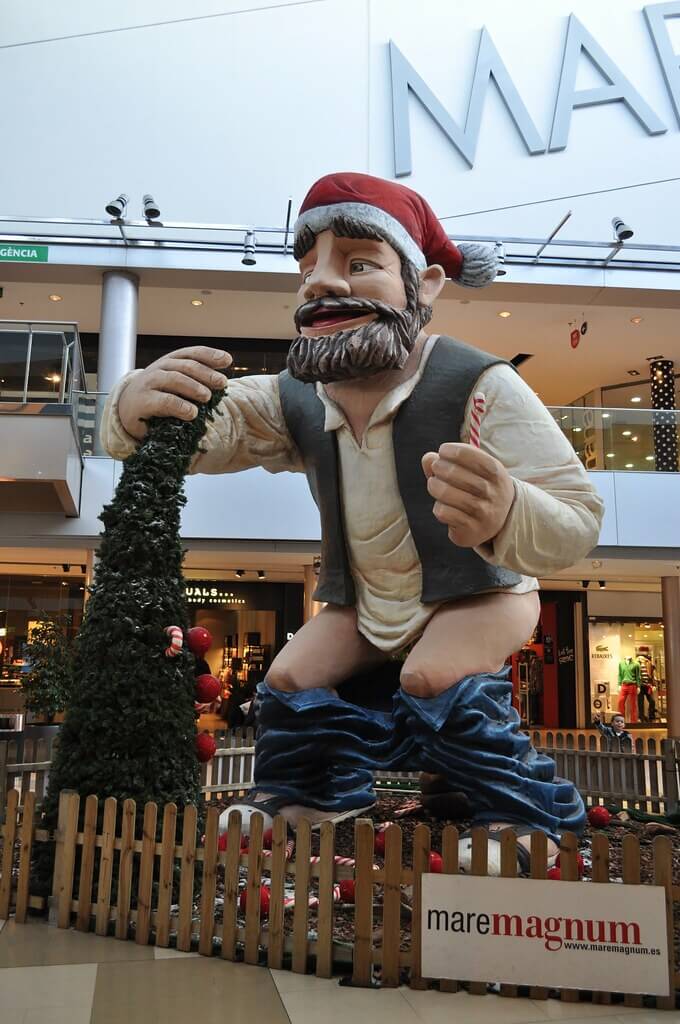
The Caganer (or “the defecator”) is a nativity figure who is usually depicted as a farmer or shepherd. He symbolises fertility and good fortune.
People in Catalonia, some other parts of Spain and some parts of France share this tradition, including Andorra, Valencia, the Balearic Islands, and Northern Catalonia (in southern France).
This is so popular that celebrities are regularly depicted as Caganers. If you visit a household that enjoys this tradition, see if you can spot the Caganer in their nativity scene!
Final thoughts
Well they certainly spice up Christmas! These are great reasons to visit any Western European country during the Christmas period. Now that I live in Germany, I’m hoping to catch a glimpse of Baby Jesus soon, between drinking Glühwein and eating Bratwürste at the charming Weihnachtsmärkte!
Are you already familiar with all of these Christmas characters?


Leave a comment