

Reading is usually the skill I find comes most naturally when learning a language.
But with German, it’s a different experience: the length and complexity of many words can make reading feel more intimidating than it should.
The solution is to get comfortable with the unfamiliar. First, dive straight in and expose yourself to longer words without worrying about understanding every part immediately. Second, read aloud. Reading aloud forces you to slow down, helping you break up compound nouns and recognise familiar roots.
And choosing the right material makes all the difference. Below, you’ll find a selection of resources ideal for A1–B2 learners:
Storybooks Canada (A1-B1)
Storybooks Canada is a project that aims to promote bilingualism and multilingualism in Canada.
It features 40 free stories at A1-B1 level, originally from the African Storybook in many languages, including German.
eReaders – Black Cat and Cideb (A1-B1)
eReaders are graded readers, available at A1-B1 level on the app. The printed books have more levels available (B2-C1).
The beauty of these books is that many are adapted from classics and biographies (e.g. Sisi, The Life of Johann Sebastian Bach).
An added bonus is that you can have the story read to you, which will improve your listening and pronunciation skills.
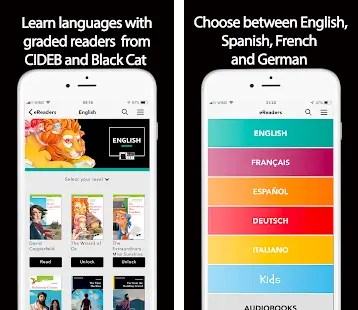
There are two types of subscriptions available for this; pay 9.90€ for an ongoing monthly subscription or 59.99€ a year for an annual subscription. You can also just buy each book individually, which is worth doing if you’d like to test out the format.
Sloeful (A1-B2)
Sloeful is a relatively new project that provides free German material.
It has texts for A1-B2 learners, a small selection of stories for A1 learners and fairytales for A2-B1 learners.
All content comes with an audio recording, useful vocabulary and a comprehension quiz. I love their illustrations too!
The Fable Cottage (A2)
The Fable Cottage website provides free audio books which recount traditional fairy tales in modern and accessible language.
All of the stories have accompanying transcripts with pictures embedded in the text, and some have whole videos.
You’ll be surprised how you can recognise your target language’s words for things like “ax”, “hood” and “beanstalk” even as a beginner because you simply know the story.
German Stories for Beginners (A2-B1)
The maker of The Fable Cottage also has German stories on The German Project.
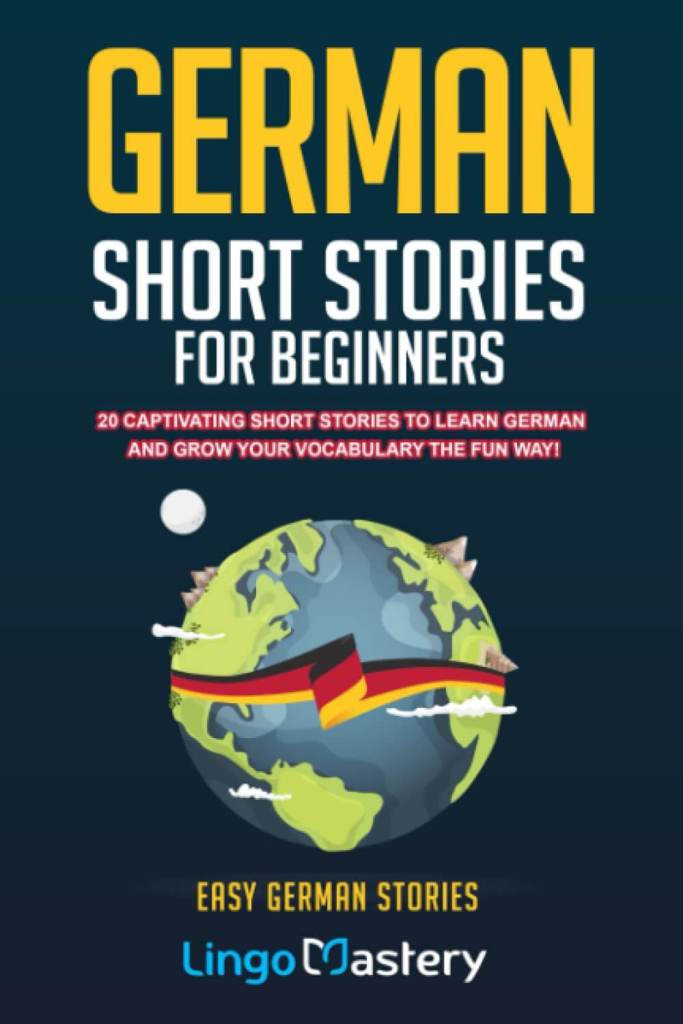
The stories in German Stories for Beginners are one to two pages each, followed by a brief summary of the story, a glossary of key words for each story and some comprehension questions to testing your understanding.
Pitched as “for beginners,” in reality I think these stories are a little hard for A1, and I’d recommend them for A2 learners up for a challenge.
The stories aren’t exactly fascinating, but they include realistic dialogues and day-to-day situations.
Deutsch Perfekt (A2-C1)
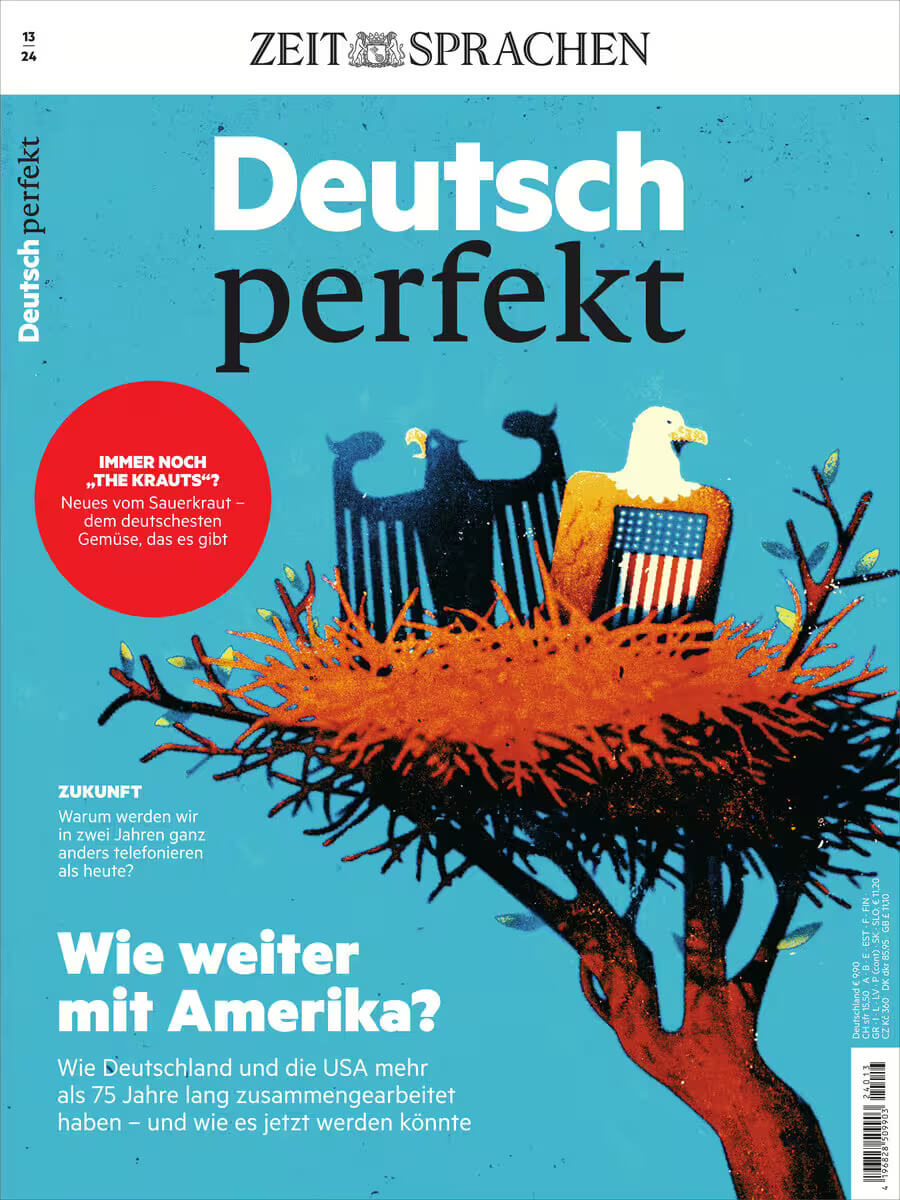
Deutsch Perfekt has a variety of clearly labelled articles at different levels, on topics including politics, society, culture, business, sports and more.
Each article includes vocabulary explanations in simplified German, complemented by grammar explanations, exercises and idioms.
You can access this online for free. Follow the steps here. NOTE: Even if you live in Germany, register with a different country, otherwise it asks you to get a library card to access it.
Upwordo Micro Stories (B1)
Upwordo Micro Stories is a desktop app that offers free real-world German texts at an intermediate (B1) level, with instant translation and vocabulary lists.
The texts are really short and snappy, so ideal for bitesized learning when you’re short on time. Plus, you can save words for later review and practice.

Young Adult fiction (B1-B2)
Young Adult fiction is the perfect way to dip your toes in the deep end and start reading books written for native speakers. The stories are generally uncomplicated and the language used is fairly simply.
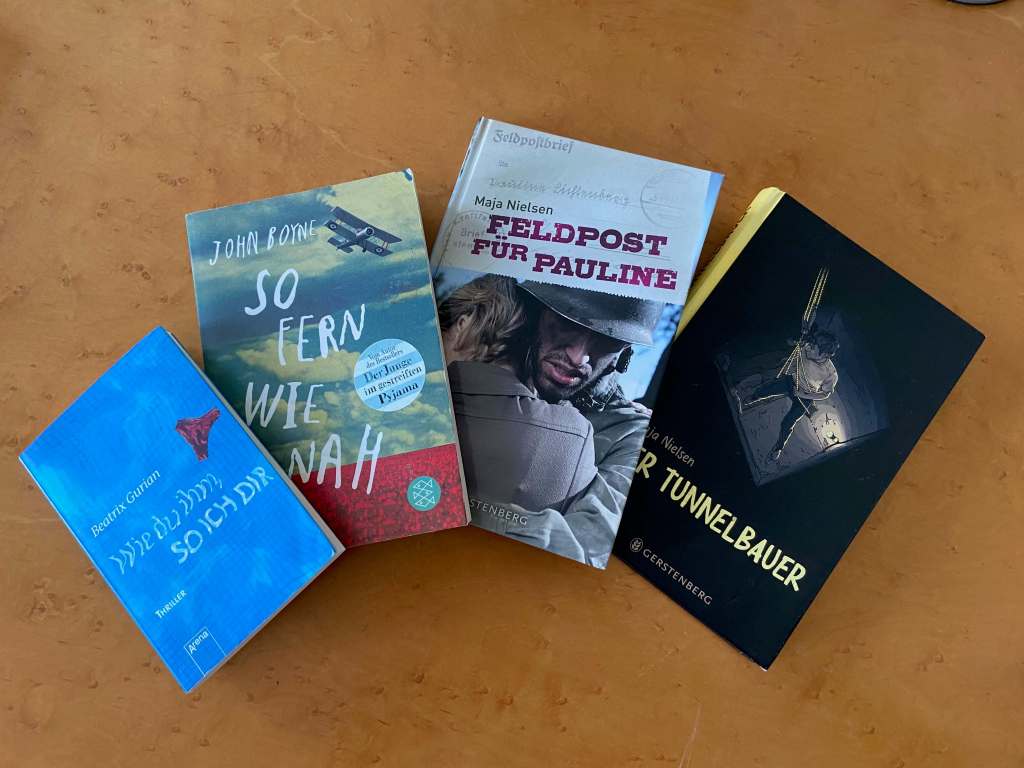
Start with Wie du ihm, so ich dir by Beatrix Gurian. It’s a mini-book of 106 pages that will fit into the back pocket of your jeans. The story is stupid, but you’ll feel a real sense of accomplishment for finishing your first “real” book.
I’m currently reading Der Tunnelbauer and I am LOVING it. It’s based on the true story of Joachim Neumann, a young man who fled East Germany shortly after the Berlin Wall was built, and then dug six escape tunnels with a group of young students. You can see a 7-minute interview with him here, and watch a talk with the book’s author, Maja Nielsen, and Neumann here.
Don’t shy away from reading translations either; you might enjoy reading a book you’ve previously read in your native language. Though steer away from anything too niche, like Harry Potter, and the vocabulary in such books just isn’t day-to-day, and even if you’re a super fan, you may feel more discouraged by its difficulty than anything.
Nachrichtenleicht (B1-B2)
Nachrichtenleicht is a news site that rewrites current events in simple German. Each article has an accompanying audio recording and a short list of vocabulary items.
Deutsche Welle Langsam Gesprochene Nachrichten (B2)
It’s rare that I endorse slow versions of natural speech as I find them boring at best, and demotivating at worse, if learners below B1 level give them a try.
I recommend Langsam Gesprochene Nachrichten (“News Spoken Slowly”) from Deutsche Welle as a B2 reading resource first, whereby you can use the audio to improve your pronunciation.
It’s ideal for building vocabulary related to politics, culture, and current events at B2 level, as a transitional stage before you tackle regular news pieces for natives.
Zeit Wissen magazines (B2-C1)
Zeit Wissen is a popular German magazine that focuses on science, technology, society, and culture. It is published every two months by the same company that produces Die ZEIT, one of Germany’s leading weekly newspapers.
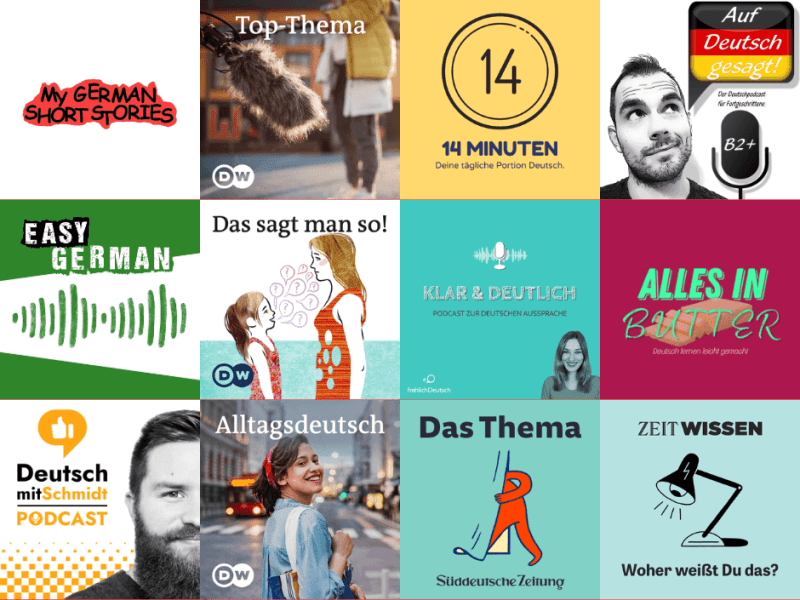
The same people also make one of my favourite podcasts: Woher weißt du das?, along with many other podcasts covering different topics, as I mentioned in my 12 high-quality German podcasts to get you from B1 to B2 post.
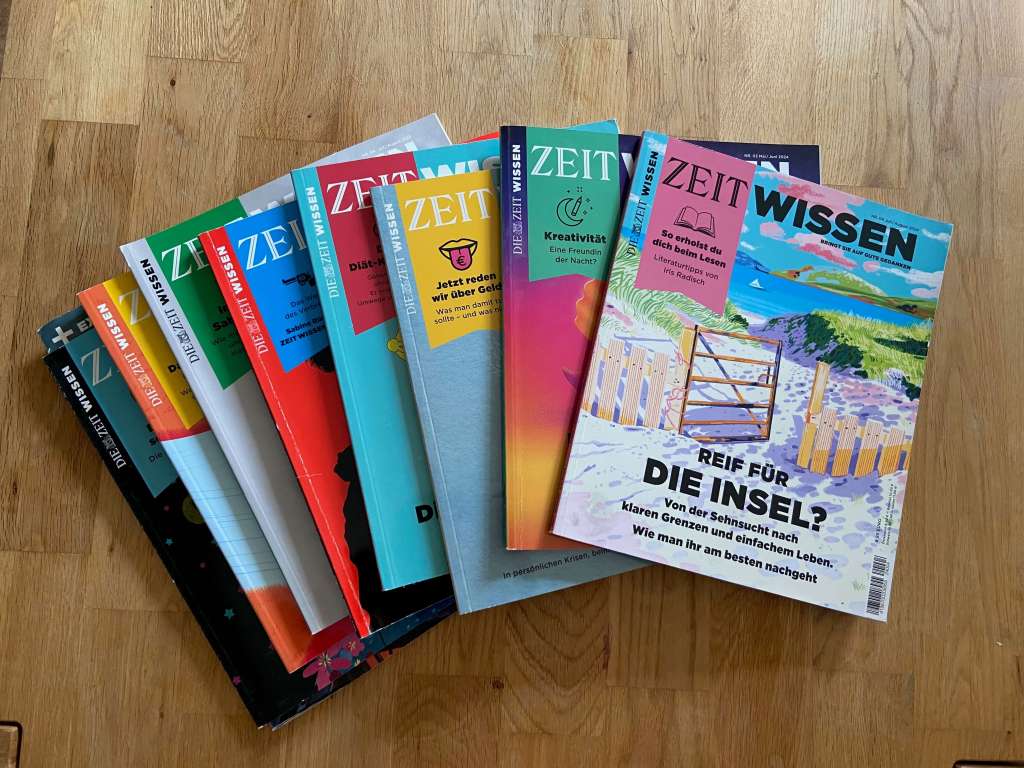
Zeit Wissen is beautifully produced, and the content takes many different forms, from long and short-form articles, quizzes, stats and more.
You can order the physical magazine if you live in the EU, otherwise, you can get the content in digital form through their app (Google Play here and Apple here). Little tip if you live in Germany, Austria or Switzerland: people regularly sell copies on Vinted!
Final thoughts
My greatest recommendation for improving your reading in German is to read physical books alongside any digital consumption for a number of reasons:
- Reading on your phone risks distraction
- Pen and paper boost memory more than smart devices, so get that highlighter out!
- You can more easily see your progress with a physical book
As such, it’s worth combining methods; use Upwordo Micro Stories as a bitesized task when you’re on public transport; read texts on Sloeful as an alternative to scrolling, and have a physical book on your nightstand for your before-bed activity.
Enjoyed this post? Please like and share it!




Leave a comment