

This year, I took advantage of Bildungsurlaub – a German scheme that grants employees a week of paid educational leave.
After two years of memorising German case charts, my heart had started to crave the soft lull of Portuguese, and the gentle rhythms of bossa nova.
With only a week to spare, Brazil was too far, so I signed up for a European Portuguese course in Lisbon to matar saudades (= relieve my longing), and to get to know Brazilian Portuguese’s older brother.

My plan to rekindle my romance with Portuguese didn’t exactly go to script. The birthplace of Fado delivered a mixed bag indeed – charm, surprise, and on a few occasions, some wrong notes.
Here’s what I learnt:
European and Brazilian Portuguese are closer cousins than siblings
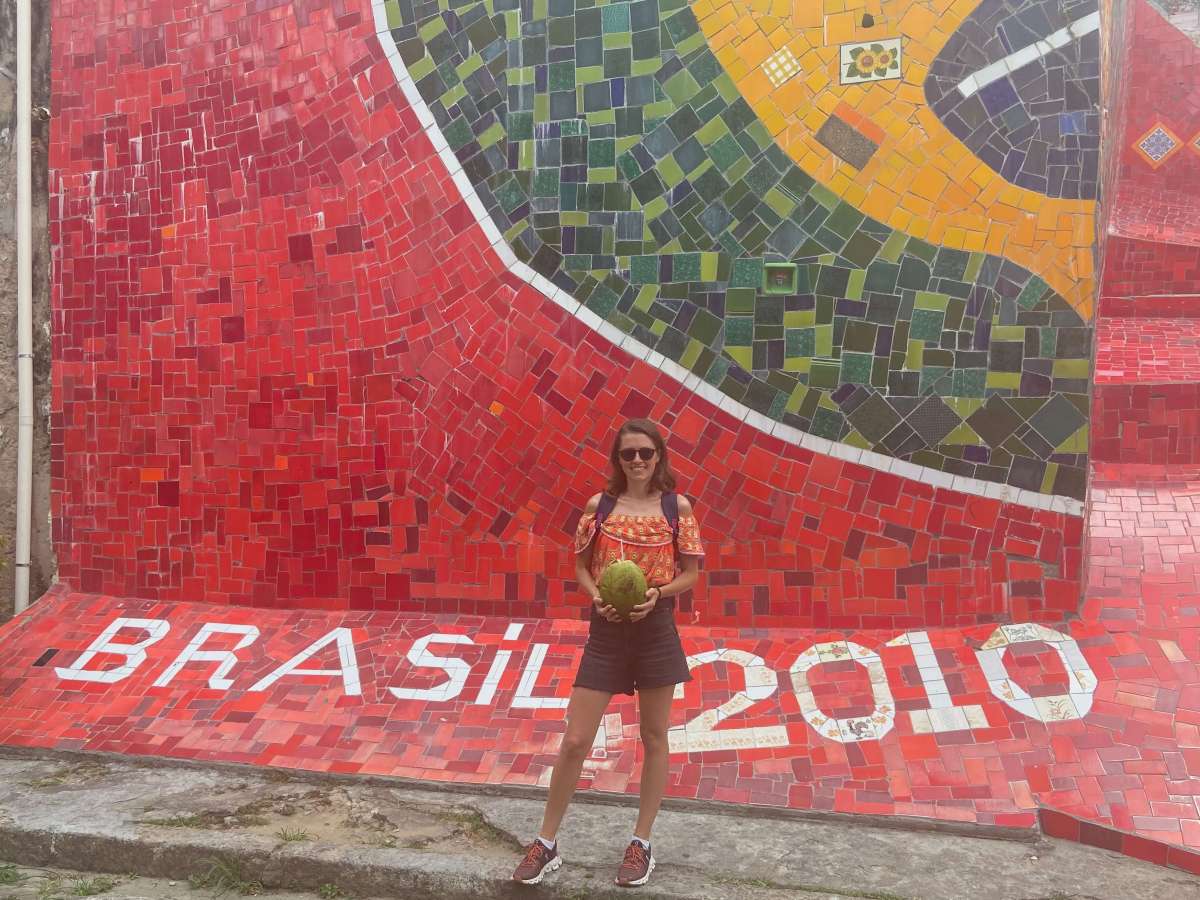
My first taste of the language of samba and saudade – over 10 years ago – was Carioca Portuguese, known in English as the “Rio lilt.”
The Portuguese of the natives of Rio de Janeiro is melodic, relaxed and full of warmth.
Just a few words are powerful enough to summon the sensation of warm air and the sounds of the Copacabana shore.
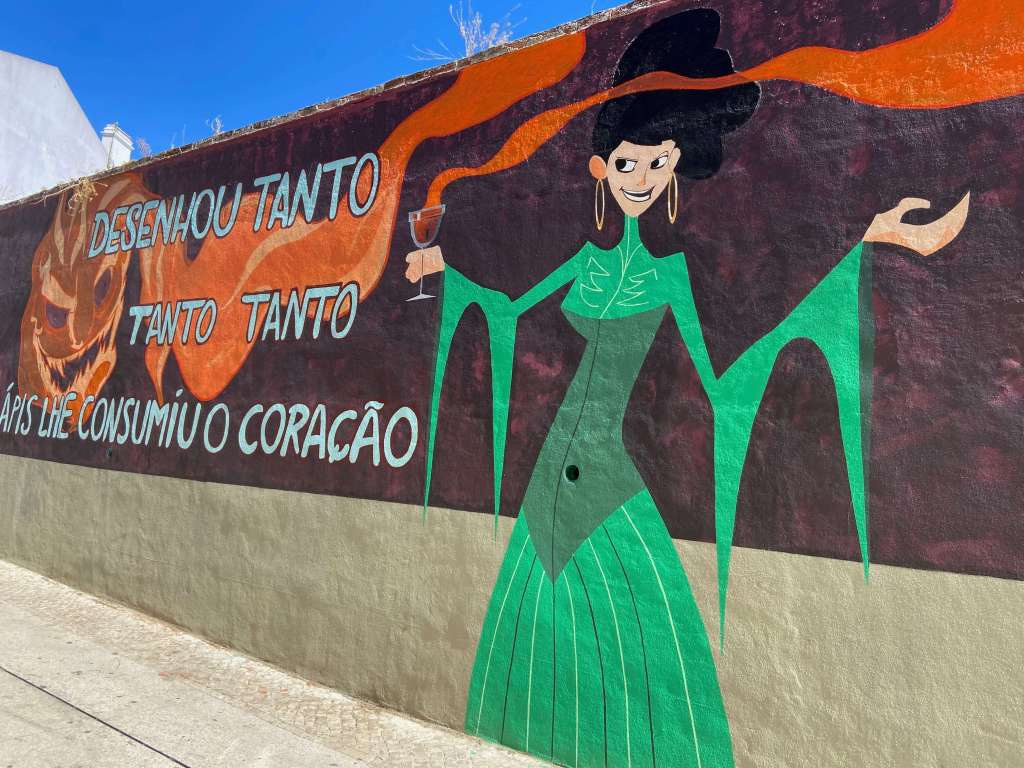
Arriving in Lisbon in 30-degree heat roused that feeling briefly, only for it to be sabotaged on day one of my Portuguese class, by swallowed vowels and guttural ‘r’s produced by my teacher and classmates as they introduced themselves. Everything, as the father of bossa nova Tom Jobim would say, seemed a little desafinado – out of tune.
Despite the rude awakening, I was keen to give this exotic European variant a good crack.
Your strongest language will fight for airtime
My second big shock was the realisation of the extent to which German had imprinted itself onto my brain. Up until day three of the course, zum Beispiel, Ja, klar! and other German markers claimed right of way every time I opened my mouth.
This shouldn’t have been a surprise. After all, like all bad polyglots, I forsook my other languages the minute I started learning German two years ago, in pursuit of perfect Deutsch.
Happily, this linguistic imperialism eventually subsided – thanks to a chance encounter with a Brazilian after class on day three.
Bianca led our class trip to the Centre of Modern Art, swaying along narrow Lisbon streets and humouring my fan-girling over her Recife accent.

Something clicked during our exchange – a little dopamine hit telling my brain, “yes, this is it.”
After days of jarring sounds in class, that one real conversation gave me exactly what my brain had been craving: connection, rhythm and the joy of getting something right.
From this point on, my German retreated. I began approaching Portuguese like a DJ approaches a deck: Brazilian Portuguese as the base, European Portuguese sliding up and down the faders, experimenting with the mix.
Locals love that you’re learning their language
Being a lesser learnt foreign language, the Portuguese are genuinely delighted to hear you trying out their native tongue.
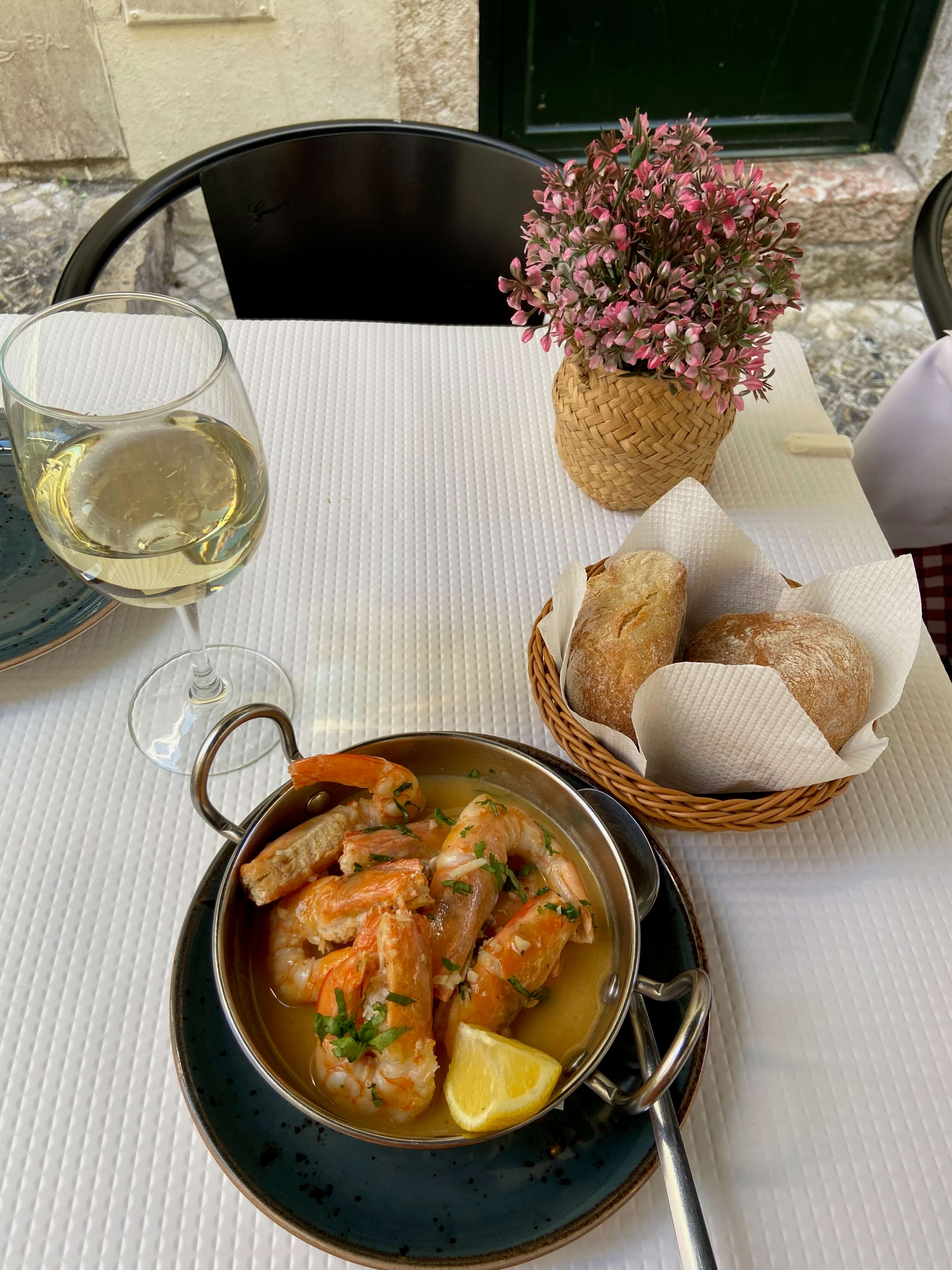
My interactions earned me free herbs at a market, grappa on the house after dinner, and a waiter even asked if I had uma costela brasileira – “a Brazilian rib,” meaning brazilian ancestry. Smart guy knew how to earn his tip!


You can create your own “curriculum”
In the face of every Tom, Dick and Harry asking me how and why I had learnt Brazilian Portuguese, I set myself a linguistic – and DJ – challenge to learn some European Portuguese vocabulary and grammar.
I ditched você (often considered distant – and as such, rude, in Portugal) and forced myself into the tu forms – cue plenty of verb-stumbling. I swapped ônibus for autocarro, banheiro for casa de banho, trem for comboio and more.
This was a lot of fun and it redirected my energy from trying to get that Rio feeling, to enjoying something new.
Location shapes your learning style
Lisbon is the new Barcelona: a tourist theme park stuffed to the brim with people trying to sell you food, souvenirs and experiences in English.
My advice – go north: Porto, Coimbra, Braga, even a smaller city or town if you can find a Portuguese language school. The further from the tourist circus, the better.
For context, I visited Porto a few years ago – taking a day trip to Guimarães (the birthplace of Portugal) – and I loved it.


However, if you do have your heart set on Lisbon – it is beautiful when you airbrush out the tourists and permanent construction sites – you’ll just have to dig a little deeper for those authentic interactions in Portuguese.
One thing that the capital does deliver better than smaller cities is its cultural offerings.
You can get beyond restaurant-and-cafe-Portuguese by visiting the likes of Museu do Aljube – Resistência e Liberdade, the Lisbon Earthquake Museum (it’s immersive!) or a Fado show at Adega Machado.
These spaces offer audioguides, written displays in Portuguese and a window into the Portuguese spirit, helping you stay immersed even when conversation practice is scarce.
Choose your school very carefully
As the first intensive course of Portuguese I’d ever taken, I had been looking forward to the experience for months.
My teacher was nice and my classmates enthusiastic, yet slowly but surely, cracks started to show.
I could’ve done without my teacher’s 30-minute lectures on 15th-century explorers. Added to this was the lack of materials beyond the odd worksheet, minimal interaction between classmates, and a total absence of multimedia (where were the pretty pictures, song lyrics and art to inspire me?). The result: the classes sometimes dragged.
But worse were my teacher’s disparaging comments about Brazilian Portuguese: “they sound like nine-year-olds,” she said at one point. She even discouraged me from using direct and indirect pronouns around Brazilians: “they won’t understand you.”

These jibes made me feel very Carrie Bradshaw in Season 5 of Sex and the City:
You only get one great love…[Brazilian Portuguese] may just be mine. And I can’t have nobody talking shit about my boyfriend.”
The lesson? Do your homework on different schools! Read reviews carefully, ask questions before booking, and don’t go for a course just because it’s cheap. Your teacher’s attitude can make or break your week.
💡 Quick tip: Portuguese Connection School in Lisbon and inlingua Porto both offer Brazilian Portuguese classes. I’d still recommend choosing one of their European courses for a new experience, but this detail means that the teachers at these schools are more likely to embrace all Portuguese variants.
Don’t fight your first love
After a mini-crisis over whether my love for Portuguese had fizzled – courtesy of those elusive, swallowed vowels and my teacher’s negative attitude – thanks to the catalytic encounter with Bianca, the swaying Brazilian, by the final day, I had my mojo back.
So when my teacher asked us to give final presentations on a topic of our choosing, I went full brasileira, introducing my class to Brazilian folklore. Even she admitted she’d learned something new that day.
The lesson?
Don’t suppress the version of a language that feeds your soul. If your heart beats to the rhythm of samba, you don’t have to apologise for soaking yourself in Brazil’s magic, even from afar!
Since returning to Germany – the land of order and restraint – I’ve started rewatching Coisa Mais Linda, and have Cidade Invisível lined up next. My experience in Portugal has reignited my love of Portuguese, which, despite the odd jarring moment, made it a success.
Final thoughts
Looking back, expecting European Portuguese to feel Brazilian was as delusional as expecting a refreshing dip from my post-kayak plunge in the Algarve. The reality was an Atlantic ice bath. Brrrrr!
The cultures, climates and language are very different. I should’ve set out to learn something completely different, rather than to dress Portugal up in carnival clothing.

And I’m still open to discovering more about the European variant. Next time, I’ll fine-tune the conditions based on what I’ve learned – and, with luck, I’ll meet the language of Fado in all its glory.
In the meantime, I’m not going to fight the fact that my heart beats a little louder for Brazilian Portuguese.
And if you feel a strong pull toward one flavour of a language over another, embrace it! Every version of a language has its own soul – you just have to find which one speaks most to you.
Liked this post? Please like and share it!



Leave a comment