

Forget boring course books for 2026.
If you’re at least B1 level, you’re ready to dive into material that’s totally tailored to your interests.
Whether you don’t know which podcast to listen to, where to get reading practice or what grammar and pronunciation features to focus on, here’s a really simple set of building blocks to design your own curriculum for 2026, and actually stay engaged.
You can use this method for self-study, or for 1-2-1 lessons.
You need:
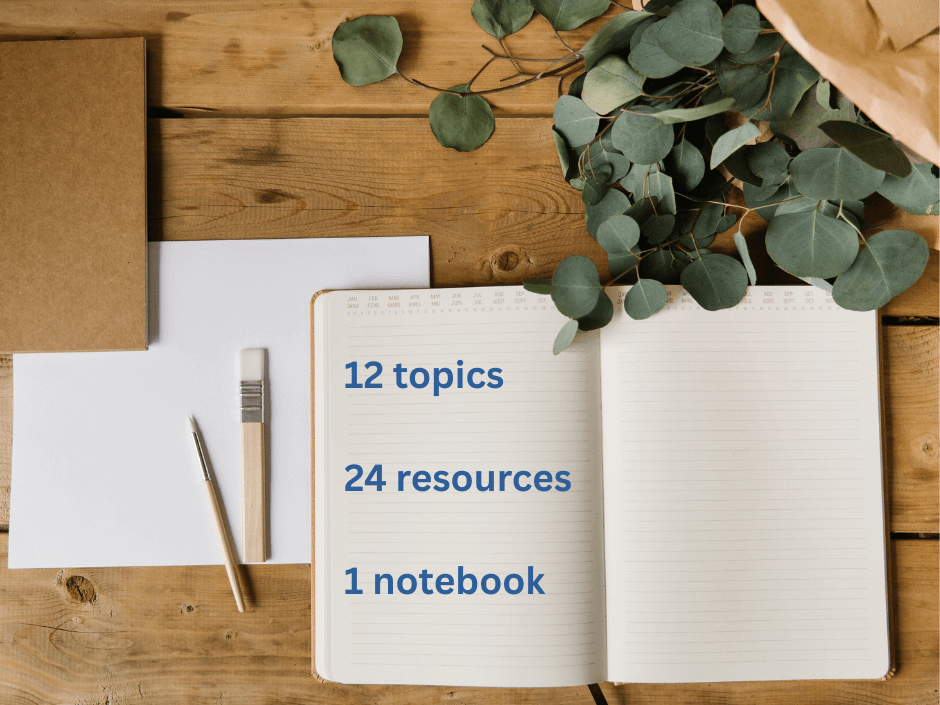
- 12 topics you love
- 24 resources
- 1 notebook
I call it the Textbook of Life. Here goes:
Step 1: choose 12 topics
Choose any 12 topics that really interest you. Nothing you feel you should learn. Just stuff you’re excited about.
I’ve put some examples below, applicable to B1-C1, but nothing is off limits.
Want to learn about Lord of the Rings in your target language? Or Gaelic football? Or musical theatre? Put them on your list!
B1-B2 topics
- Personality traits
- Relationships
- Feelings
- Life stages
- Home
- Shopping
- Music
- Film and TV
- Food and eating
- Technology
- Free time and culture
- Travelling and transport
- Health
- Environment
- Society
- Literature
- Geography
- Politics
- Sport
- Education
- Work
- Festivals and traditions
- Art
- History
- Science
- Maths and logic
- Fashion
- Wellbeing
C1 topics
- Infrastructure
- Philosophy
- Agriculture
- Architecture
- Finance
- Humanities and social sciences
- Law
- Communication and media
- Idealogy
- Interior design
Step 2: map out your year
Each of your chosen topics will be your “Topic of the Month” throughout 2026. Assign each topic to a month.
Consider months you’ll be tired and needing an easier or more light-hearted topic, and other months when you’ll have enough energy to get into something meatier.
You can map out your year on my Textbook of Life template on Canva here. Or get the printable version below:
Here’s a simple example:
| January | Personality traits |
| February | Film and TV |
| March | Travel |
| April | Geography |
| May | Fashion |
| June | History |
| July | Food and eating |
| August | Art |
| September | Relationships |
| October | Society |
| November | Wellbeing |
| December | Festivals and traditions |
Step 3: gather your monthly resources
Each month you will explore your topic with one podcast episode and one article. Now find one of each for all your topics, up front.
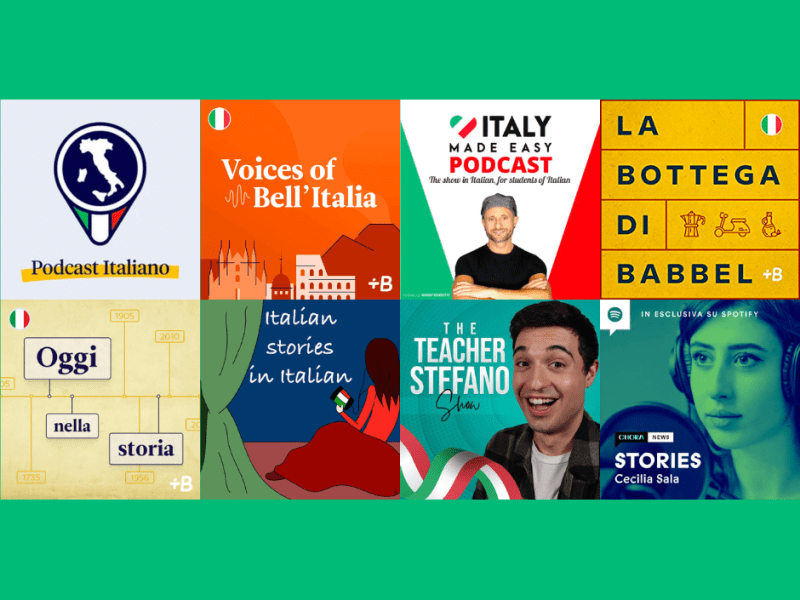
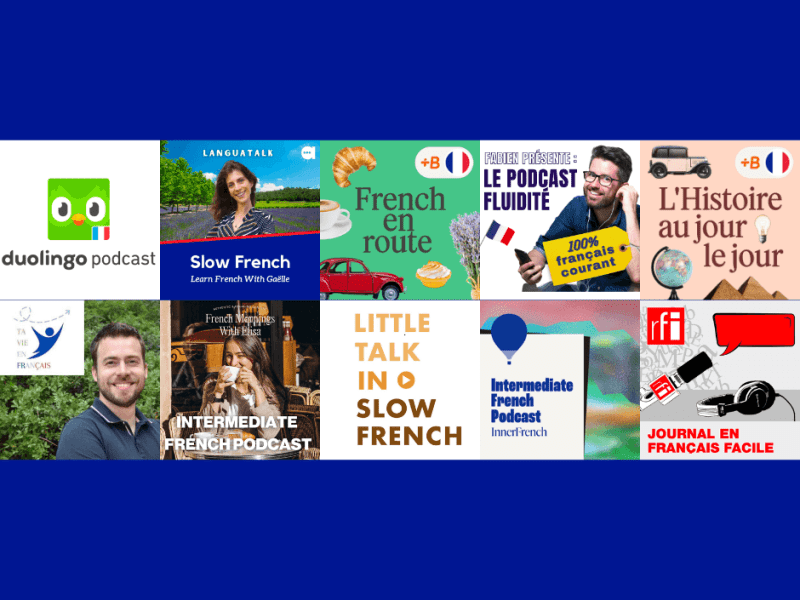
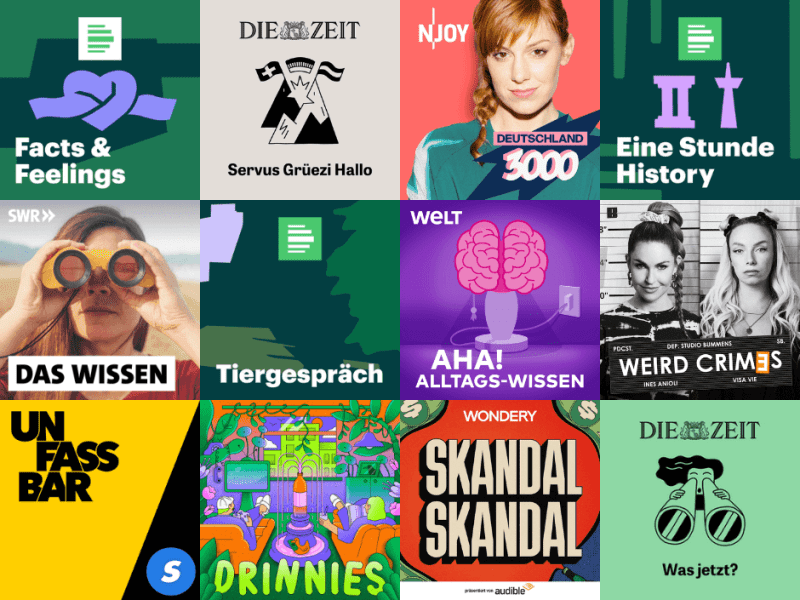
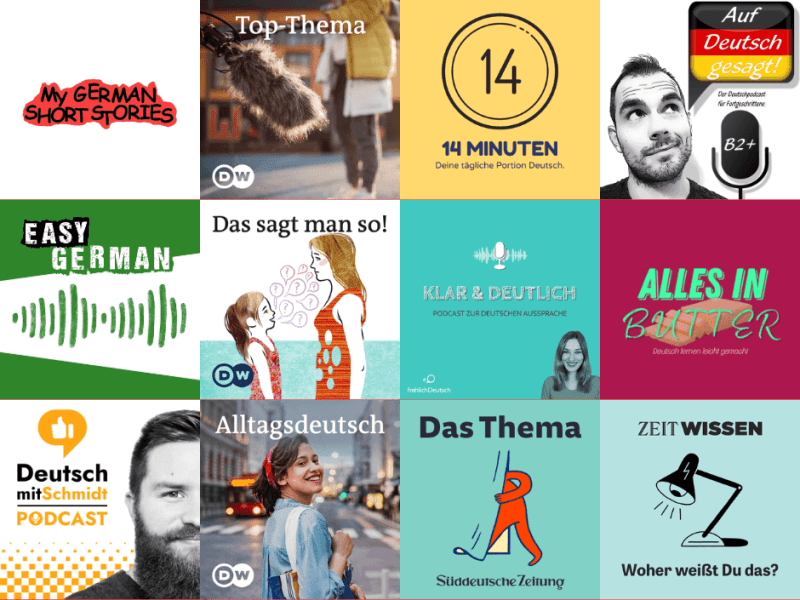
Source 12 podcast episodes
Don’t overcook it when selecting your podcast episodes. Choosing a 30-minute episode will absolutely burn you out early on. Ten minute episodes are long enough.
And consult podcasts at your current level. If you want to push yourself or can only find an episode on a desired topic that’s a little too difficult for you, assign it to a later month in the year, once you’re in the swing of things:




Source 12 articles
For reading material, you’ll need to do some digging to make sure you choose material at the right level.
B1 reading
Find level-appropriate articles in the following publications:
| German: Deutsch Perfekt magazine Vocable website Sloeful website Nachrichten Leicht website | Italian: Adesso magazine Italiano magazine | Spanish: ECOS magazine Vocable website |
| French: Écoute magazine 1jour1actu website Le Média Positif website | Portuguese: Diálogos magazine PORTUGUÊS.PT magazine |
Information on access:
- All the websites I’ve listed are publically accessible
- Read my 10 resources for improving your German reading skills (A1-B2) post to learn how to get the digital version of Deutsch Perfekt magazine for free
- For the others, check your local library for physical copies or digital access
- You’d also be surprised how often people sell copies – and bulks of copies – on Vinted
B2-C1 reading
Consult native-level news wherever you can find it. The below are just a few publications:
| German: Deutschland Funk Taz Süddeutsche Zeitung Der Spiegel | Italian: Il Post Rai News Corriere della Sera | Spanish: 20 minutos El País El Mundo |
| French: France24 Le Parisien 20 minutes | Portuguese: Sábado Diário de Notícias Público |
Step 4: buy a beautiful notebook
Buy a notebook to store all of your newly learnt vocabulary thematically.
Take a less-is-more approach to your note-taking.
Here’s an example of how you could organise your notes on each topic, but you should do what makes most sense to you:
- Gather vocabulary on one page: I’m a fan of a spider diagram, because you can always find a little more room to squeeze another word in
- ½ page collocations e.g. instead of just writing the word “promise,” write “to make/keep/break a promise”
- 5 “gold expressions” e.g. high-frequency expressions that could be used in multiple different contexts, such as “and so on” or “when all is said and done”
That means for each month, you should have no more than two pages of notes.
Step 5: plot out your weekly tasks
Decide how you’ll organise your time to get to know your topic. Here’s an example:
Week 1: read the article
- Read your article
- Note down enough vocabulary to cover half a page in your notebook
- Record yourself explaining some of the ideas in the article and giving your opinion on them. Answer:
- What is the article about?
- What do you agree / disagree with?
- How does it relate to your own life or country?
Week 2: listen to the podcast episode
- Listen to your podcast episode once all the way through for the gist
- Listen again and make notes on what you hear
- Repeat if necessary
- Add half a page of key vocabulary to your notebook
- Write a one-page summary of the episode by hand. Cover:
- Main idea
- 2–3 supporting points
- One reflection or question
Week 3: refine your grammar or pronunciation
Week 3 is about removing your biggest friction point. Sometimes that’s grammar. Sometimes it’s your accent. Sometimes it’s rhythm, stress or confidence.
This means you should focus more on features you’re already familiar with, and that need refining.
| Grammar | Pronunciation |
| Choose a level-appropriate grammatical structure (check CEFR lists for this) | Identify a sound you struggle with e.g. consonant contrasts (b/p, d/t), vowel sounds, sentence melody, reduction of filler words |
| Do some exercises to practice it (in any grammar books you own, online, or using AI) | Do short daily drills e.g. research and practise minimal pairs, try out some tongue twisters, try shadowing whole phrases from week two’s podcast episode |
| Write 5-10 sentences using the grammatical structure, on the topic of the month | Record yourself reading your summary on the podcast, focusing on improving your pronunciation |
Set yourself a time or an exercise quantity limit. This could be: do one hour over the week, or 5 minutes a day, or 5 grammar exercises total.
Week 4: check in or chill out
Exhausted by weeks 1-3? Then chill out.
Still got some juice in you?
- Read through your podcast summary and try to spot your errors
- Then type it into LanguageTool to get more feedback
- Make a note of these corrections in your notebook, and review them when you do your next month’s recording and summary
Final thoughts
If you try this out and it feels too much, then pull everything back.
This can look like:
- Choosing a shorter article or podcast episode
- Not preparing for your recording on the article, or your podcast summary. Just try it using just your brain
- Pick grammar structures or pronunciation features you’re already fairly confident using, but that could use refining, over brand-new difficult stuff
- If a topic feels too heavy, has too much unknown vocab, or you just find it boring, ditch it and try one of your later topics
I used this with my teacher for the second-half of 2025, and it was really effective.
I felt myself engaging with content at a higher level, and the recording and summary forced me to use new vocabulary straight away.
Liked this post? Please like and share it!



Leave a comment