

This month marks my two-year anniversary of living in Germany.
As someone whose heart thuds more loudly to a Latin beat, I had never considered living in the land of barefoot shoes and an approach to traffic lights that labels “red walkers” as “dead walkers” (Rotgänger, Totgänger).
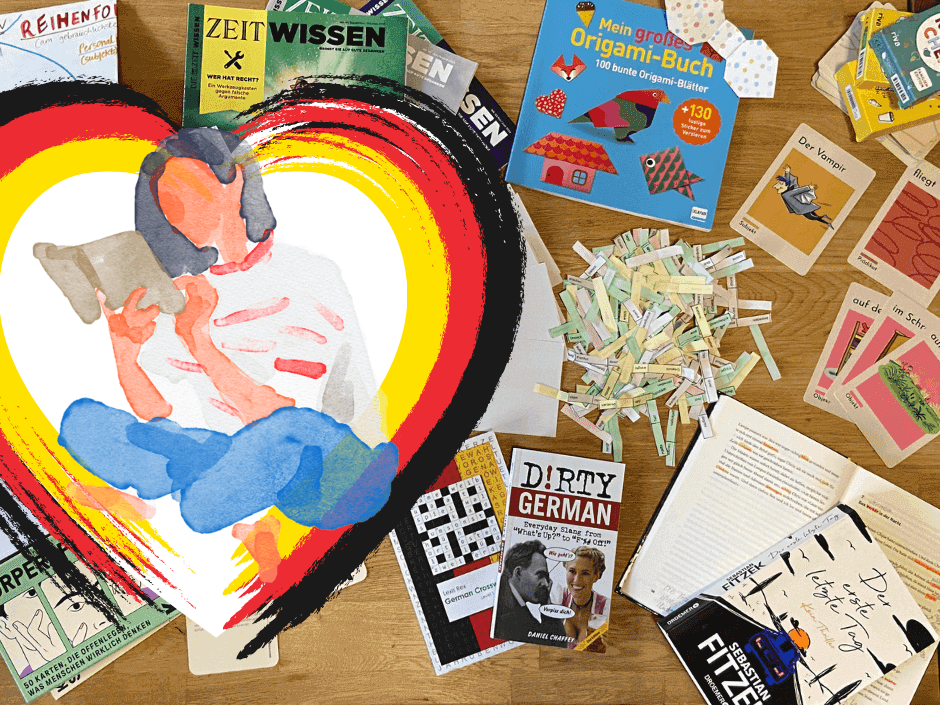
Yet, having thrown in the teaching towel in England for a new adventure on the continent, my options were limited post-Brexit, and Germany was the only country to extend a Tannenbaum branch.
The chaos
I moved to Germany faced with the usual anxiety-inducing challenges of a fresh start abroad – new job, new city, new language.
Added to this mix was a shaky immigration status thanks to Brexit, the hard-earned knowledge that the early days of a move can calcify quickly, and the sense that the world was very much on fire.
Once the honeymoon glow of beer, Bratwurst and sauna sessions had worn off, I went searching for a longer-term fix.
I needed a cosmos to counter this existential chaos: an act of creating order and meaning. One that would give me structure, agency and control.
My unwitting target? German.
The antidote
I recently watched Amie McNee’s Ted Talk called The case for making art when the world is on fire; McNee compels her audience to make art as a way to make the world better and to reclaim something for ourselves.
She defines art as “anything where we create something with the intent to connect.”
With that sentence, she had me.
It perfectly synthesised my desire to learn German, a language I was determined to master in order to connect with locals.
And the beauty of art, language learning in general and German specifically, is that they’re primed to sweeten the bitterness of life’s challenges.
Here’s what German does for me:
1) German makes me laugh
Have you ever noticed that the English language has a Latin PR team? It cloaks the brutalities of life in genteel, civilised terms, all whilst German calls a spade a spade.
Google the female reproductive system and you’ll find “egg ladders” (Eileiter), meaning the fallopian tubes, the “mother mouth,” (Muttermund), meaning the cervix, and “mother cake,” (Mutterkuchen), meaning placenta.
But the mother of all German descriptions has to be the “delivery room”.
In English our usage comes from the Latin dēlīberāre, describing the room where women are liberated from the burden of pregnancy.
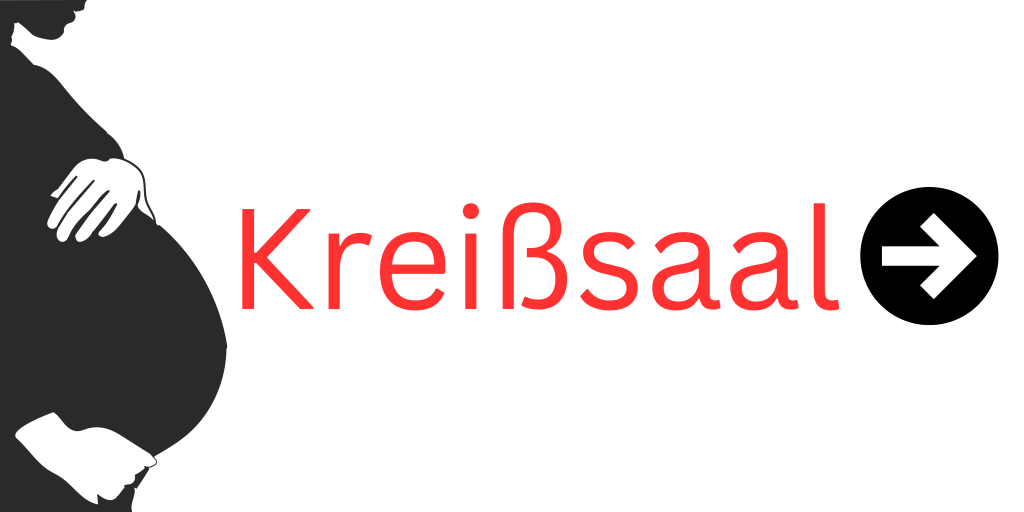
The Germans, on the other hand, prefer the term Kreißsaal, which means “screaming room.”
There’s plenty more where this came from: from Handschuhe, literally “hand shoes,” meaning gloves, to Klobrille, literally “toilet glasses,” meaning toilet seat, learners are endlessly entertained.
If laughter really is the best medicine, then in times of chaos, German is the ultimate comic relief.
2) German makes me feel better
If someone offered you a steady stream of dopamine, reduced stress, and a general sense of satisfaction, would you take it?
It turns out that language learning – like other creative or intellectual tasks – has measurable, calming effects on the mind.
For example, immersion in focused study reduces rumination. If my brain is too busy figuring out the right German case, I simply don’t have the bandwidth to doom spiral.
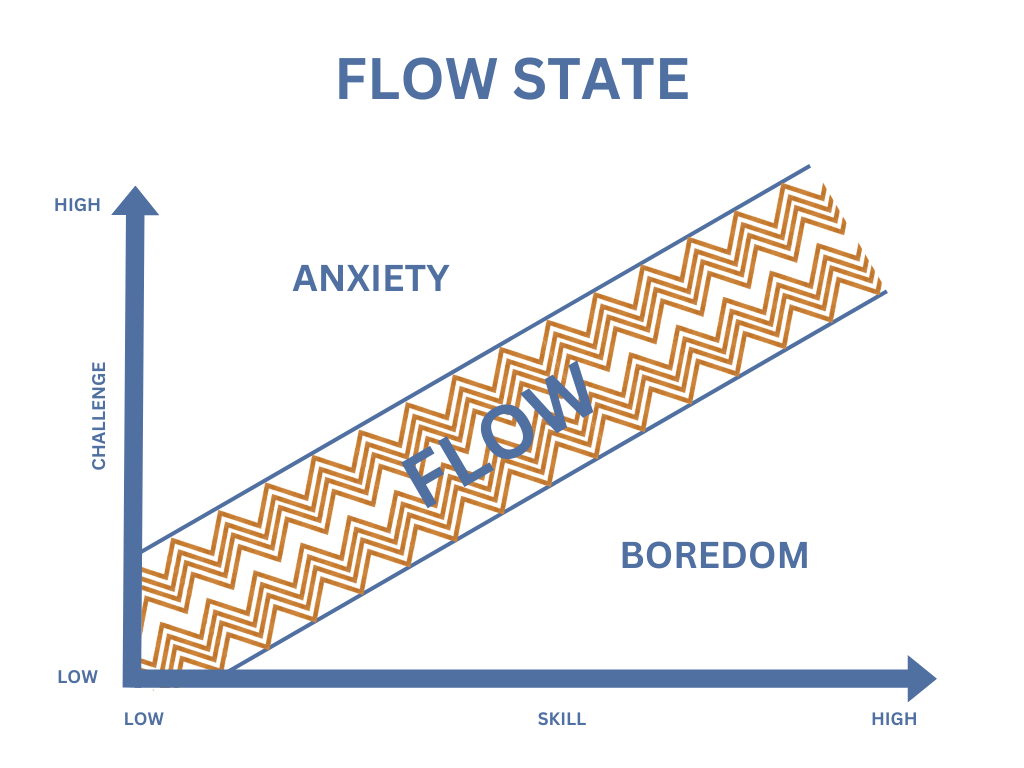
Sustained focus also calms the nervous system. I ride a flow state in my weekly German lesson, leaving class calmer and in a better mood.
Then there’s that dopamine release we feel when we get something right.
When I correctly form a complex German sentence, I feel the surge, reinforce my learning and get a tangible sense of satisfaction. I super-sized this feeling when I achieved my goal of passing the B2 TELC exam last July.
In short, German is a kind of linguistic Xanax. No prescription needed.
3) German gives me structure
Italian placates the soul with musicality, and Spanish wins over its speakers with warmth. German, on the other hand, soothes with structure.
Sentence-building is logical, rigid and usually has only one correct assembly.
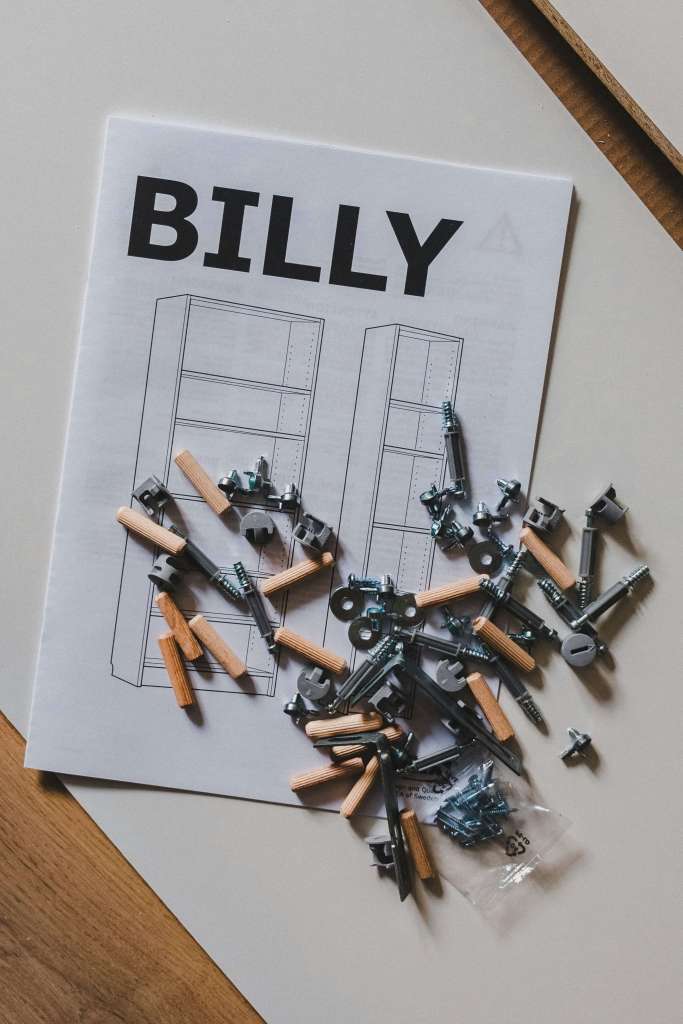
Consider German a second-hand piece of IKEA furniture you bought on Kleinanzeigen, which the seller swore you wouldn’t need the instructions for.
But only once it’s built do you discover a crucial screw at the bottom of the box: the conjugated verb you forgot to put at the end of a subordinate clause.
As long as – like me – you know some well-intentioned native speakers happy to finish your sentences, these mistakes soon diminish.
The structure baked into German can be a nightmare for new learners. But once you crack it, suddenly, there’s predictability: the cosmos ordering grammatical chaos.
4) German is my rebellion
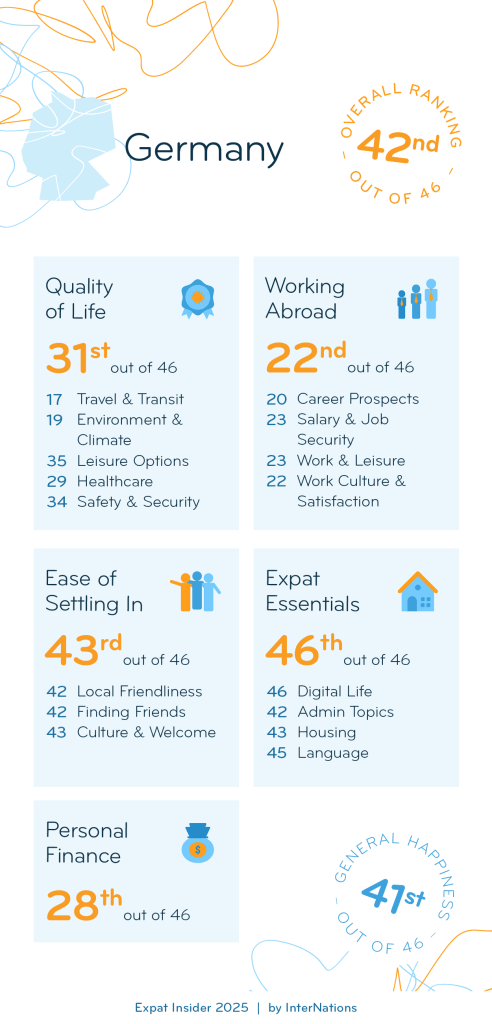
In the 2025 Inter Nations survey, foreigners in Germany ranked it 41st out of 46 for general happiness. Ouch.
Even worse, it’s in the bottom 10 for local friendliness, finding friends, and culture & welcome, and it comes second to last for language, beating only JAPAN.
Lord have mercy.
Having been a foreigner with little to no local-language knowledge in Switzerland and Belgium, I know how it feels to be on the outside. I wasn’t up for round three.
So I made a decision: German wasn’t just something to learn. It was my rebellion. Not just a way to survive, but a way to take control of my story in a country that, on paper, should make me miserable.
5) German helps me connect
Learning German hasn’t just softened the edge off bureaucratic nightmares; it’s also unlocked friendships, family connections and a sense of belonging I never expected in the land of rules and polite social distance.
I chat freely with my boyfriend’s mum, who doesn’t speak English, and no longer suffer the role of silent plus-one at weddings and birthday parties.
I’ve also made German-speaking friends, who are less likely to vanish the moment they get itchy feet – a rare gift in the expat world.
Finally, I’ve received lovely messages from readers of The Talking Ticket, on how helpful you’ve found my German content. Thank you, readers!
6) German belongs to me
German is my personal project – with no boss, no landlord and no Ausländerbehörde.
I’m not following a prescribed path or ticking someone else’s boxes. I set the rules, choose the pace and decide what “progress” looks like.
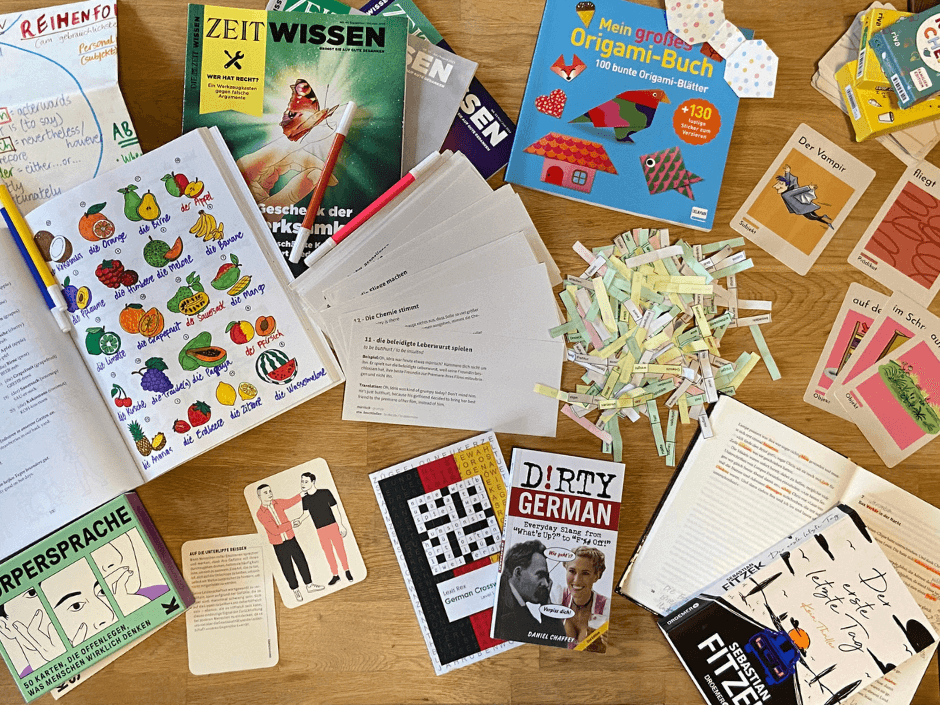
That freedom has led me to do some pretty unconventional things in the name of learning, including:
- turning drinks with friends into word-game sessions
- reading children’s books aloud (Der kleine König Dezember was a personal favourite)
- saying yes to unusual social situations
- binging a German SATC rewatch podcast
- and much more
None of it is textbook. Some of it simply shows what doesn’t work, but all of it is authored by me, and has started to bear fruit.
Upon arrival, my German was nothing more than a crude bit of clay; now it vaguely resembles self-expression.
Final thoughts
Two years in, German hasn’t changed the world around me.
Life is still messy, the bureaucracy still bites, and Germany is still Germany.
But my project of total indulgence, as McNee encourages, continues: hours, energy and stubborn effort have turned it into a small island of cosmos in a sea of chaos – and in what McNee describes as an epidemic of meaninglessness, that feels pretty epic.
Liked this post? Please like and share it!



Leave a comment