

The most common advice you hear from successful Spanish speakers about how to kickstart your learning is to “speak from day one.”
Nice in theory, but how do you do that when you know so few words?
First you need to understand the most common types of interactions in Spanish conversations.

Based on my experience living in Northern Spain, Spanish speakers often prioritise connection. In casual chat, open disagreement is usually avoided and interactions are kept smooth and breezy.
Next you need to a small selection of stock phrases to insert when you notice: “now I need to express understanding,” or “ok here’s where I softly interject.”
Now those things are settled, you can get practising the art of Spanish conversation with this simple list of words and phrases to get your Spanish juices flowing:
- Alternatives to sí
- Take turns / start a point
- Soften a point / hedge
- Alternatives to no when invited somewhere or asked for a favour
- Buy time / postpone a decision
- Agree with others
- Disagree / gently correct
- Express frustration
- Express understanding
- Alleviate tension
- React to someone’s news
- Encourage / push someone
- Downloadable word mat
Alternatives to sí
Just as advanced English speakers avoid overusing the word yes, to sound less robotic in Spanish, it’s worth learning some alternatives to sí. Here are some of the most common:
| Claro | of course |
| Por supuesto | of course |
| Vale | ok |
| De acuerdo | ok |
| Exacto | exactly |
Take turns / start a point
Spanish speakers often announce their turn before speaking, or use certain expressions to steer a conversation politely.
As long as they’re said softly, they will make you sound like an empathic and considerate speaker:
| Oye… | hey / listen |
| Mira… | look / listen |
| A ver… | let’s see |
Soften a point / hedge
When you don’t want to come down on one side or the other, it’s worth learning to hedge in Spanish. This does two things: 1) keeps the conversation light 2) doesn’t force you to defend you position if you were to agree or disagree, which would require more vocabulary.
| Bueno… | well… |
| Yo creo que… | I think that… |
| Quizá / quizás | maybe |
| Más o menos | more or less |
| Depende | it depends |
| Puede ser | could be |
Alternatives to no when invited somewhere or asked for a favour
Hard nos are a no-no in Spanish conversations; you need to cushion everything by stating 1) your desire to accept in the face of an obstacle 2) an alternative solution 3) a legitimate reason why you have to refuse:
| Me encantaría, pero no puedo | I’d love to, but I can’t |
| Hoy no puedo, pero ¿qué tal mañana? | I can’t today, but how about tomorrow? |
| Lo siento, ya tengo planes | I’m sorry, I have plans |
Buy time / postpone a decision
If you’re not ready to say no to something, it’s worth having some phrases to buy time; here are my favourites:
| Déjame pensarlo | let me think about it |
| Luego lo vemos | let’s deal with it / talk about it later |
| Hablamos más tarde | let’s talk later |
Agree with others
Everyone loves being told they’re right, and Spanish speakers are no different. Here are some simple phrases to whip out to boost your conversation partner’s confidence:
| Estoy de acuerdo | I agree |
| Tienes razón | You’re right |
| (Eso es) verdad | (that’s) true |
| Exactamente | exactly |
Disagree / gently correct
Need to disagree? Go softly softly and the world won’t end. These light objections will go fairly unnoticed:
| Ya, pero… | sure, but |
| No exactamente | not exactly |
| Bueno, en realidad… | well, in reality |
Express frustration
Spanish has some of the most fabulous swear words but if used too early in the learning process, they can sound a little childish. Wait til you’re a little further along in your development before busting out ¡Joder! and stick with these more PG options for now:
| ¡Qué rollo! | what a drag / annoying / boring |
| ¡Qué pesado! | how annoying / what a nuisance |
| Estoy harto/a | I’m fed up |
| ¡Jo! / ¡Jolín! | ugh / darn / geez |
Express understanding
Feed that connection with fellow Spanish speakers by showing you get where they’re coming from:
| Entiendo | I understand |
| Ya veo | I see |
| Lo comprendo | I understand |
| Ah, vale | oh, ok |
Alleviate tension
One of the most appealing aspects of Spanish is its effortless anti-catastrophising. A simple no pasa nada will put your worries into perspective immediately:
| No pasa nada | no problem |
| Tranquilo/a | don’t worry |
| No te preocupes | don’t worry |
| Está bien | it’s fine |
React to someone’s news
I’ve known many a fabulous Spanish-speaking storyteller over the years. Even early learners can deliver short emotional reactions to reward such superb narration:
| ¡Qué bien! | great! |
| ¡Genial! | great / awesome |
| ¡Qué bueno! | that’s great |
| ¡Qué suerte! | how lucky! |
| ¡Menos mal! | thank goodness! |
| ¡Qué mal! | that’s bad |
| Lo siento | I’m sorry |
| ¡Qué pena! | what a shame! |
Encourage / push someone
Everyone is different, of course, but the Spanish speakers I’ve met and gotten to know over the years have invariably been audacious and supportive.
The general attitude if you declare you’d like to do something, from improving your Spanish to B1 level or move to another city is: “why the hell not?! Go for it!” Here’s how to return such support:
| ¡Venga! | come on |
| ¡Vamos! | come on / let’s go |
| ¡Anímate! | go on / give it a try |
Downloadable word mat
Want to print these for your next Spanish conversation? Download my word mat, which includes even more simple words and phrases to kickstart your Spanish!
Final thoughts
The first step to learning these words is listening out for them.
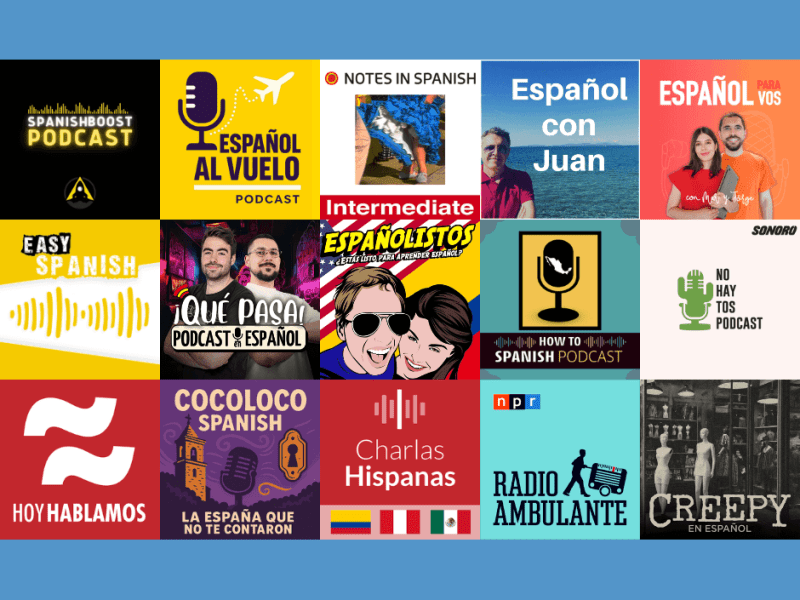
Play conversational bingo as you eavesdrop on the train or at the park, or as you listen to simple Spanish podcasts – you’ll be amazed how often you hear vale, bueno and pues, amongst many other words on this list.
Then try these out alone – in your head, out loud in conversation with yourself, and with others!
Are there any other words you use regularly? Are my list and word mat helpful? If so, please like and share this post 😊
MORE LIKE THIS ›



Something went wrong. Please refresh the page and/or try again.


Leave a comment