

At a German wedding last year, a guest made a brief comment to me about her Kugel. I couldn’t see ice cream anywhere, so I just smiled politely then later asked my boyfriend if I’d heard right.
I had not. A Kugel is not just a scoop of ice cream, it can be a ball, a baby bump (that’s what she meant!) and even a bullet…
You know you’ve reached a new era in your language learning when you start asking the question “I thought that meant [X],” which is inevitably met with “it does, but it also means Y.”
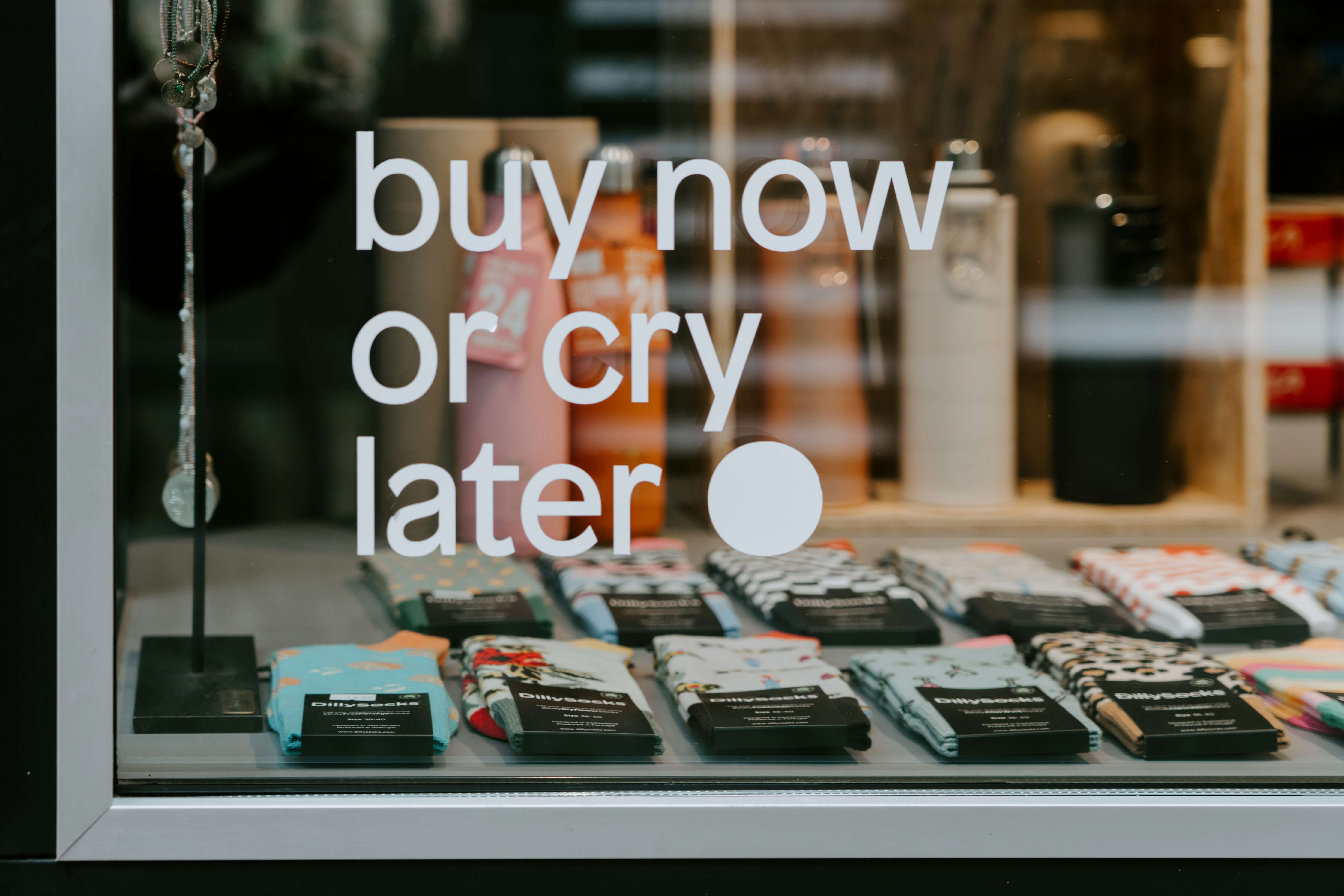
It’s easy to lose hope here, thinking, why the hell would a language use the same word for a baby bump and a bullet? and how am I supposed to learn all of this?
But you’re actually sitting on hidden treasure. German is littered with homonyms – words that look the same but have multiple meanings. Learn 60 words from this list, and increase your vocabulary by 160+.
Let’s go!
Sports and fitness
I started making this list after the 500th time my Bodypump instructor yelled the word Scheibe. I thought: I hear this word everywhere – what’s the deal?
Hours of googling later, this list was born. And it seemed fitting to start with sports and fitness:
| German word | Meaning 1 | Further meanings |
| Die Stange | barbell | rod (curtain rod) |
| Die Scheibe | (gym) weight | slice (of bread, cheese, etc.) / windowpane / dartboard / target / disc (i.e. vinyl record) |
| Das Kugel | ball | bullet / scoop (of ice cream) / baby bump / globe (Weltkugel) |
| Der Boden | floor | soil / ground |
| Die Bank | workout bench | bank |
Shopping and food
Germans like naming things for their shape. That’s why fruit peel, an eggshell and a bowl are all called Schale. They all share a curved shape.
Shape also explains why a lightbulb is called a glowing pear (Glühbirne).
But this logic doesn’t appear to explain Birne as a slang word for head, something I learnt whilst watching Hot Fuzz with German subtitles last weekend.
I much prefer the English “melon,” which seems more true to form…
| German word | Meaning 1 | Further meanings |
| Die Kasse | checkout / till | cash register |
| Die Schale | bowl | peel / shell (e.g. Bananenschale, Eierschale) |
| Die Tafel | bar (of chocolate) | chalkboard / dining table (charity food bank: Tafel) |
| Das Glas | glass (drinking) | glass (material) / jar |
| Die Dose | can (of beans) | box / tupperware, electrical socket (Steckdose) |
| Der Becher | cup / mug | plastic tub (of yogurt, ice cream) |
| Der Karton | cardboard box | carton (of milk, eggs, etc.) |
| Der Laden | shop | shutter (Fensterladen / Rollladen) |
| Die Birne | pear | lightbulb (Glühbirne), head (as the English say: “use your melon!”, the Germans say benutz deine Birne!) |
| Der Kasten | crate (of beer or bottles) | box / case |
| Die Klinge | blade (of a knife) | bell / chime |
Home and daily life
A friend of mine has a sign above her toilet that reads Kacken unterm Schimmel-Himmel: “pooping under a mouldy sky,” a sign made by the previous tenants who suffered a pipe leak from the upstairs flat. Said sign remains in situ to this day for its comedic value.
But this expression could also read: “pooping under a white horse heaven.” That’s German for you!
| German word | Meaning 1 | Further meanings |
| Das Schloss | lock | castle |
| Der Schlüssel | key | wrench / secret (figurative “key”) e.g. der Schlüssel zum Erfolg |
| Der Leiter | ladder | leader |
| Der Schimmel | mould | white horse |
| Der Stock | stick | floor / storey |
| Das Blatt | leaf (plant) | sheet of paper / newspaper / hand of cards (e.g. ein gutes Blatt haben) |
| Das Tor | goal (in football) | gate / large door |
| Die / Das Steuer | tax (die Steuer) | steering wheel (das Steuer) |
| Die Decke | blanket | ceiling |
| Die Stelle | place / spot | job / passage (in a text) |
Nature and travel
Two summers ago I took a quiz from Zeit Wissen magazine called Was ist ihre Kraftquelle? whilst relaxing at the local lake, sans phone. With barely B1 German, I didn’t know what Kraftquelle meant, having only ever seen the word in the context of thermal springs: Thermalquelle.
Powering on in the hope of discovering what I was being tested on, I scored equally on relationships and retreat, which seemed a little contradictory… Turns out the quiz was asking “what is your source of strength?”
| German word | Meaning 1 | Further meanings |
| Der / Die See | lake (der See) | sea (die See) |
| Die Quelle | spring (water source) | source (of information) |
| Die Mauer | wall (outdoor) | figurative “barrier” (eine Mauer zwischen uns) |
| Das Feld | field (agriculture) | academic / work field (im medizinischen Feld) |
| Der Hafen | harbour | figurative “safe haven” (mein Hafen) |
| Die Welle | wave (sea) | wave (trend / movement) |
| Der Kanal | canal / channel (water) | media channel (TV, YouTube) |
| Der Ton | clay | tone / sound |
| Der Flügel | wing (bird or plane) | piano (grand piano) / building wing |
| Die Feder | feather | spring (mechanical e.g. in a clock) / nib (of a pen) |
| Der Stein | stone / rock | precious gem / fruit pit |
Bonus: words with 3+ common meanings
My first year in Germany I bought pair of jeans from Only on a whim. Having changed my mind by the time I got home, I returned to the store a day later with the receipt and labels intact. I requested my money back at the counter, but was offered only a Gutschein.
I’d never heard the word but got the gist. My German was too poor to argue that such a policy was nowhere stated and consumer rights – hello? So I left the store without accepting the damn Gutschein.
Convinced it was because I was foreign, I dragged my boyfriend in a week later to seal the deal. He had a brief back and forth, then confirmed to me that it was the only option. “But I don’t want a fucking Guteschein!” I protested.
To this day a 50€ Only voucher remains in my wallet and the fictitious word Guteschein has become a hilarious joke amongst my boyfriend’s family.
| German word | Meanings (English) |
|---|---|
| Der Schein | light/shine (sunshine: Sonnenschein, candlelight: Kerzenschein) / parking ticket (Parkschein) / banknote (Geldschein) / driving licence (Führerschein) / public transport ticket (Fahrschein) / voucher (Gutschein) |
| Der / die / das Band | das Band: ribbon / tape, die Band: music group, der Band: book volume |
| Die Note | grade / mark / musical note |
| Die Mutter | mother / nut (hardware) / source/origin (Die Mutter aller Probleme: “the mother of all our problems”) |
| Das Gericht | court / judgement / dish (meal) |
| Der Ball | ball (sport) / formal dance / round object |
Context-critical homonyms
I took the Leben in Deutschland test last year, and got stuck on a question referencing Staatsgewalt.
Something about state violence? Wrong!
Turns out, the word Gewalt can mean both “violence” e.g. Gewalt gegen Frauen = violence against women – a word I learnt the meaning of from women’s public toilets – and “authority” e.g. Staatsgewalt = state authority/power.
Quite disturbing, and very important to distinguish between to avoid ending up in a pickle. Here are some more to steer you out of confusion or worse, trouble:
| German word | Meaning 1 (neutral / literal) | Other meanings (serious, figurative, or abstract) | Example(s) |
|---|---|---|---|
| Gewalt | force / power / authority | violence (häusliche Gewalt, Gewalt anwenden) | Die Staatsgewalt sorgt für Ordnung. / Die Polizei hat mit Gewalt eingegriffen. |
| Macht | power / ability | political control, dominance | Die Macht des Staates. / Er hat Macht über sie. |
| Verhältnis | proportion / condition | relationship, affair, social situation | Das Verhältnis von Männern zu Frauen… / Er hat ein Verhältnis mit seiner Kollegin. |
| Anschlag | notice / poster | violent attack / assault | Ein Anschlag am Schwarzen Brett. / Ein terroristischer Anschlag. |
| Schlag | hit / beat | blow / stroke (medical) / type | Ein Schlag mit dem Hammer. / Er hatte einen Schlaganfall. / Er ist ein ganz besonderer Schlag Mensch. |
| Opfer | victim | person who sacrifices / gives | Das Opfer des Unfalls. / Er bringt ein Opfer für seine Familie. |
| Schuld | debt | guilt, blame | Ich habe Schulden bei der Bank. / Es ist meine Schuld. |
| Urteil | judgement (legal) | opinion / assessment / pass judgement | Das Gericht hat ein Urteil gefällt. / Sie hat ein Urteil über ihre Mitbewohner gefällt. |
| Widerstand | resistance (physical) | political resistance / rebellion | Elektrischer Widerstand. / Der Widerstand gegen das Regime. |
| Kampf | fight (physical) | struggle, campaign | Der Kampf im Ring. / Der Kampf gegen Armut. |
| Zucht | breeding (animals, plants) | discipline (archaic or moral tone) | Pferdezucht, Blumenzucht. / Zucht und Ordnung. |
| Pflicht | duty (job, responsibility) | moral or legal obligation | Die Steuerpflicht. / Es ist meine Pflicht, zu helfen. |
| Recht | right (correctness) | law, legal right | Du hast recht. / Das Recht auf Bildung. |
| Ordnung | order (tidiness) | societal / moral order | Die Bücher sind in Ordnung. / Die öffentliche Ordnung wahren. |
| Führer | guide / leader (neutral compound) | political leader (highly sensitive alone) | Reiseführer, Stadtführer. / Der Führer (historical taboo). |
| Ziel | goal / target | aim, purpose | Das Ziel des Spiels. / Das Ziel meines Lebens. |
| Streit | argument | conflict, legal dispute | Ein Streit unter Freunden. / Ein Rechtsstreit. |
| Dienst | service (work duty) | religious service / military service | Kundendienst, Bereitschaftsdienst. / Er leistet seinen Dienst in der Kirche. |
Final thoughts
If you stuck around long enough to get to the bottom of this post, one thing will have become clear to you:
I never learn vocabulary by memorising lists of words. They cement in my brain when I encounter them in the world, through the stories that form around them.
This isn’t an ideal method for everybody, and can be hard to achieve if you’re not living in a German-speaking country, but not impossible.
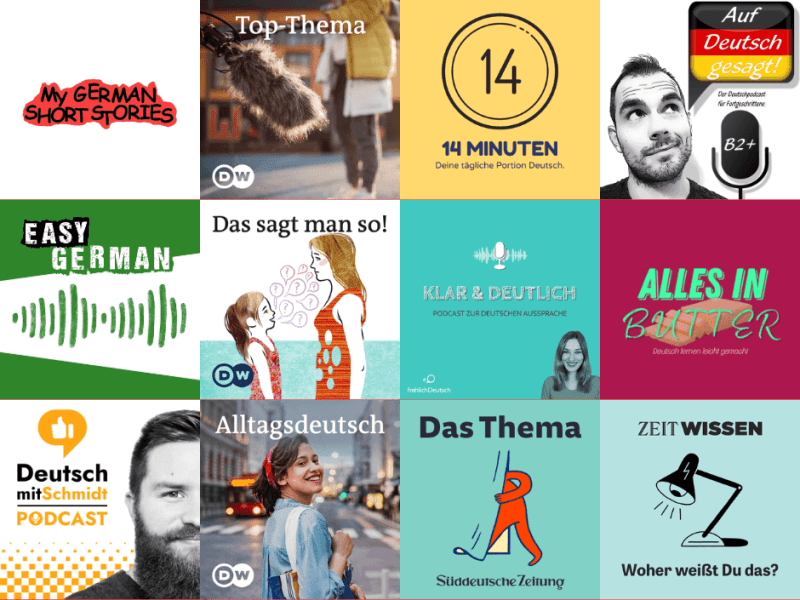
You can channel this method by watching German series, listening to German podcasts and reading in German.
Liked this post? Please like and share it!




Leave a comment