

Perhaps you’ve recently got into Duolingo to finally start learning that foreign language, or you’ve been plugging away at the app for some time, but you don’t know if you’re actually making any progress beyond keeping up that streak.
I personally think that Duolingo can be a great starting point for an introduction to your target language, and as a quick fix for when you’re too tired to do any study work at a higher energy level. Duolingo is a generalist app, which introduces you to vocabulary appropriate to each level of CEFR. However, since it doesn’t mimic the reality of interacting in a foreign language in any kind of authentic way, it’s important to get this experience elsewhere, and there are plenty of options out there.
The five apps I cover in this post are great companions to Duolingo, and where, regardless of your level, you will learn to:
- Listen to and understand natives talking about humour, history, famous people and more
- Read stories and classical literature at your level
- Speak to natives in a comfortable environment
- Write to speakers of your target language
- Sing along to songs in the language
So let’s jump right in:
- LISTENING: Chatterbug
- READING: eReaders – Black Cat and Cideb
- SPEAKING: Italki
- WRITING: Hellotalk
- PRONUNCIATION: Lingoclip
- FINAL THOUGHTS
LISTENING: Chatterbug
Languages: French, Spanish, English and German
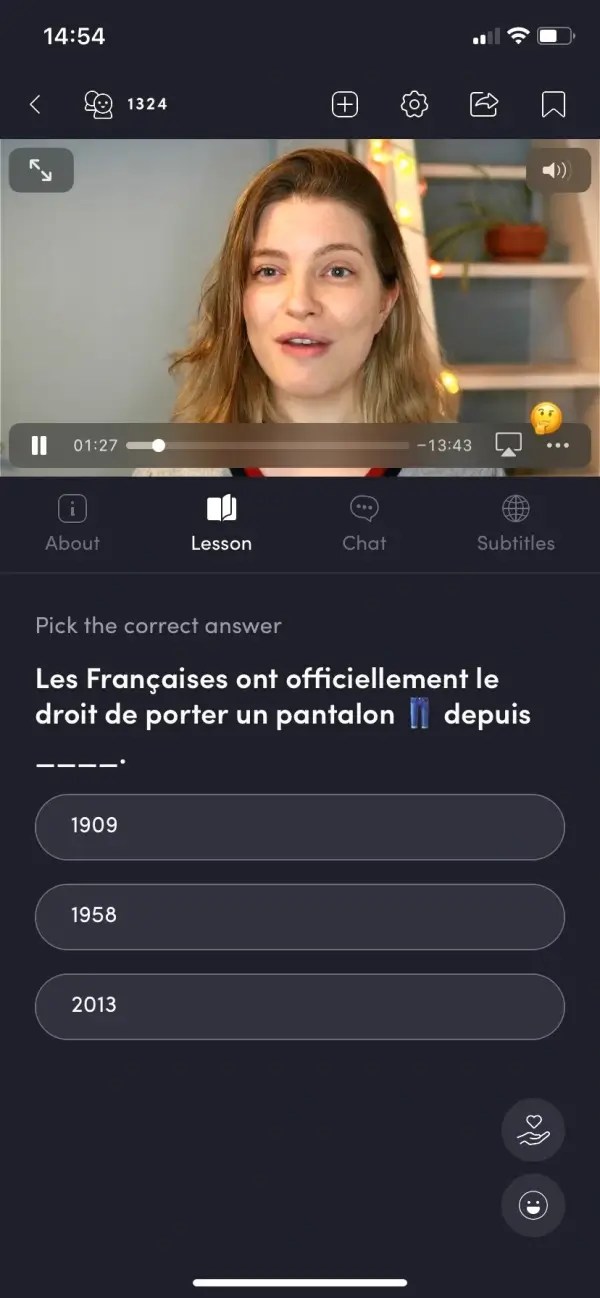
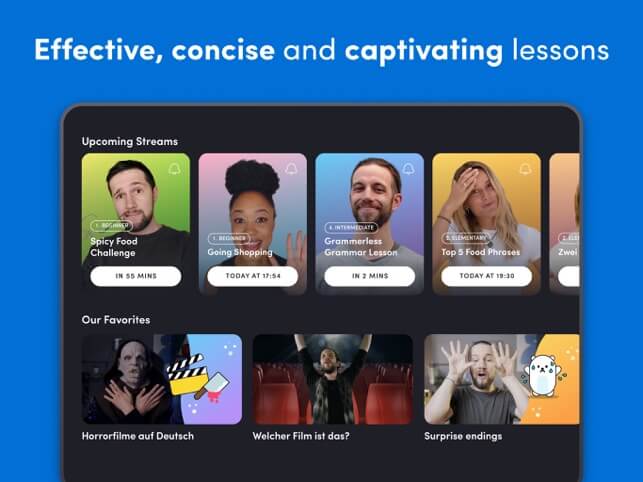
Chatterbug is a relatively new app and no doubt they have plans to expand to cover more languages because I think the format is absolute dynamite. It’s purely video-based, allowing you to interact with native speakers – by commenting and answering questions – on a range of subjects from food to politics, either live or recorded.
If the idea of trying to decipher what a native speaker is saying to you brings you out in a rash, then this app is guaranteed to help you tune your ear to an array of cultural topics.
Cost: free
READING: eReaders – Black Cat and Cideb
Languages: French, Spanish, English, German and Italian
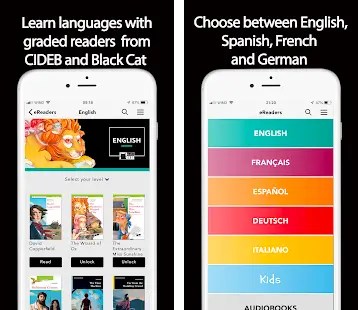
Hardly a catchy name, but this application is an EXCELLENT resource to improve your reading, listening and knowledge of the literature of your target language.
A ‘graded reader’ is a book that has been adapted to include only the language items taught at any given level, and the books are organised according to the CEFR (Common European Framework of reference for languages). This means that in the books categorised under the level A1 (basic user) only the present tense will be used, for example.
See how they work here:
The beauty of these books is that many are adapted from classics and biographies. As such, it’s a great taster of anything from Madame Bovary to Don Quijote or The Life of Johann Sebastian Bach. An added bonus is that you can have the story read to you, which will improve your listening and pronunciation skills.
Cost: there are two types of subscriptions available for this; pay 9.90€ for an ongoing monthly subscription or 59.99€ a year for an annual subscription. You can also just buy each book individually, which is worth doing if you’d like to test out the format.
For those who prefer a physical book, there are many more options than are present on the app on the Black Cat Cideb website (in euros); also find them in all major bookstores in your own country (and on Amazon) per language below (the series changes name per language):
French: Lire et s’entrainer
Spanish: Leer y aprender
Italian: Imparare leggendo
German: Lesen und Üben
SPEAKING: Italki
Languages: 150+ languages
Italki is well-known and well-used amongst seasoned linguists, but can seem scary for newbies. In reality, interactions with a native-level speaker, whether for a structured lesson or just as conversation practice is one of the most effective ways to improve your speaking.
If you’ve reached level 15 on Duolingo, but never speak in your target language – and the idea of a language exchange or group class terrifies you – then Italki is the way to go.
Don’t forget to recommend or promote a teacher you really like, as I’ve heard that the site’s latest algorithms favour new teachers over loyal and effective ones.

WRITING: Hellotalk
Languages: 150+ languages
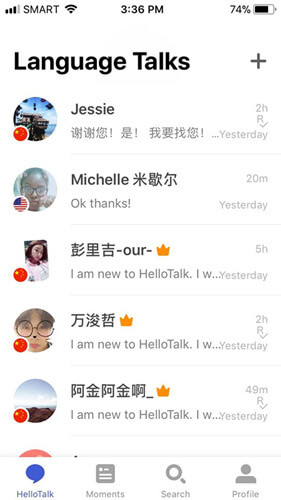
Hellotalk is a language exchange app that allows you to text and send voice messages to other speakers of your target language. There’s a free version, which allows limited use of some of their paid features, including translating messages that others have sent to you. I personally think the free version is perfectly good.
It’s a great way to get your conversational language going and to connect with people all over the world.
I’ve only recently discovered this one, and it’s one of my favourites.
PRONUNCIATION: Lingoclip
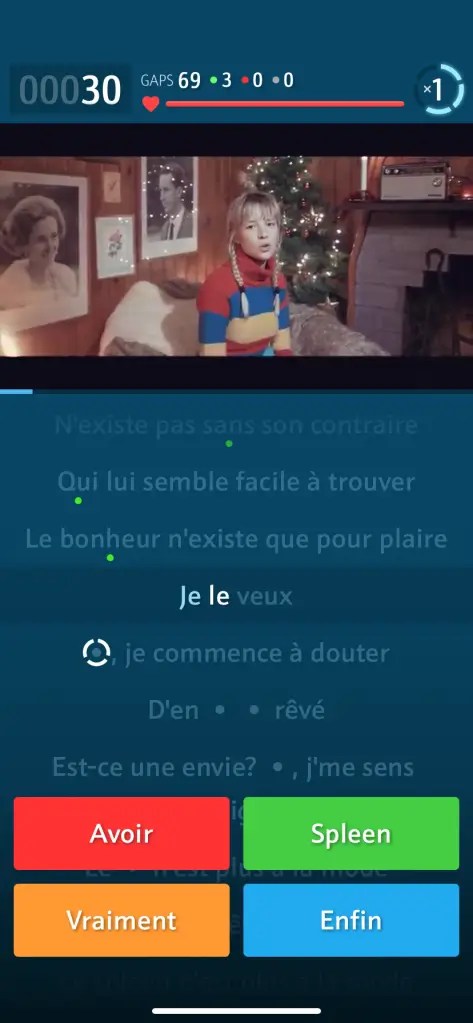
You’ve heard it time and time again: “Listen to music in the target language”. But what music? Where to start? And how is this helping when I can’t understand any of the lyrics?! If this sounds like you, then Lingoclip is the answer.
It’s a free app that you can also use on a computer (called Lyrics Training as a website). You simply select the language you’re learning, the genre you want to listen to, a song, your desired level (beginner, intermediate, advanced or expert), and the desired mode (multiple choice, typing or even karaoke!). Before you know it you’ll be singing along like a native.
FINAL THOUGHTS
Ultimately, an app that works for one person does not work for another, so it’s worth trying out as many as you can until you find one that works for you.
On Chatterbug
I was really excited to find Chatterbug because I’d long been on the hunt for similar content to Pablo Román’s hugely successful Dreaming Spanish, which I used with my students allll the time. Both Chatterbug and Dreaming Spanish are perfect examples of how even beginners can successfully understand native-level chat; if you don’t believe me, give them a try!
On Black Cat and Cideb
For reading in a foreign language to be really effective, you need to get the technique down; check out my post on 6 simple steps to read effectively in a foreign language, then order a cheap second-hand book on Amazon as a starter before you commit to the app subscription.
Just type in the relevant series name I listed above (for example, for Spanish, type in “Leer y Aprender”) and pick one and your level that takes your fancy. Then follow my 6 steps to reading mastery! Before you know it, you’ll be storming through the books at your current level, and reaching for the level up!
On Italki
Italki is a seasoned linguist’s worse-kept secret. When you meet someone who speaks multiple languages and you ask them how they did it, chances are Italki was part of the process. Whether you want to gain confidence by speaking 1-2-1, have a specific learning need or simply want your first native friend, Italki is the one.
On Hellotalk
The beauty of Hellotalk is that it suits people who aren’t yet ready to socialise in person in the target language. Start by texting, upgrade to sending voice notes when you’re ready, then you might consider trying out an in-person language exchange once you’ve built up your confidence. Before you head to a language exchange, make sure to check out my From meek to chic: 9 proven strategies to improve your speaking skills at your local language exchange post.
On Lingoclip
As an ex-teacher, I tend to veer away from gamified learning on the long term as it doesn’t mimic real life. Whilst Lingoclip is gamified, the idea is that you’ll learn some songs in your foreign language so well that you’ll end up singing along when they come up on your Spotify in the car, and when you can do that at the drop of a hat, it’s such a learning win!
Have you tried any of these before? What do you think? Let me know in the comments!
Psst! If you liked this post, please give it a like below 😊👇!


Leave a comment