

Having spent most of my adult life pursuing my passion for Romance languages and some of it living in Western Europe, I ran into some very bad timing when I decided that I wanted a new adventure away from England after the Brexit withdrawal agreement deadline.
Craving cobbled streets, foreign conversations and sunnier climes, I set about getting back to mainland Europe. I was sure that the red tape wouldn’t be that red. Alas, how wrong I was.
If you want to get straight to the section on how to get a job in Germany, you can skip to that section here. If you’re British, read from here at your peril…
Over a matter of months, I managed to get job interviews in companies all over Western Europe and I learnt a thing or two about just how USELESS my passport is now. Here’s what to expect if you’re British and looking to work in the EU in the future:
France 🇫🇷
If French companies want to hire a non-EU citizen, they have to advertise a post for three months before applying to hire said persona non grata, then they must prove to the French authorities that no other EU citizen can offer what the pariah has to offer, after which they must pay 3,000€ for a visa for them. Also, France had the highest number of rejected visas out of all Schengen countries in 2022.
Italy 🇮🇹
Italy is even more complicated, with the country being split into regions bureaucratically, where each region has a different policy on which non-EU nationalities they’re allowed to hire – and how many – at any given time, and these details fluctuate constantly. The UK isn’t on the lists of many regions.
Spain 🇪🇸
The Spanish visa process can take as long as 9 months from the time you accept a job offer to being legally allowed to work in Spain, so most companies just won’t bother.
Belgium 🇧🇪
I don’t know so much about the ins-and-outs of getting a visa for Belgium, but with Brussels being such an international hub, and with the country being saturated with linguistically skilled individuals, there’s little need for native English speakers. For reference, I remember seeing a job advert at the British Embassy in Brussels, which stated that “applicants must already have the right to work in the EU.” At the BRITISH EMBASSY.
Portugal 🇵🇹
As for Portugal, the process of obtaining a work visa takes several months, and with the low salaries on offer, it makes more sense to try for a digital nomad visa if you want to head for Portugal; even that’s a lengthy process, and you’ll need to prove you earn significantly more than the average Portuguese national. More info on this here.
The Netherlands 🇳🇱
The Netherlands appears to be the most promising bet in this area of the world, thanks to something called an Orientation Visa. This visa provides a 1-year residence permit for recently graduated students, PhD graduates, and researchers. Holders of the permit have one year to search for a job as a highly skilled employee or to develop a business idea. This means that if you’re job seeking in the Netherlands, potential employers do not need to apply for a separate work permit for you; you are as easy to hire as an EU citizen.
Whilst the permit is more commonly used by students and researchers who were based in the Netherlands for their study or research programme, international students who have “completed a Master’s degree programme, a doctoral programme, or a post-Master’s programme of at least 12 months at a designated international educational institution abroad” can also apply, if they also meet the following criteria:
- Meet English language requirements (if you’re British, no problem!)
- Graduated in the last 3 years
What is a designated international educational institution? I hear you ask. Find more info (including links to international education rankings) here.
💡 Quick tip: if you’re considering doing a degree, most countries give you the right to stay in-country for a period post-studies to job hunt. Plus, doing your whole degree in an EU country as a non-EU passport holder isn’t as difficult as getting a job. Read my Why study your undergraduate degree abroad (even post-Brexit!): lessons from English with Me’s Veronica post for more on this.
What next?
Needless to say, each of my job avenues led to dead ends. I didn’t even qualify for the Netherland’s Orientation Visa on account of having graduated too long ago.
The irony of writing a blog that claims that language skills can take you places was not lost on me. I spoke the language of every country I tried to get a job in (bar the Netherlands), and still, no one was interested. It was a little lesson on passport privilege that I didn’t enjoy learning…
To deal with this bleak political landscape, I had to get philosophical, and a key tenet of Stoicism was useful here; Marcus Aurelius wrote in Meditations: “The impediment to action advances action. What stands in the way becomes the way.”
This principle is based on the idea that there is no such thing as a setback or an obstacle, there’s simply an opportunity to do something different, which may not be what we had previously thought of, but that is still a solution, nonetheless.
If this concept interests you, I highly recommend Ryan Holiday’s book The Obstacle is the Way, or this 6-minute video summary of the book’s key ideas for a quicker lesson.
It became clear that I wasn’t going to get a job in any of the countries I’d been pursuing (most of Western Europe!), so I had to think a little further outside the box, and frustratingly, outside my linguistic remit.
Having previously decided I was too tired to learn another foreign language, but reluctant to move to a Commonwealth country where my native language would bore me, a new language journey was beckoning.
Germany
It just so happens that German lawmakers have recently approved a plan to attract skilled workers to plug the country’s labour gap.
There are a number of new features that are useful for anyone wanting to migrate to Germany; of most interest to anyone looking to move abroad are:
- The ‘opportunity card’ (Chancenkarte): similar to the system already in place in Canada, points are awarded according to language skills, work experience, age and proof of having a connection to Germany. The more points accrued, the more like you’ll be awarded an ‘opportunity card’, which allows you to spend a year in Germany to find a job that meets skilled labor standards. Find more information on the Chancenkarte here.
- EU Blue Card: the salary threshold for the EU Blue Card has been lowered and rules around what kind of jobs non-EU citizens can seek relaxed, meaning that holders of the Card are less tied to their qualifications or previous job titles. In theory, the EU Blue Card allows holders to apply for jobs in any EU country. I’ve got a feeling you’d still be at the mercy of the bureaucratic bodies of each country in question, but it’s much more secure than a regular work visa. More information on the Blue Card here.
- Recognition of degrees: unlike in the past, skilled immigrants will not be required to have their degrees recognised in Germany. At least two years of professional experience and a degree that is recognised in their country of origin will suffice.
- More education-based migration: currently non-EU students are not allowed to work during their studies; this will change, with students being allowed to work as “student trainees”, thus they will be able to work whilst studying.
- More flexibility for residence permits: people who enter Germany on a tourist visa and find employment during this period will no longer need to leave the country and return to trigger the start of the work visa.
How do I get a job in Germany?
You can apply for jobs in Germany in the same way as you would in the UK (LinkedIn, Indeed etc). However, my recommendation would be to try for an opportunity card, so that you can move to Germany and job hunt from here, where you will have the same employment rights as a German resident.
You can even test how many points you’d likely be awarded by answering some questions on the ChancenKarte Deutschland website (scroll down to the bottom, and use Google Translate if necessary, as the questions are in German).
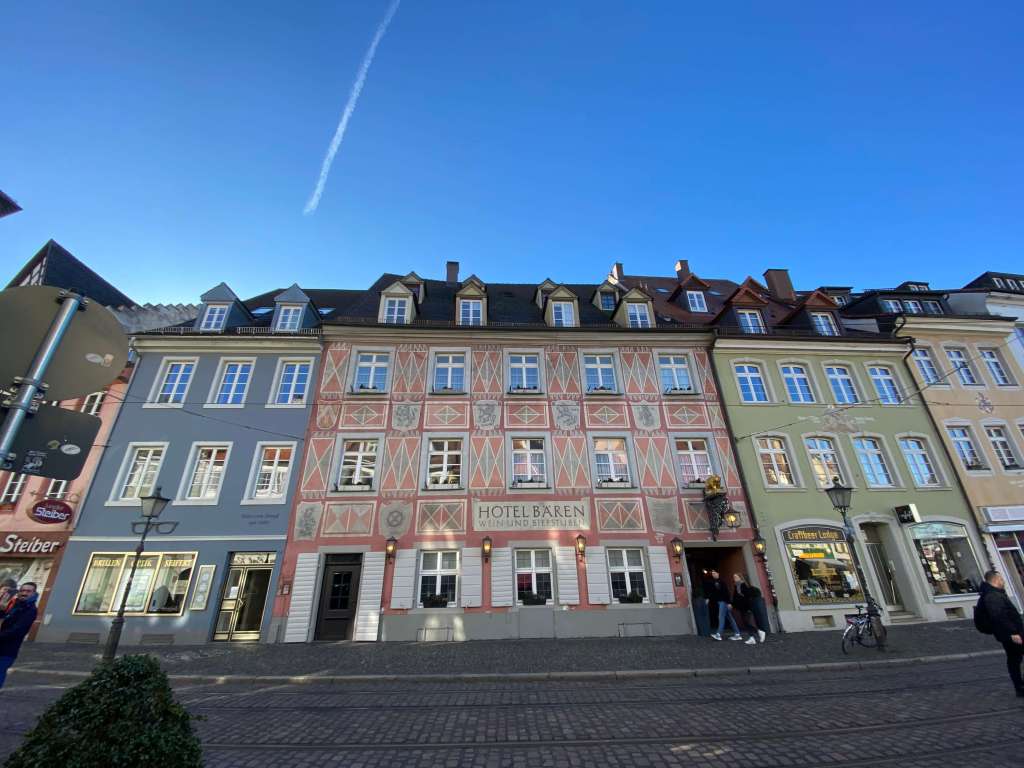
A quick note on any applications you send out – if you don’t yet speak German, you’ll be applying for English-speaking jobs (despite what you may think, there are lots!). HOWEVER, showing an interest in and dedication to learning German will give your application a little sparkle. If you can put at least A2 down, it’ll count for something. Speak no German? Why not try the Lingoda Language Sprint and get through A1 level in a matter of months? Check out my Should you try the Lingoda language sprint? Here’s my experience and advice post for more on this.
The details of getting a German visa
If you bag a job in Germany from abroad, then you’ll need to apply for a work visa from your home country. If you don’t meet the salary threshold, or other requirements of the EU Blue Card, you’ll need to apply for a regular German work visa. It costs 75€ and the application process takes around 3 months.
In the UK, you will need to apply through TLS Contact Germany, which provides this service on behalf of the German Embassy. Getting all of the documents together is pretty simple; the one that slows the whole process is the “pre-approval” document, called the “Vorabzustimmung” in German. Your new employer will need to apply for this at the Federal Employment Agency (Bundesagentur für Arbeit) on your behalf; here are the steps for applying for the pre-approval doc to send to your employer if they’re unfamiliar with the process.
Once you’ve got all of your documents together (listed here), British citizens will need to book an appointment to submit them at one of the TLS offices (London, Edinburgh or Manchester). You have to hand in your passport at your appointment, so don’t book any international travel for the month following the appointment in case there’s a back log.
I went through this whole process, where it took 3 months to get the pre-approval document and my passport and visa were sent back to me two weeks after my handover appointment in London.
A new chapter
The obstacle became the way for me, and I now live in Germany!
I never would’ve considered looking for work in Germany if it hadn’t been for the Brexit obstacle. This was purely for linguistic reasons of course, as the quality of life is very good, the job opportunities are plentiful and amongst many other pros (not least the beer and sausages), it’s incredibly beautiful.
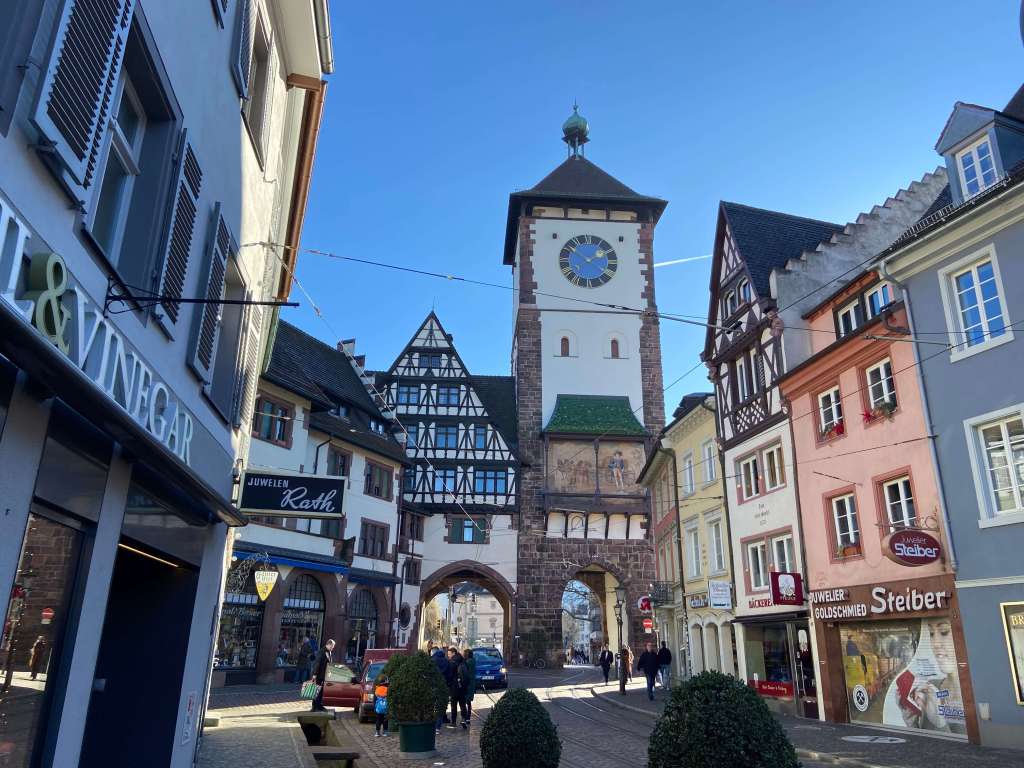
No, I’m not saying that I’m grateful for Brexit overall. Gar nicht. But I’m excited for the adventure ahead!
I’ll be writing about the pros and cons of living in Germany in a future post; if the idea of working in Germany interests you and you have questions for me, get in touch!






Leave a reply to Lucy Cancel reply