

I’ve been in Germany for nearly 6 months, and in this time, I’ve been plugging away at my German, using many different techniques to avoid the situation I ended up in whilst living in Belgium, where I existed in an English (and Spanish-speaking) bubble; you can read more about this in my How not to learn a language: 9 lessons from that time I flunked Flemish post.
Here are 15 things I’ve done or am doing regularly to keep progressing in my learning:
I’m building on knowledge I gained pre-arrival
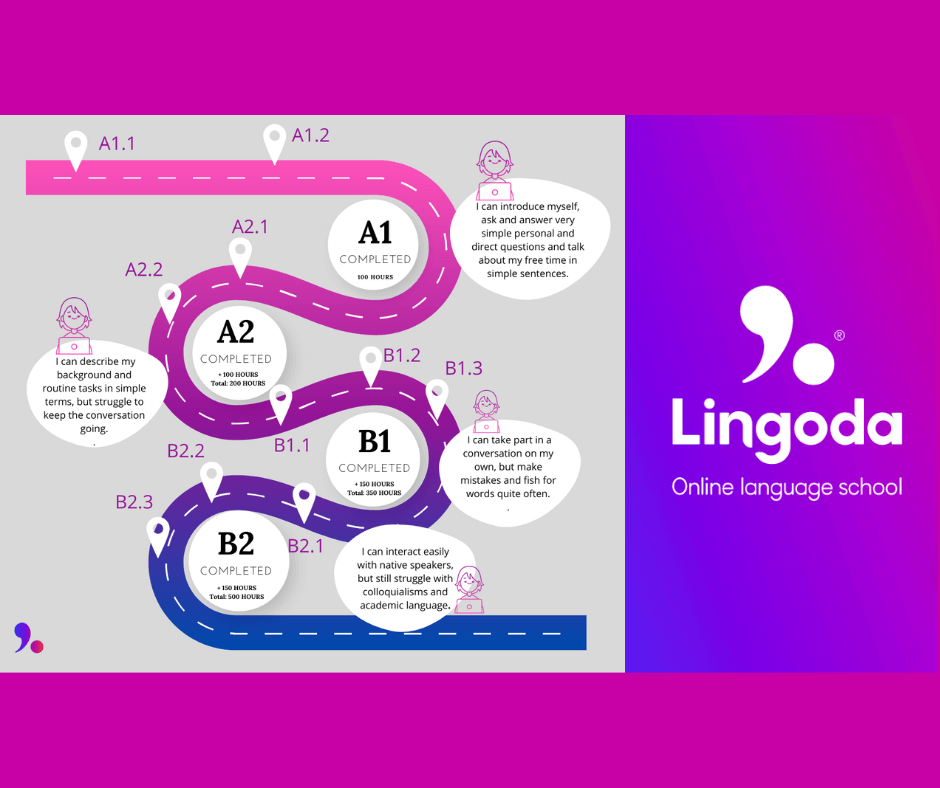
I didn’t want to arrive in Germany as a complete beginner; as such, prior to my move, I studied independently for three months, and then tried out the Lingoda language sprint at level A2.
I definitely wasn’t the ideal candidate for A2 level, but wanted to skip the really boring A1 stuff!
You can read more about the sprint in my Should you try the Lingoda language sprint? Here’s my experience and advice post. The sprint got me talking, and kickstarted my learning with a bang.
I’m taking German lessons
I signed up to German classes within two weeks of arriving in Germany, as I wanted to capitalise on the motivation I was feeling, which is something that naturally ebbs ands flows.
I was put in an A2 class at a local language school; I take 1.5 hour German lessons twice a week.
Google can give you plenty of information on language schools in your area, but asking other foreigners you know is also a great way of getting good recommendations.
Note: to my surprise, I couldn’t pay for my course by card (ohhhh Germany…); even in well-established schools, be prepared to pay in cash or by bank transfer!
I often listen to podcasts
Whether I’m walking to or from work, doing a workout, cooking, or on a lone hike, I like to listen to podcasts.
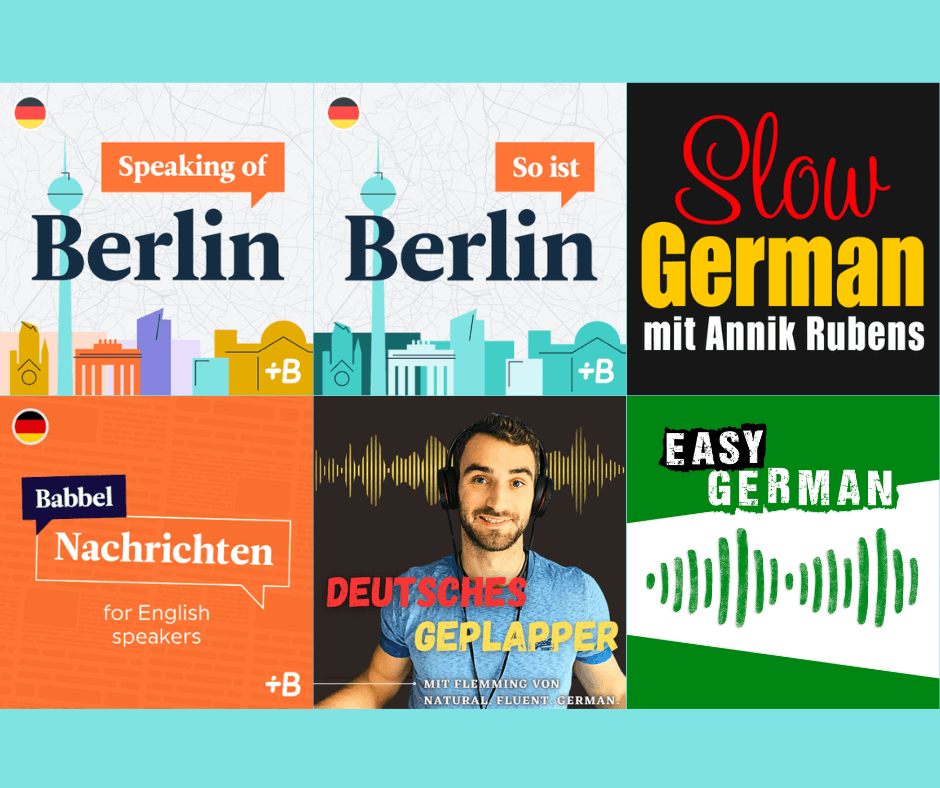
I never expect to understand everything that’s going on, but I know I’ve made progress because I’ve “graduated” from the lower level podcasts I started with, and now consistently listen to Deutsches Geplapper and Easy German.
I’ll often listen to the same episode twice, which allows me to increase my understanding.
Check out my 6 great podcasts with free transcripts for A1-B2 German learners post for my recommendations.
I watch German series
There are so many great German series to watch. A few things to note when choosing something, if you’re just starting out in your learning:
1) Choose something with a limited amount of dialogue (so choose a crime thriller over a comedy, which may be too fast and quippy).
2) Use the Language Reactor Chrome extension if you watch TV on a laptop, so that you can read your target and native language whilst watching.

3) Consider this a mindfulness activity. Put your phone away and don’t watch whilst you’re doing another task. Watching series in a foreign language requires your full attention, so choose moments when you have the energy to really concentrate.
Check out my 9 highly entertaining Netflix German series worth watching post for my recommendations.
I’ve made German-speaking friends
This was not easy at all; it’s still a work in progress, and I will be writing about the specific things I did to make friends in Germany in a future post.
In a nutshell for now: it’s not absolutely necessary to make native friends – or even fluent-speakers – in order to practise your German. All you need is someone else who is keen to practise their German, so that you have regular opportunities to get talking.
I live with Germans and speak to them in German when I have the energy
Having German housemates is great for your learning, whether you’re currently only at the stage of eavesdropping on their conversations (in shared spaces of course) to improve your listening, trying the odd conversation here and there, or asking for clarification on things that confuse you about German.
I walk the streets and read anything I can find
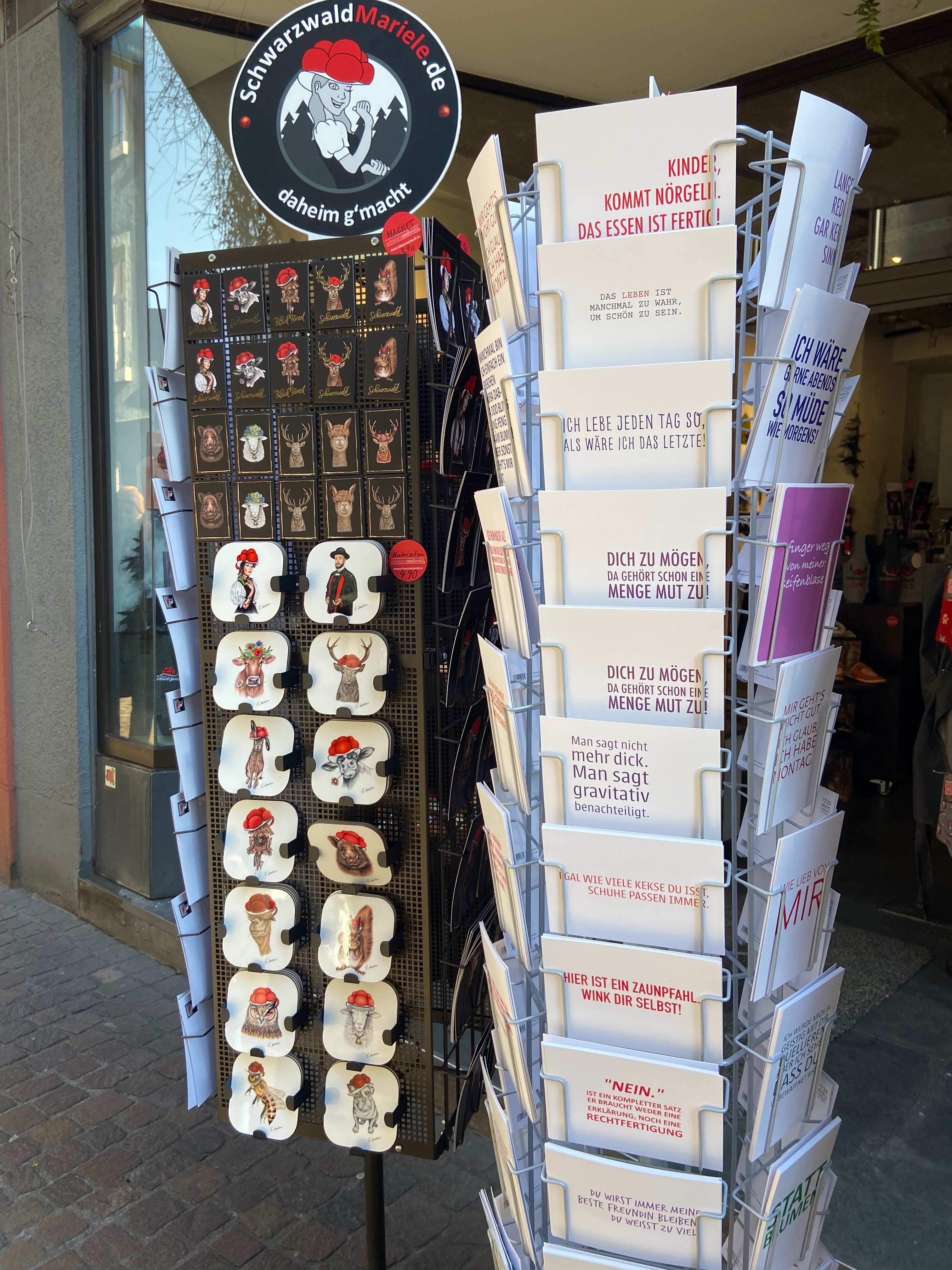
Graffiti, postcards, books, even signs at an anti-AfD march have taught me new words and expressions: kunterbunt is a glorious word! The idea here is to never stop noticing.
The more I question why German is as it is, the better I understand it; what better example of the Dativ and Akkusativ than Jorge Bucay’s book Drei Fragen? Did I buy the book? Of course not; I can’t answer those three questions in my own language, let alone German. I just keep logging the details and nuances.


I always start interactions in German
Despite the stereotype that Germans commonly switch to English when a foreigner tries speaking German, this hasn’t been my experience.
Whenever I enter shops, cafes, bars, or ask for help, I always start the interaction in German, and will only fall back on English if I’m really struggling, and it’s resulted in my having lots of brief and simple conversations in German. You’d be surprised how much these moments can build confidence, as you start to realise you can get your point across without English.
This is easier to do if you avoid touristy areas, as people are less likely to speak or to want to speak in English.
I read and listen to short stories in German
As well as listening to podcasts, I also listen to and read graded reader short stories, which are available on eReaders – Black Cat and Cideb app. This is the only app I spend money on for language learning. It costs 59.99€ a year for an annual subscription.
You can read more about these books (available in multiple European languages) in my 5 apps to use alongside Duolingo that will improve your listening, reading, speaking, writing and pronunciation post.

I do German crosswords
This is my favourite activity to do before bed; it gets me off my phone and it’s a quick and fun way to see your progress.
I recommend the Lexis Rex series of crossword books, available at beginner, intermediate and advanced level. The clues are in English.
If you want to try before you buy, or just prefer word games online – where you can also do word searches, play hangman and other games – check out https://www.lexisrex.com/.

I listen to German music
I have created a playlist of German music I like, and I read through the lyrics on Spotify to improve my understanding next time I listen.
My current favourite artist is Lena&Linus.
I write messages to German-speaking friends and use apps to practise my writing
I downloaded Bumble BFF when I first moved to Germany in the hopes of making new friends.
This was unfortunately pretty ineffective (more on this in a future post), but it gave me a lot of writing practice, and I learnt a lot of new vocabulary by looking at other people’s profiles.

And even with friends with whom I predominantly speak in English, I write to them in German.
I’ve created German wallpapers for my phone
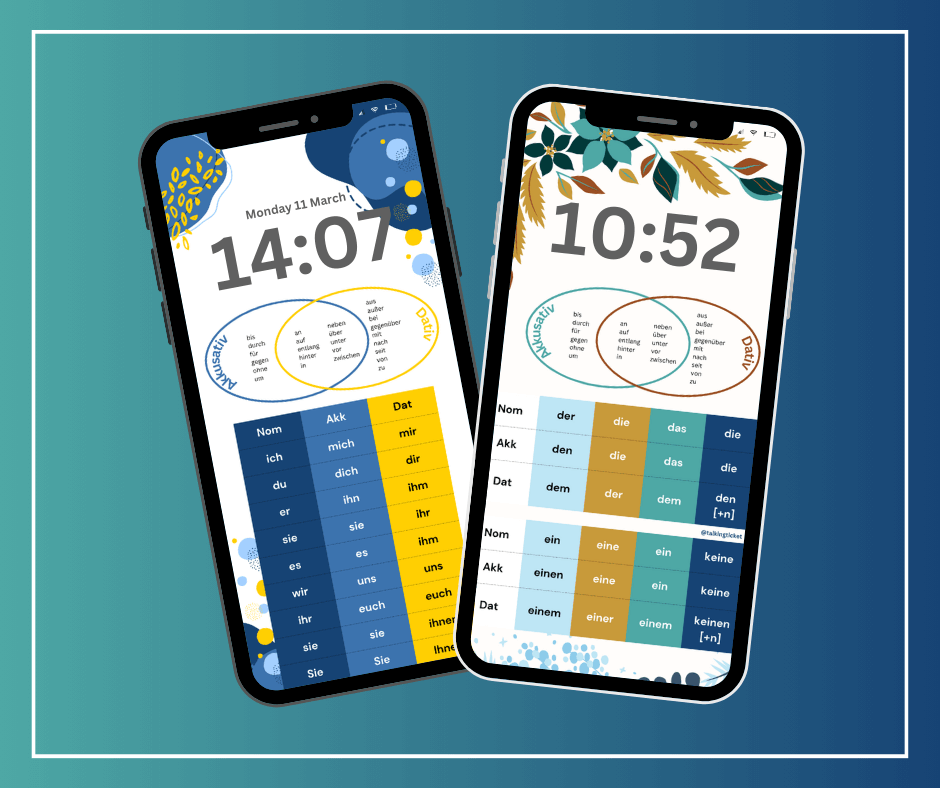
I realised I needed something to help me out when speaking and writing in German, particularly regarding the cases, so I created some phone wallpapers as a learning aid to use any time I get stuck mid-sentence.
This has drastically improved my accuracy with cases, and has helped me commit them to memory.
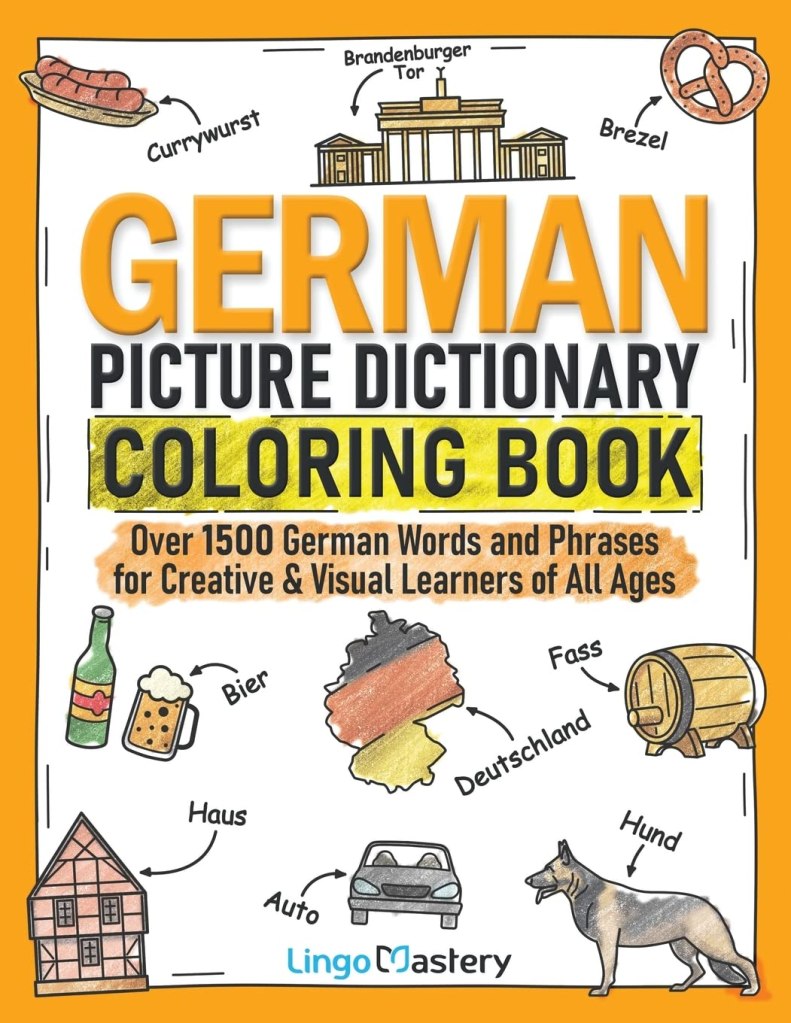
I use a colouring book
This is one of my favourite ways to learn new vocabulary.
Lingo Mastery has colouring books in 15 languages, and a colouring book provides a really nice break from screen time!
Whether you want to know how to say “badger,” “weightlifting” or “tap” (the last one translates as “water chicken”), you’ll find extensive vocabulary here.
I have downtime
My working day is purely in English, and I still socialise in English (and Spanish – note to anyone learning Spanish: move to Germany if you want to hang out with Spanish speakers!).
The point here is that your brain needs downtime, so don’t endure painful learning experiences at all costs just because you feel you should be making the most of every moment.
I’m not looking at the bigger picture
Mindset is so important in language learning, and in my experience, crucial for German. Could I panic about cases, declension, crazy word order and more? Sure. But what’s the point? I know plenty of people who’ve mastered German and I plan to join them.
Instead I focus on getting to the step in front of me in any given moment.
Final thoughts
One key thing that’s keeping me motivated with my German is the feeling that I’m in it for the long-term. Having spent a lot of time and energy convincing an EU company to hire me as a non-EU citizen, and waiting for my visa to come through, Germany is no fling – I’m committed. It’s not a question of “if” I’ll learn German properly; I just have to put one step in front of the other until I can have similar conversations in English and German.
I’m doing 13 more things as part of my move to Germany than I did when I moved to Belgium and failed to learn Flemish – you can read about what not to do to learn a language in my How not to learn a language: 9 lessons from that time I flunked Flemish post.
Language lessons alone just aren’t going to cut it for me. The lessons are pointing me in the right direction, and I’m paddling like crazy on all sides to get me where I need to go.
I’d love to hear about the experiences of other foreigners learning German in Germany, Austria or Switzerland; write to me in the comments or on social media, and let’s swap learning techniques and language fails!


Leave a comment