

Learning a foreign language should first and foremost be fun, and one simple way to get to the fun quickly is through games.
You don’t have to wait til you’re “totally fluent” to play the games that natives play, either.
There are plenty of word games designed for natives, that you can play – whatever your level.
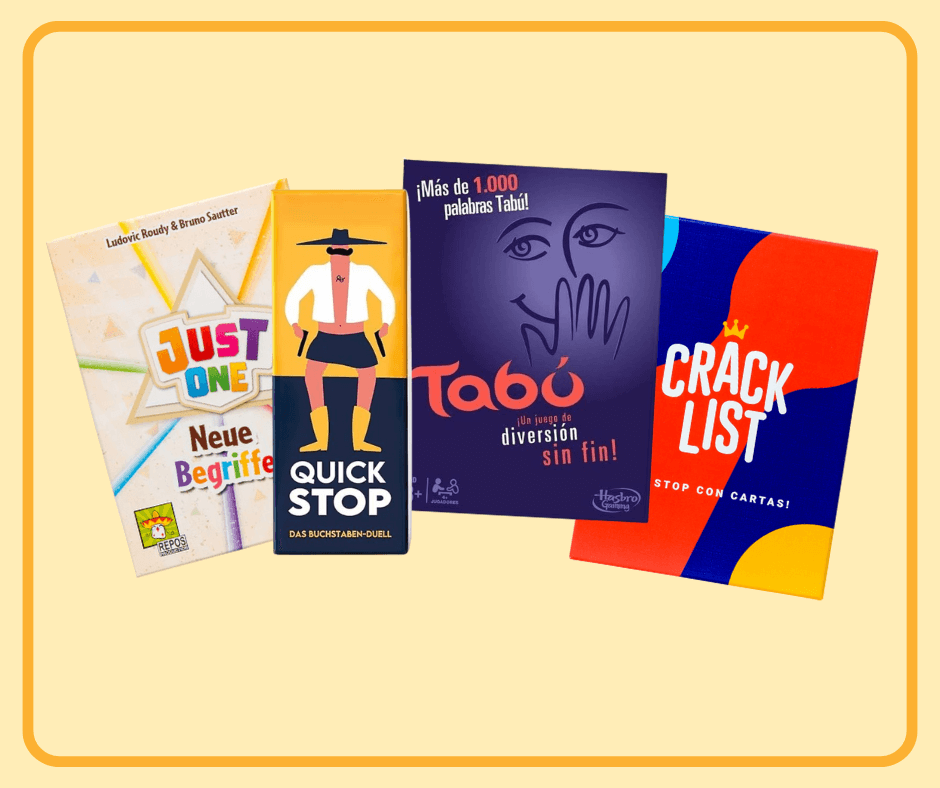
Whacking out a fun card game is particularly useful if you live in a Spanish-speaking country, where you can get natives and other learners involved.
If that’s not you, you can still enjoy these games with friends also learning Spanish. Don’t have any Spanish-speaking friends near you? Sounds like it’s time to create a community! Check out my From meek to chic: 9 proven strategies to improve your speaking skills at your local language exchange post for avenues to meet people in your area, as obsessed with Spanish as you are.
Now you’ve got your crew, you’ll want a few games up your sleeve. I’ve carefully curated a selection of games that will help you expand your vocabulary (whether through learning synonyms or grouping words by theme), improve your sentence construction, fluency and more.
💡IMPORTANT: some of these games are available in multiple languages; make sure to double-check the language of each game before ordering.
A1+
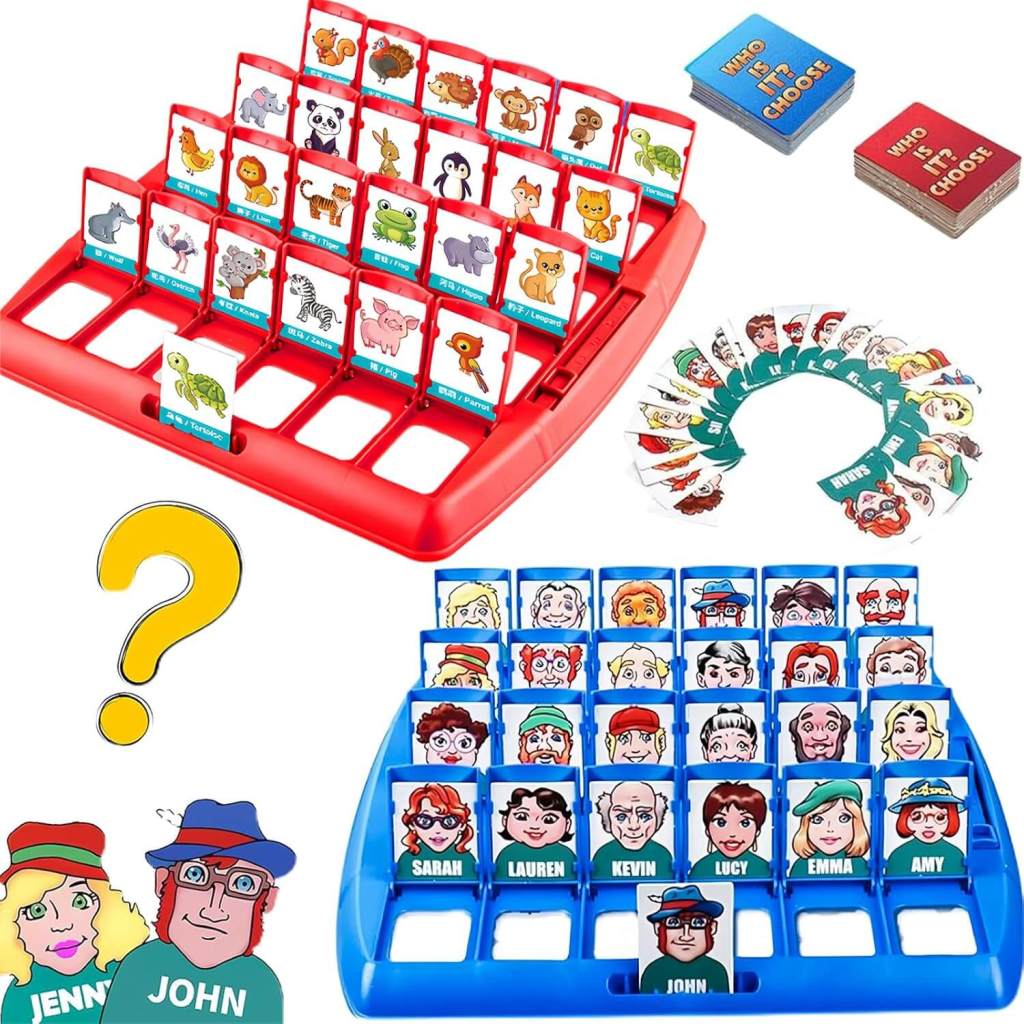
Quién es Quién/Guess Who
Guess Who is the perfect game for practising asking questions and talking about physical appearance. Better yet, you don’t need to buy a Spanish version to play in Spanish; use your English version or pick one up in a secondhand shop.
Don’t want to buy the physical game? Here’s an online version.
Why play? Guess Who is a good way to ease into speaking Spanish with another learner or a native; stretch yourself by adding extra phrases like ¡Sé quién es! (I know who it is!) and Lo he pillado (I’ve got it).
Up or Down?
Up or Down? is a great game for anyone who enjoys facts, numbers and betting!
One question is asked per round, for example, What is the temperature of the water in the Blue Lagoon in Iceland? The first player must choose a number between 1-1000, as their answer.
All other players must then state whether they think the correct answer is higher or lower (or ¿Arriba o abajo?) than the stated number. The winner is the person with the most counters at the end of the game.
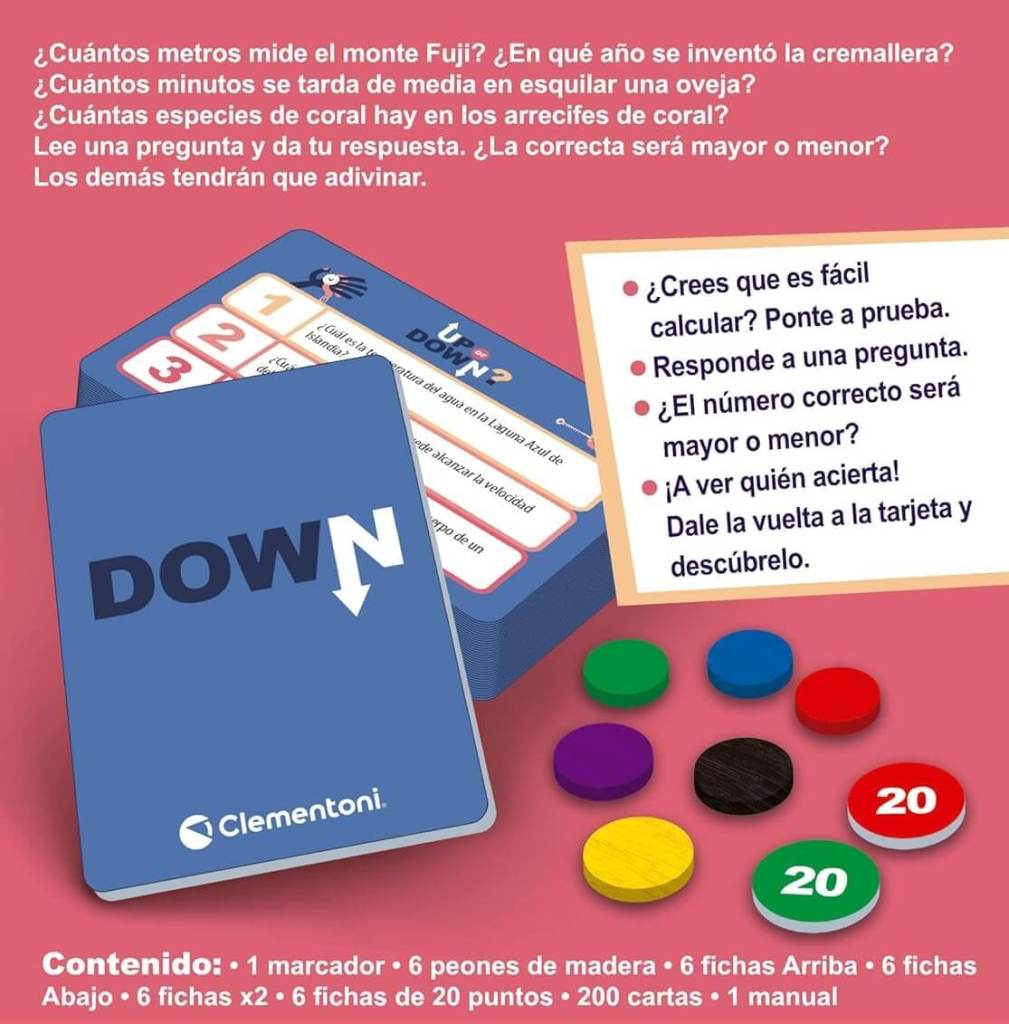
Why play? Up or Down? will test your listening (or if you prefer, reading) skills. You’ll improve your ability to deduce the meaning of unknown words by seeing them in context. Keep it simple by saying simply arriba or abajo when you make your bet, or make it harder by stating specific comparatives: más frío / menos alto / más rápido.
Kloo: Race to Madrid
Kloo: Race to Madrid is a really simple question and answer game. There are four decks of cards on clothes & shopping and everyday objects, which focus on nouns in one set, and verbs and stock phrases in the other.
Quite simply, if you correctly translate a word or term, you move forward. See the full instructions.

Why play? With Kloo you’ll expand your vocabulary on clothes & shopping and everyday objects, and the cards can double-up as flashcards.
A2+
Just One
Just One requires teamwork, whereby the whole group gives clues to help the person whose turn it is to guess a key word. It’s a bit like a reverse and slower version of Taboo.
See the full instructions in English (but remember to buy the Spanish version!).
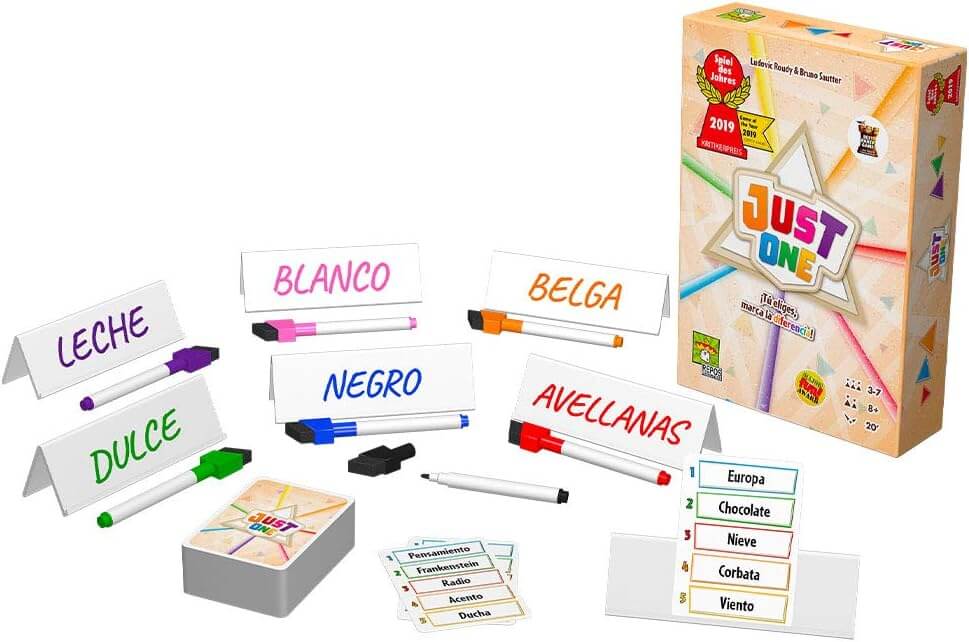
Why play? Just One will help you expand your vocabulary through synonyms, and force you to think creatively. The vocabulary used is common and simple – it’s recommended for children of 8 years old and up – so good for A2+!
¡Fuera de Lugar!
¡Fuera de Lugar! is similar to Up or Down? but instead of guessing the numerical answers to the questions, you just have to put the different items in the correct order, from smallest number to biggest.
For example, ordering the amount of teeth a great white shark has, the amount of blocks in a Jenga set, the amount of sheep per person in New Zealand and more. As the turns continue, players add to this ever growing chain, and any player can thump their fist on the table and declare “¡Fuera de Lugar!” Turning the cards over reveals their answers, and points are awarded based on having placed the correct order, or having caught someone out.
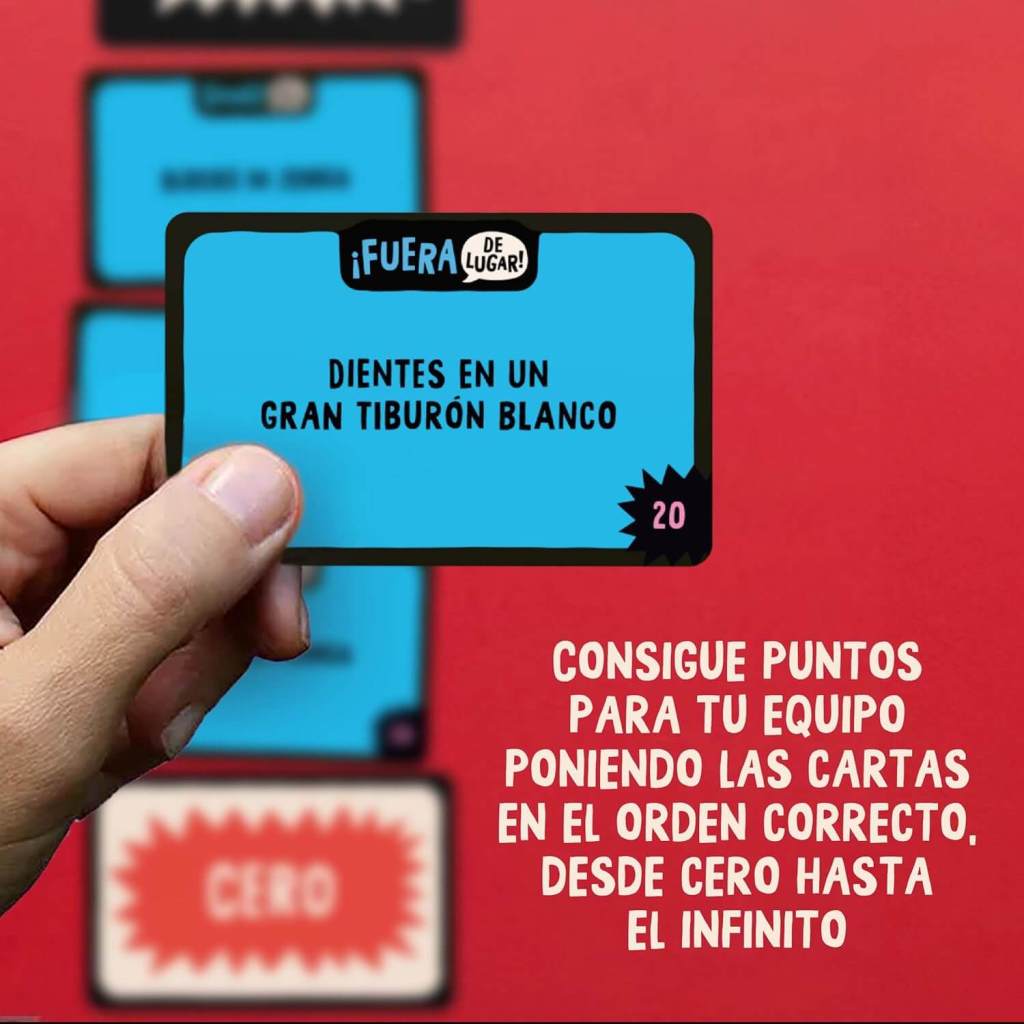
Why play? You’ll drastically improve your vocabulary across a wide range of topics playing ¡Fuera de Lugar! You could also practise numbers when revealing answers.
B1+
Tabú
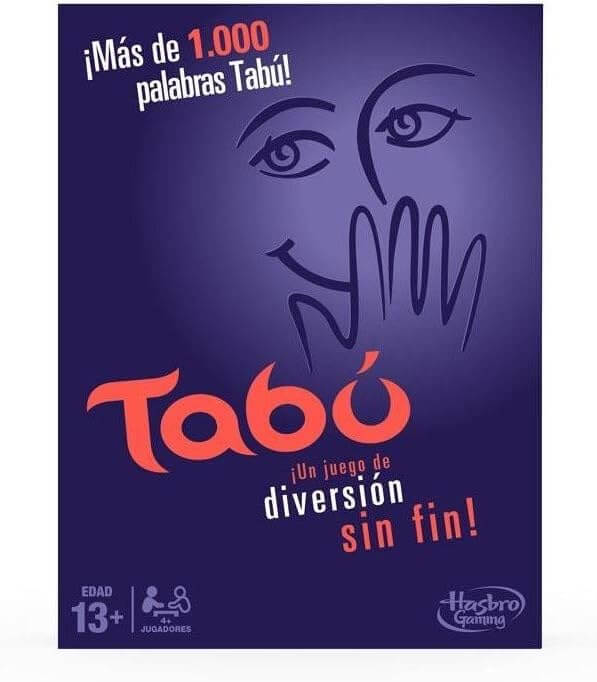
Taboo is a pretty well-known game in most languages; why not try it in Spanish?
For anyone who doesn’t know it, players work in pairs, where one player must describe a key word to the other player, without using the selection of words on the card they’re holding.
See the full instructions in English (but remember to buy the Spanish version!).
Why play? Tabú is a great way to learn word groups connected to a variety of topics, to expand your knowledge of synonyms, and explaining abilities.
Quickstop
Are you ready to discover that there are more Spanish words in your head than you realised?
In Quickstop, there’s a set of cards with concepts or categories on, such as “Something that lives in the sea,” “A childhood game” or “An animal that does small poops.” One of these is dealt each round, and players race to submit an answer that begins with one of the letters they’re holding in their hand (the yellow cards).
Different letters are worth a different score. The aim of the game is to finish with the lowest score. Watch the full instructions (in Spanish) here.
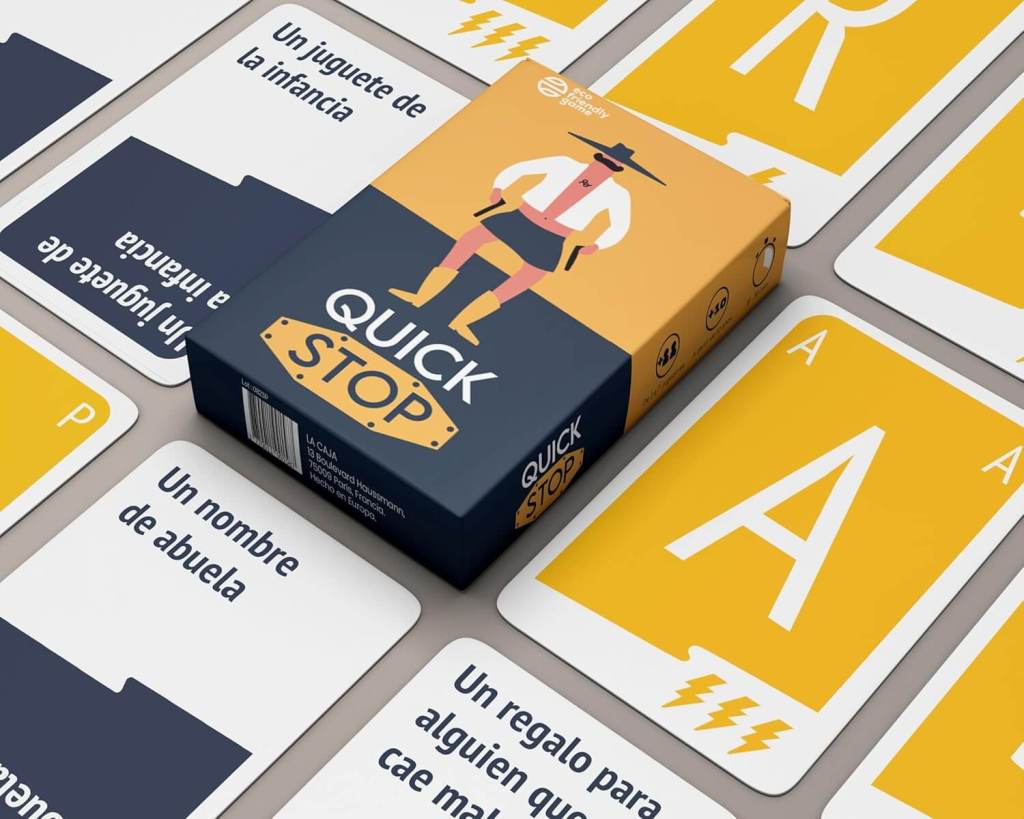
Why play? You’ll learn new vocabulary from other players and will start to categorise and groups words, improving your recall. It’s also high energy and really fun!
Crack List
Crack List is like Quickstop on crack… Or perhaps mutated with the game Uno. It features the same principle whereby a category is chosen, and players must submit a word associated with it, starting with one of the letters in the player’s hand.
There are many additional cards such as reversing the order, a joker card that gives freedom to pick any letter, and more.
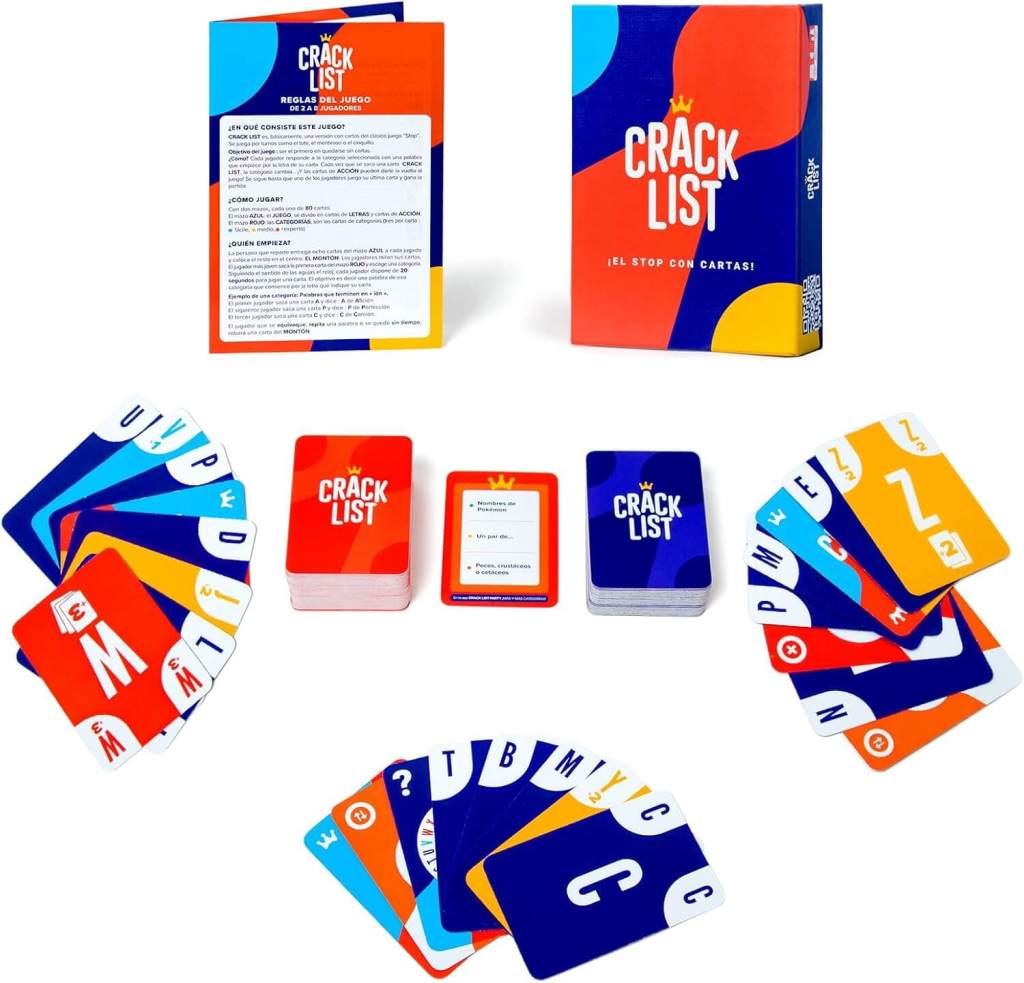
Why play? This game will help you broaden your vocabulary, group words in categories, and start to think quickly in Spanish – crucial for a language whose native speakers talk at a million miles an hour!
Contrabando
Contrabando is a little like reverse Taboo. Each round a player draws a question card; examples include: “How would you rob a bank?”, “What do you think is the hardest job in the world?” and “What do you think about before you sleep?”.
The player must also draw a contraband card which has one word on it; there are three categories: easy, intermediate and hard. Example words are dog, pirate, siren, saxophone. The player must answer the question and slip the contraband word in undetected. If successful, the player gains points; if caught out, however, points go to the successful detective in the group.
Read the full instructions in English here.
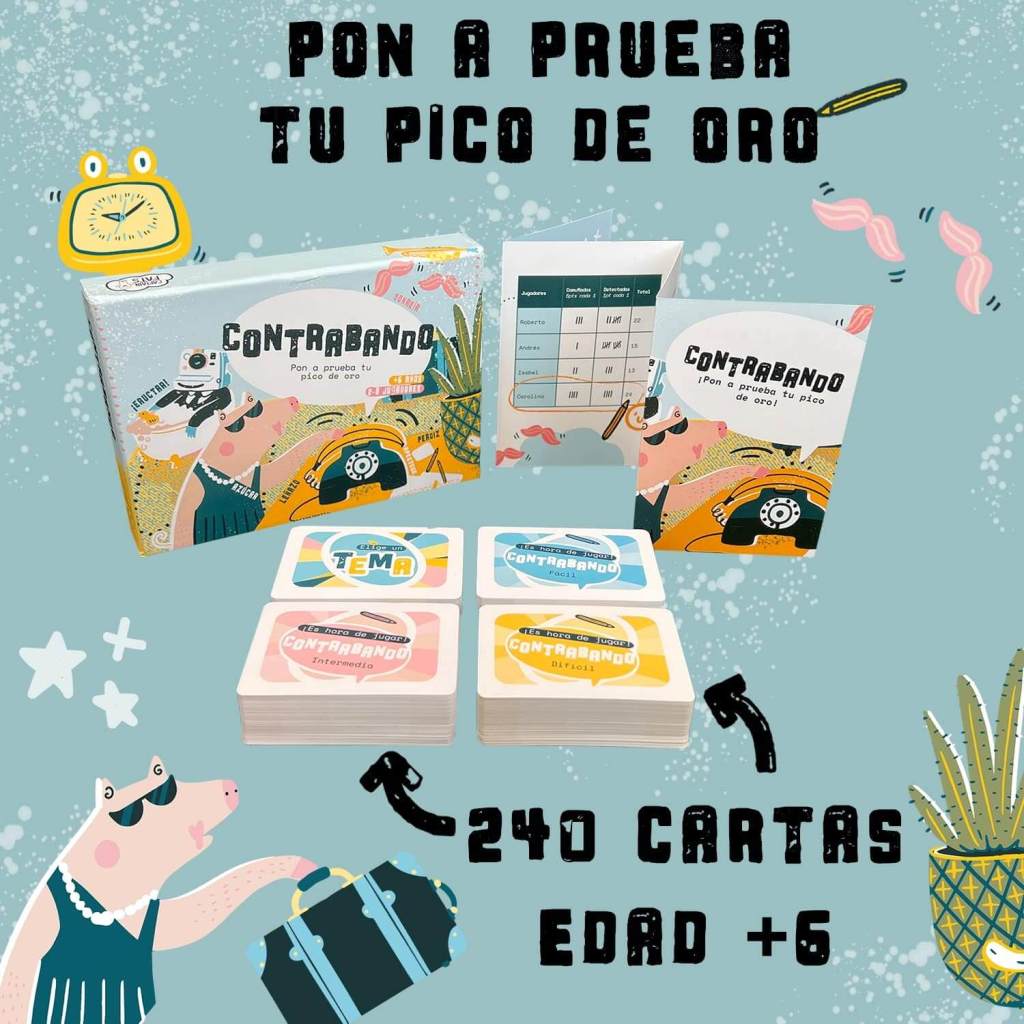
Why play? You’ll improve your ability to describe things and justify your choices in Contrabando, as well as enhancing your fluency and argumentation skills.
Final thoughts
If you’re not sure where to start, here are my recommendations:
If you’re just starting out with Spanish, try Guess Who or Kloo: Race to Madrid. If you want to test and broaden your vocabulary, play Quick Stop. If you’re keen to stretch your speaking muscles and refine your sentence structure, try Taboo or Contrabando.
And remember you can always adapt the games to suit your level, by changing the time given to answer in Taboo, only using the easy cards in Contrabando or using Google lens to help you translate tricky cards in ¡Fuera de Lugar!
¡Pásalo bien!
Enjoyed this post? Please like and share it!





Leave a comment