

Despite the scepticism amongst some foreign language learners regarding how effective Duolingo is, I’m pretty positive: it’s a great launch pad for anyone new to language learning.
An avid believer in the principle that we should go hard or go home when it comes to pursuing our goals, I’ve got a step-by-step guide for those of you who have never learnt a foreign language before.

Rather than push you toward a droll textbook or insist that you change the language on your phone (ergh!), I’ve got a series of methods that tick the same boxes Duolingo does. If you try just a couple of methods from this list, you’ll gradually start to feel more comfortable with different formats, which will put you in the driver’s seat on your learning journey, with the little green owl as your deferent passenger.
So let’s go through the things you love about Duolingo, and get you trying out other methods that hit the same spot:
- You love free stuff
- You need bite-sized lessons that you can fit into your busy schedule
- You love gamified learning
- You like competing with friends and interacting with a community
- You live for the high reward with low pressure
- You want to have fun
- Final thoughts
You love free stuff
Forking over a load of cash when you don’t know if something will work isn’t ideal, so it’s always worth starting with free stuff:
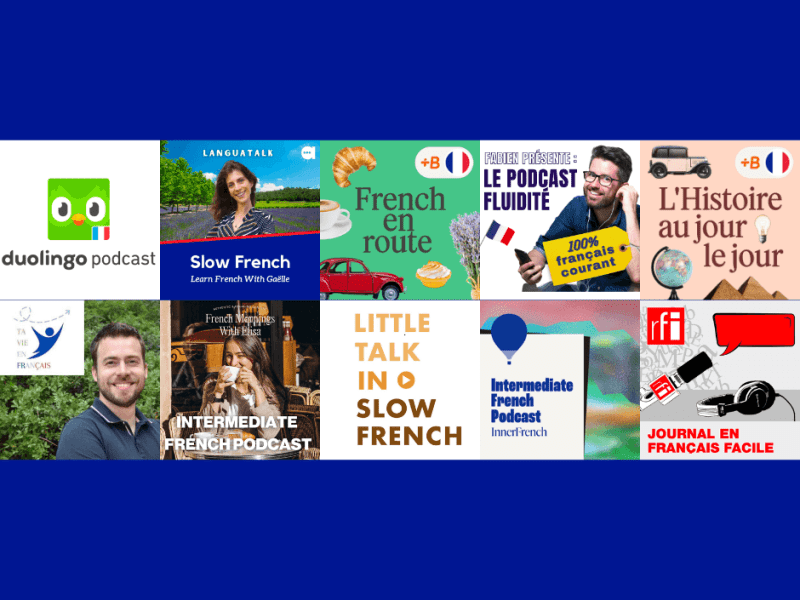
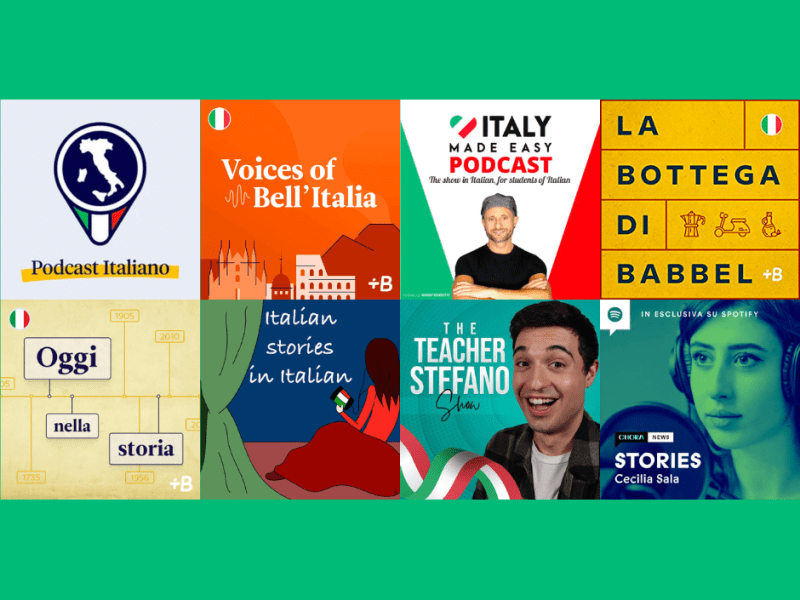
Discover podcasts
If you’re learning French or Spanish, start with Duolingo podcasts (they’re free!). What makes these podcasts special is the clarification peppered through the 20-minute episodes. For every snippet of Spanish or French, you get a follow-up explanation of what’s been said. The topics are cultural and always engaging, and each episode comes with a transcript, so you can read as you listen.
If you’re learning a different language or you want to move away from Duolingo, there are plenty of options out there: check out my suggestions for French, Spanish, Portuguese, German and Italian below.
Also read my 7 tips for using a podcast successfully to maximise your learning in my 5 free ways to become the ultimate active listener when learning any foreign language post.



I’ve included other free stuff under some different categories, including Duolingo Stories, Hellotalk app, Chatterbug app, comedy Instagrammers, online word games, language exchange events and Lingoclip app.
You need bite-sized lessons that you can fit into your busy schedule
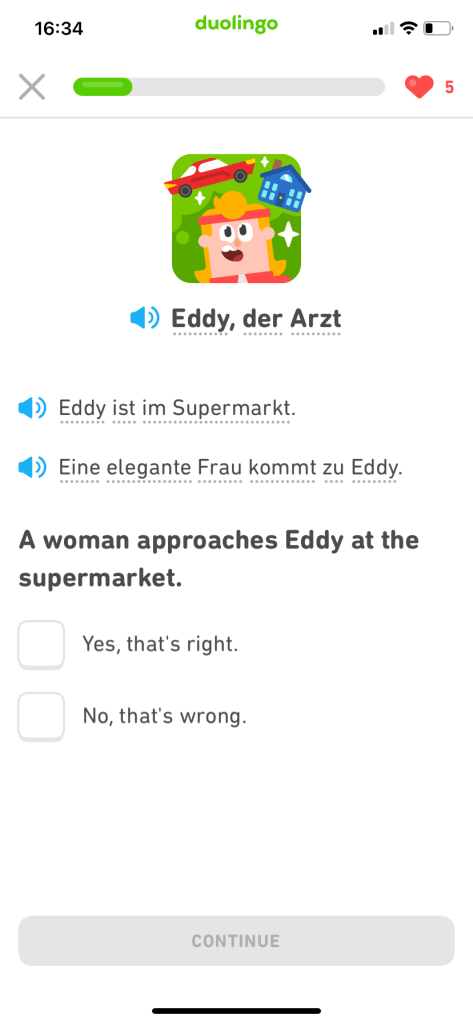
Read Duolingo Stories
Duolingo Stories are the perfect solution for the book-averse, available on the free version of the app.
Read and listen to snippets of stories, and answer questions to test your understanding as you go.
Start with these and you’ll develop your ability to deduce meaning from context, learn new vocabulary, and will learn correct pronunciation thanks to the read-aloud function. These will also set you on the path to reading books and/or articles in future!
Use Chatterbug app
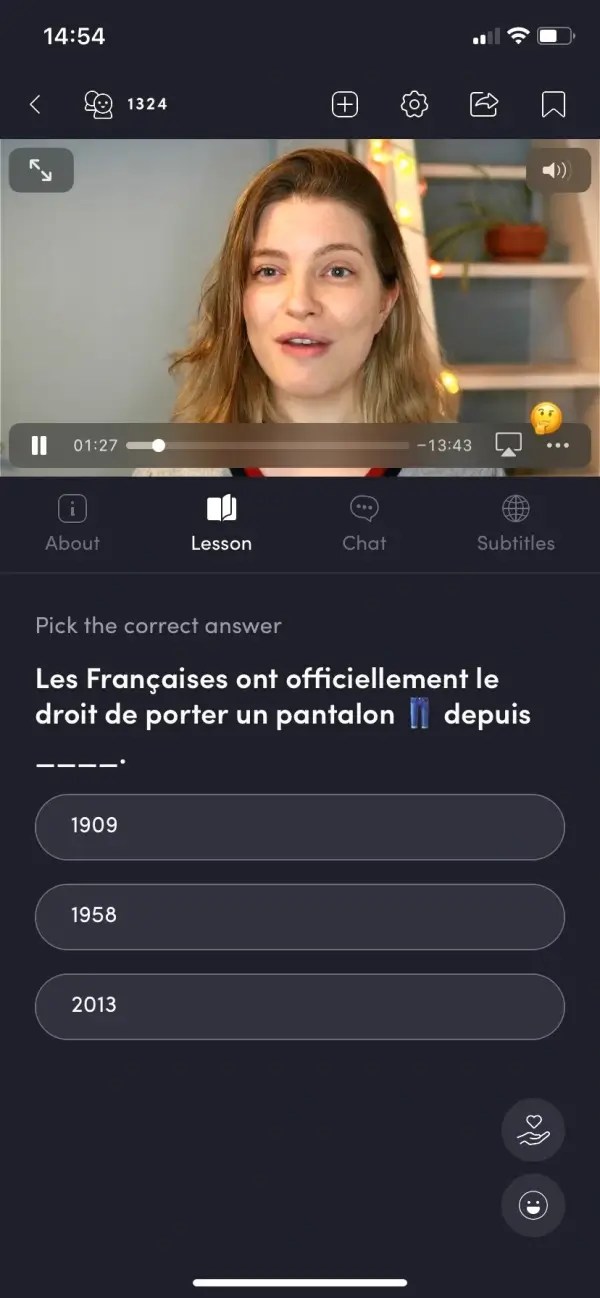
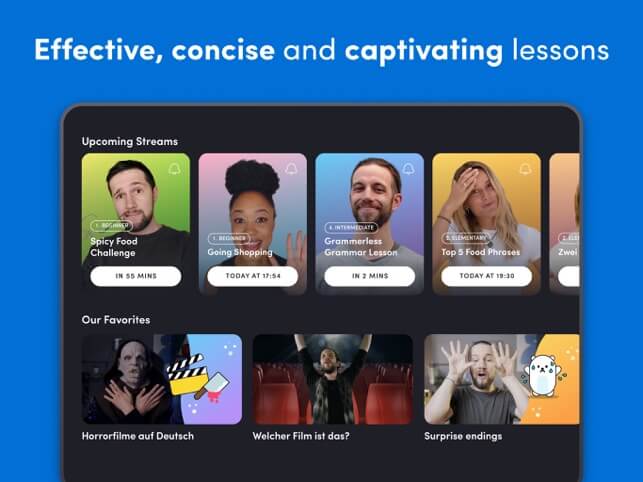
Chatterbug is a free, little-known app perfect for improving your listening skills, available in Spanish, French, German and English.
Native speakers are videoed live, discussing a cultural topic of interest. The recordings are available for free, and you can engage by answering the questions the teacher presents as you follow along.
The videos range from 8-20 minutes long.
You love gamified learning
Learning a foreign language doesn’t have to be boring, or a lone pursuit; these are some of my favourite methods:
Do the Lingoda Language Sprint
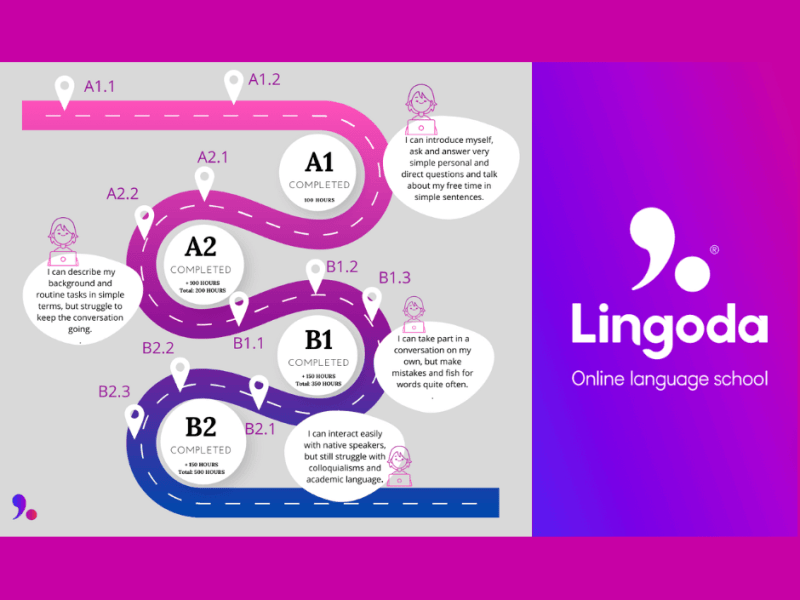
The Lingoda Language Sprint is a two-month challenge to attend 15 online language lessons each month. If you attend every class without fail, you’re entitled to a 50% refund, or the equivalent in class credits.
I’ve attended many language courses in my life, and Lingoda was the only one where I never missed a class. That carrot sure is effective! And I learnt a lot.
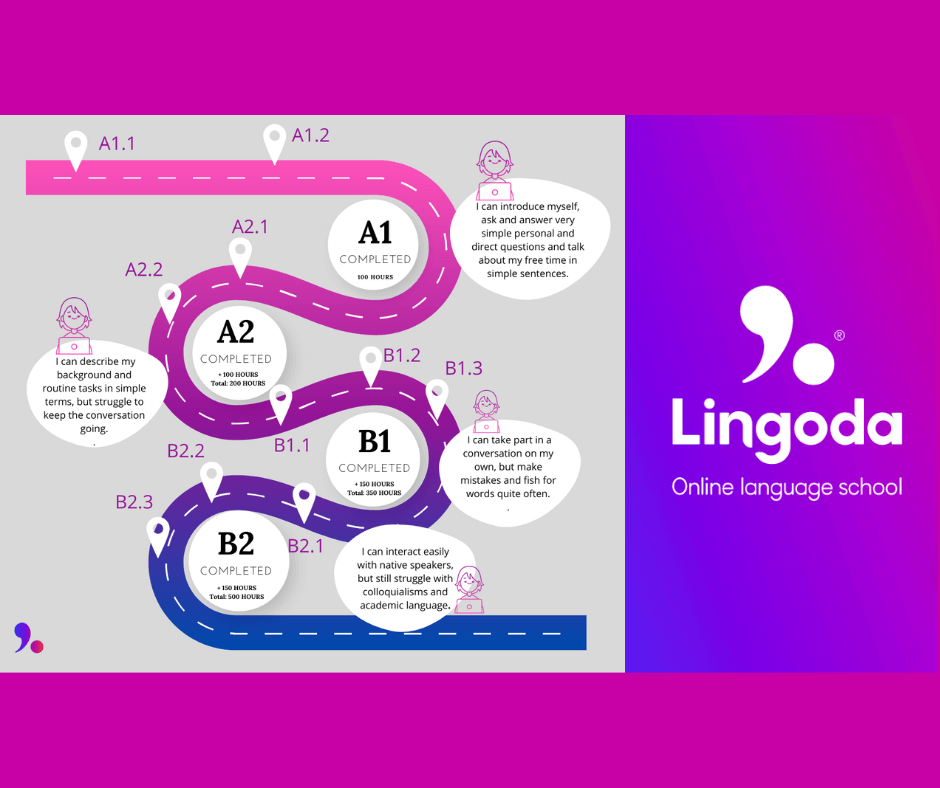
For more information on this, read my Should you try the Lingoda language sprint? Here’s my experience and advice post.
Play board games in the language
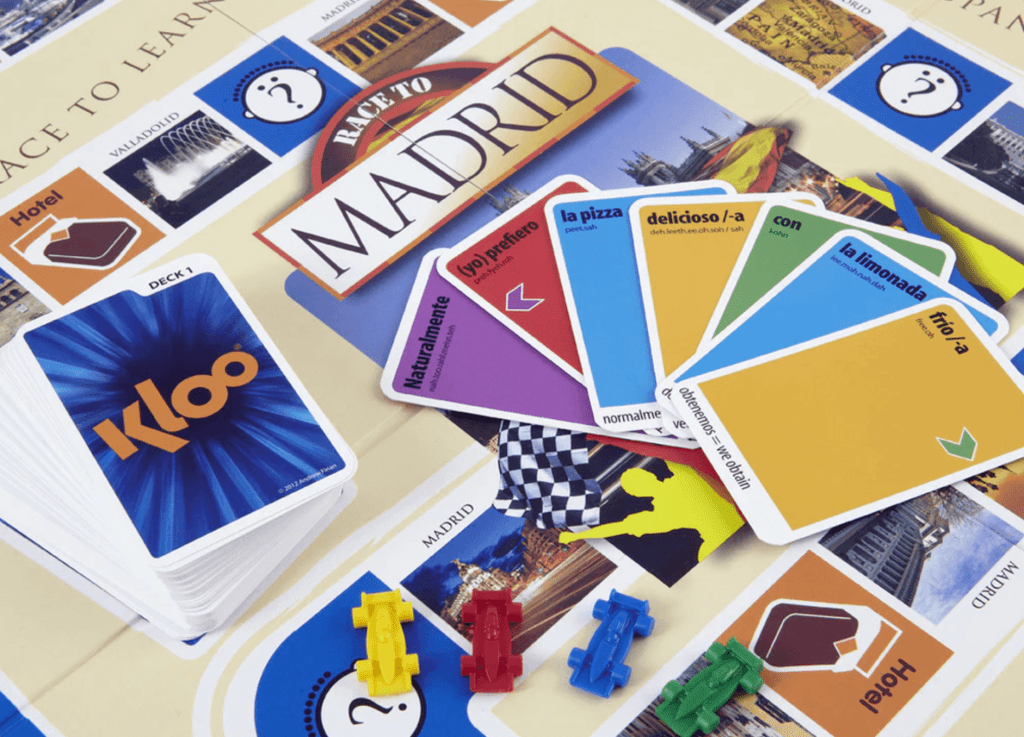
There are plenty of board games in foreign languages out there, but mostly for native or advanced speakers. An exception is Kloo Games, which has lots of board games for French, Spanish and Italian.
This is a great way to motivate others to join your learning journey, too!
Do crosswords and play other word games
I love crosswords, and have used the Lexis Rex series of crossword books in French and German.
If you want a free alternative, or just prefer a screen, check out the crosswords and other word games on the Lexis Rex website, which caters to many languages, from French, to Czech or Scots.

You like competing with friends and interacting with a community
If you want to find other people passionate about your target language, with whom you can practise and bounce off to motivate each other, there are plenty of options!
Use Hellotalk app
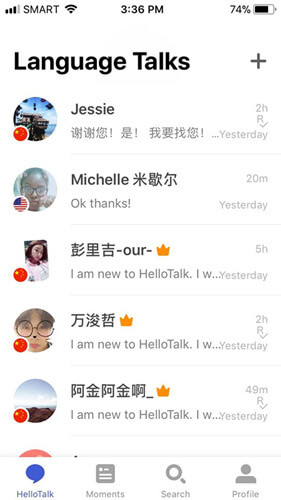
Hellotalk is a free language exchange app that allows you to text and send voice messages to other speakers of your target language. There’s a free version, which allows limited use of some of their paid features, including translating messages that others have sent to you. I personally think the free version is perfectly good.
This is a great option if you don’t know any speakers of your target language.
Attend a language exchange event
Language exchange events can be useful for meeting native speakers of your target language, but also for practising with other learners who are working at your level (or ideally who are a little further ahead).
If you’re on the lookout for an exchange, I’d recommend you check the BlaBla language exchange website to see if your city hosts one of their exchanges, and if not, check out Eventbrite, Meetup and Facebook.
Often exchanges are language specific but sometimes they’re more general (as BlaBla is).
For tips on how to make the most of a language exchange, read my From meek to chic: 9 proven strategies to improve your speaking skills at your local language exchange post.
Attend an in-person language class
If you’re learning a popular foreign language, you’ll easily find classes in your local area.
It’s worth asking to “try out” a lesson before committing to a course, to make sure the teacher and style suits you.
You live for the high reward with low pressure
Get that dopamine rush away from Duolingo with these two suggestions:
Use Lingoclip app
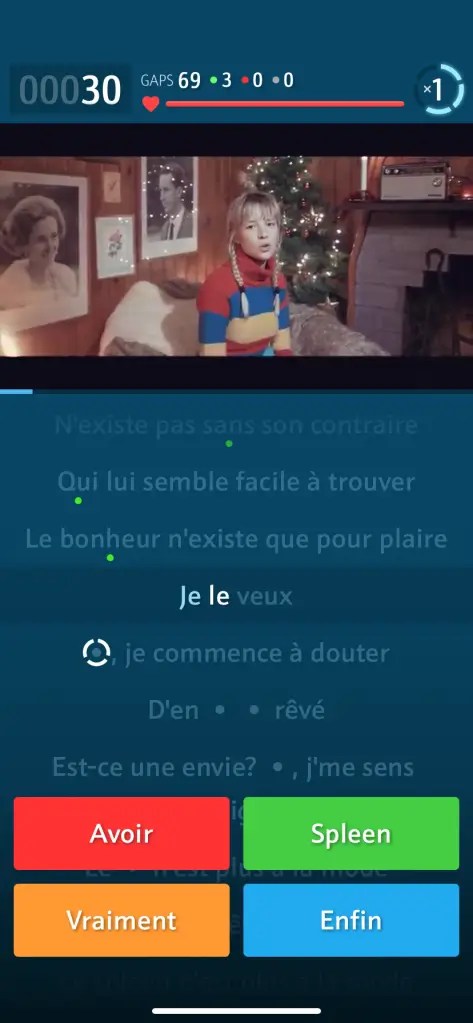
Lingoclip is a free app that you can also use on a computer (called Lyrics Training as a website); it’s a gap fill activity for music lyrics.
Select the language, genre, a song, your desired level (beginner, intermediate, advanced or expert), and the desired mode (multiple choice, typing or even karaoke!).
Before you know it you’ll be singing along like a native.
Read graded readers
Graded readers are short stories written to different learning levels. For example, if you read a book at the most basic level (called A1 level) the whole book will be in the present tense, and will use very simple vocabulary.
There are lots of different series out there; my favourite is eReaders – Black Cat and Cideb, which publishes physical books and e-versions on their app, available in French, Spanish, English, German and Italian.
There is audio to listen to as you read, to help you with getting the gist, and to keep you focused!
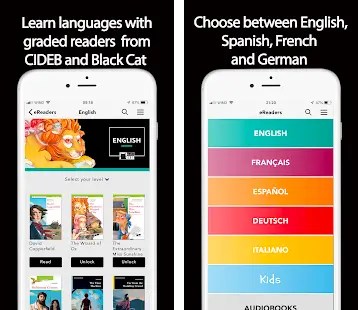
I recommend buying a physical book to test the format first. Browse the available books in the series on the Black Cat Cideb website, and buy in your own currency on Amazon. If it works for you, the app costs 9.90€ for an ongoing monthly subscription or 59.99€ a year for an annual subscription.
You want to have fun
I’ve already covered lots of fun learning methods, here are my final suggestions:
Follow and channel comedy Instagrammers
This one is for the theatrical amongst you. It sounds insane and embarrassing, but producing totally foreign sounds and picking up new gestures and body language require a total pendulum swing from your native self.
That is, create a caricature version of yourself speaking your target language; you’ll gradually reel it back to something normal! Channel Tatty McCleod in French, Jannick Apitz in German or any other Instagrammer taking the piss out of their own nationality… Emily in Paris characters are also fair game…
If you still have no idea what I’m talking about, check out my Why you should cultivate an alter ego in your target language and how to do it post.
Watch TV and films in your target language
Getting into TV series and films in your target language is always a pleasure! And you’d be surprised how much you pick up, even when you’re reading subtitles in English.
Here are some of my favourites below:







Once you’re more familiar with a series or film, why not download the Language Reactor Chrome extension? It works with Netflix and Youtube (amongst other things), and allows you to see dual subtitles in your native and target language, or just the target language, whereby you can scroll over any words to see their meaning, and the series or film will pause until you’re ready to return to it.
Try a colouring book
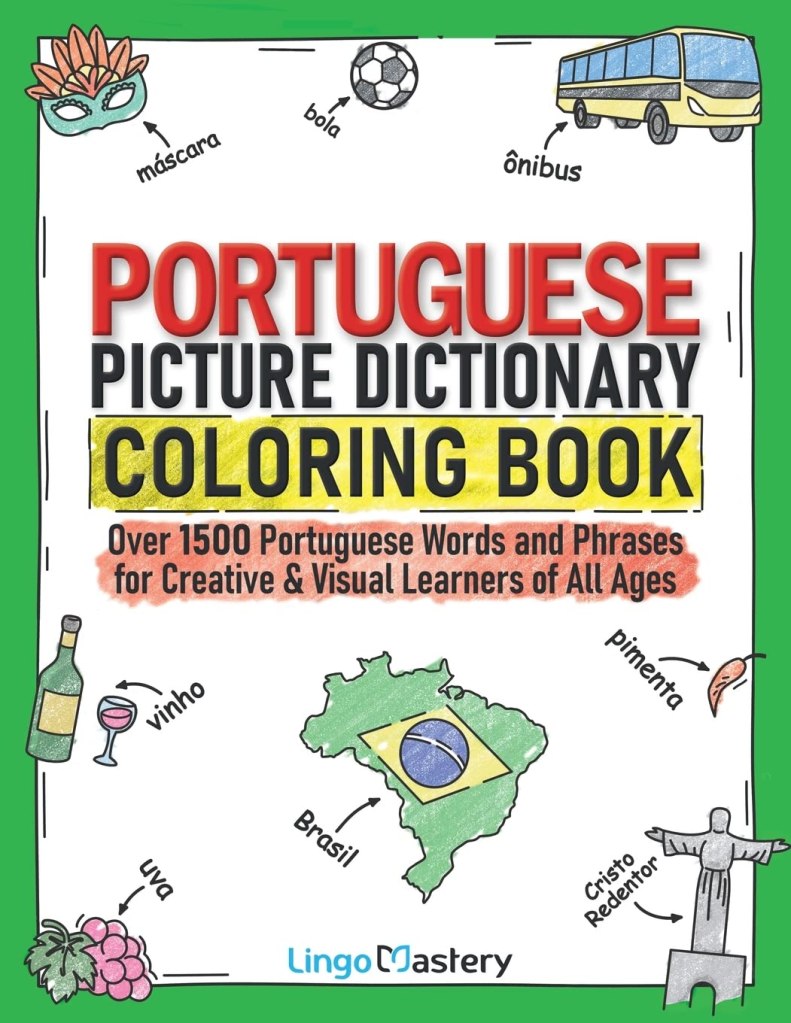
If you’re a fan of mindfulness activities, then try a colouring book. Here’s one from Lingo Mastery (I’ve just ordered their German version); find lists of words on topics from family, to the human body and the zoo.
You can colour in the pictures – and label them in your target language to ensure you commit the words to memory.
The whole point here is that pen and paper boost memory more than smart devices, so put down the flashcard app in favour of this fun little activity.
Final thoughts
You may be wondering – why go through the effort of trying out different methods that have the same features as Duolingo?
The process will train you into a master at deciphering which methods work best for you and which you should ditch, making you a more independent learner, less hooked on the little green owl.
You don’t need to try all of them, just the ones that appeal to you.
Ultimately, variety is the key to any learning journey; good luck!
Let me know in the comments or on my social channels which methods you’ve tried!


Leave a reply to Lucy Cancel reply